

 English
 Español
 русский
 中文简体
中文简体

Home / News / Industry News / What challenges do eddy current impeller castings face in their applications in the chemical or energy industries
Industry News
What challenges do eddy current impeller castings face in their applications in the chemical or energy industries
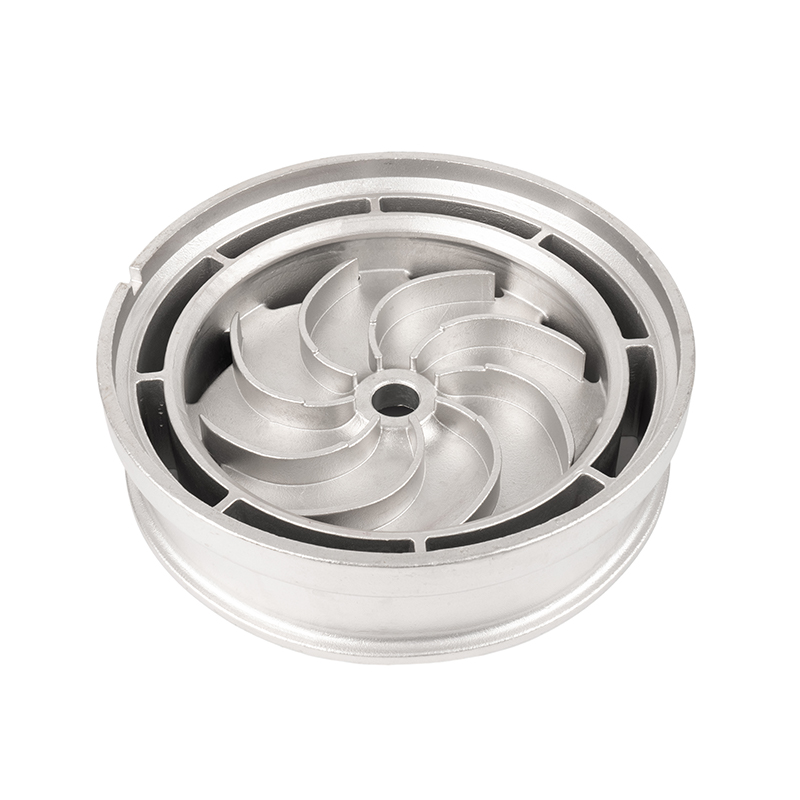
Swirl impeller castings are widely used in industries such as chemical engineering and energy, especially in pumps, compressors, turbines, and other fluid transport equipment. The design and manufacturing of these impellers require high precision, as their performance directly impacts the overall efficiency and reliability of the equipment. However, in these industrial sectors, the application of swirl impeller castings faces several significant technical and environmental challenges. This article will delve into the key challenges swirl impeller castings face in the chemical and energy industries.
1. Adaptability to High-Temperature Environments
In the chemical and energy sectors, particularly in industries such as petrochemicals, power generation, and metallurgy, swirl impellers often operate in high-temperature environments. High temperatures present severe challenges to the performance of impeller materials. Common casting materials tend to experience thermal fatigue, deformation, and aging at elevated temperatures, which reduces the impeller's lifespan.
In these high-temperature environments, swirl impeller castings must be made from high-performance alloys, such as nickel-based and cobalt-based alloys, which have good resistance to heat. However, these high-temperature alloys are more expensive and present significant manufacturing challenges, requiring precise techniques and specialized process control.
2. Erosion from Corrosive Media
In the chemical industry, swirl impeller castings are often exposed to fluids containing acids, alkalis, salts, and other corrosive chemicals. These corrosive media can severely erode the impeller's surface, especially over long periods of use. As the impeller’s performance deteriorates due to corrosion, equipment failure becomes a risk, making corrosion resistance a critical issue.
Common cast iron or steel materials are insufficient to withstand highly corrosive substances, particularly under conditions of sustained high temperatures or pressures. To address this issue, swirl impeller castings are often coated with special surface layers or made from corrosion-resistant alloys like stainless steel, nickel-based alloys, or fluoropolymer coatings. However, the durability and adhesion of these coatings in extremely corrosive environments remain a significant concern.
3. Stability Under High Pressure and High Flow Conditions
Many equipment in the chemical and energy industries operate under high-pressure and high-flow conditions, and swirl impellers in such environments must endure immense mechanical stress. The fluids under high pressure increase the load on the impeller, and may even cause excessive vibrations or fatigue fractures. As impeller rotation speeds increase, the stresses on the impeller surface and internal structure also escalate, and if the design is not optimized, the impeller may fail prematurely.
Therefore, the design of swirl impeller castings must account for the high-pressure and high-flow conditions, addressing stress concentration issues. The impeller's structure needs to offer adequate strength and rigidity to avoid deformation or failure under such conditions. Additionally, the choice of material and heat treatment processes are essential to enhance the impeller's fatigue resistance and ensure its operational stability.
4. Fatigue and Wear Issues in Materials
In the chemical and energy industries, swirl impellers are subjected to continuous high-load operations, with frequent start-ups and shutdowns causing material fatigue. The constant friction and wear on the impeller surface can degrade its performance over time, resulting in cracks, peeling, and other forms of damage.
To combat fatigue and wear, swirl impeller castings typically employ high-strength, wear-resistant alloys or surface coatings. However, even the most robust materials cannot entirely eliminate fatigue and wear, especially in complex fluid dynamics. Optimizing the material properties and design of the impeller to improve its fatigue resistance and wear durability is an ongoing challenge for engineers.
5. Process Control and Manufacturing Precision
The manufacturing of swirl impeller castings is a complex process that involves casting, heat treatment, and machining, among other steps. In the chemical and energy sectors, these impellers are often required to meet high standards of precision and consistency, as even small errors in manufacturing can result in performance degradation or failure. However, due to the high temperatures and corrosive properties of the materials, along with the complex geometries of the impellers, various defects such as porosity, cracks, and shrinkage often arise during production.
Advanced manufacturing techniques, such as investment casting and laser cladding, can improve the precision of impeller production, but they also demand higher levels of technological expertise and control. Ensuring the quality and stability of swirl impeller castings while minimizing production costs remains a major challenge for manufacturers.
6. Environmental and Sustainability Requirements
With increasing environmental regulations, the chemical and energy industries are facing higher demands for sustainability. The manufacture and use of swirl impeller castings must now meet environmental standards, reducing harmful emissions, energy consumption, and ensuring the recyclability of materials used in production.
In addition to performance, the materials and coatings used for swirl impeller castings must meet environmental requirements. The use of eco-friendly coatings and sustainable manufacturing processes that minimize the release of harmful substances and optimize energy use during production is now a key focus for industries. Balancing high performance with low environmental impact is a critical challenge moving forward.
7. Cost Control and Technological Investment
Swirl impeller castings in the chemical and energy industries require high-quality materials, advanced manufacturing techniques, and continuous technological optimization. As these requirements increase, the production cost of impellers also rises. Balancing the need for high performance with the need to control costs is a significant challenge faced by many businesses in these industries.
Moreover, adopting advanced manufacturing processes and materials typically involves substantial investments in technology and research and development. Companies must strike a balance between investing in innovative technologies and ensuring cost-effectiveness, ultimately finding an optimal trade-off between cost and performance.
RELATED PRODUCTS
Do you have questions? Do not wait, Let's talk!
Contact Us
- Tel: +86-13967888380 / +86-13685858588
- +86-0574-86183698 / +86-0574-86183685
- Fax: +86-0574-86183696
- Email: [email protected]
[email protected] - Add: No. 68, Jiangbin Branch Road, Beilun Xiaogang Joint Development Zone, Ningbo, Zhejiang, China.
QR Code
Copyright © Ningbo Etdz Andrew Precision Cast Co., Ltd. All rights reserved
 Custom Metal Precision Casting Parts Manufacturers
