

 English
 Español
 русский
 中文简体
中文简体

Home / News / Industry News / Why is Centrifugal Casting the Secret to High-Performance Centrifugal Pump Castings
Industry News
Why is Centrifugal Casting the Secret to High-Performance Centrifugal Pump Castings
What is a Centrifugal Casting?
In the grand landscape of modern industrial manufacturing, centrifugal casting holds an irreplaceable position. Simply put, it is an advanced process that utilizes centrifugal force rather than traditional gravity to fill a mold and solidify metal. Unlike standard sand casting, where molten metal relies on its own weight to flow slowly into the cavity, centrifugal casting involves the high-speed rotation of a mold (typically between 300 to 3,000 RPM). This rotation generates massive inertial force, tightly pressing the molten metal against the inner walls of the mold.
The essence of this process lies in the redistribution of force. When molten metal is injected into the spinning mold, it experiences pressure dozens or even hundreds of times its own weight due to centrifugal acceleration. This high-pressure environment greatly enhances the filling capacity of the metal, ensuring that even thin-walled or dense components achieve perfect contours.
More importantly, centrifugal casting acts as a purifier for metal quality. Because of the centrifugal force, the denser liquid metal is pushed toward the outer wall, while lighter impurities, slag, and gases are squeezed toward the rotational center (the inner diameter surface). During solidification, these defects concentrate in the inner layer of the part, where they can be easily removed by subsequent machining, resulting in a finished component with extremely high density and near-perfect physical properties.
What are the Three Types of Centrifugal Casting?
Centrifugal casting is not a single fixed mode; the industry categorizes it into three primary types based on the symmetry of the part, its complexity, and production goals:
True Centrifugal Casting
This is the purest form, primarily used for manufacturing cylindrical or tubular long parts. The mold rotates around a horizontal or vertical axis. The most notable feature is that it does not require a core to form the center hole.
Principle: Molten metal is uniformly distributed along the inner wall of the mold by centrifugal force. The size of the inner diameter is determined by the total amount of metal poured.
Applications: Cast iron pipes, paper machinery rollers, bearing bushings, and ring components in large Centrifugal Pump Castings.
Semi-Centrifugal Casting
This method is suitable for manufacturing disc-shaped or wheel-shaped parts with central symmetry. Unlike true centrifugal casting, it usually employs a complete mold and a central core.
Principle: The primary role of centrifugal force here is not to form a hole, but to assist the metal in flowing from the center runner to the edges, ensuring the density of hubs, spokes, and other outer sections.
Applications: Flywheels, gear blanks, pulleys, and certain pump impellers.
Centrifuging (Centrifugal Moulding)
This is a variation that uses centrifugal force as a pressure booster to manufacture irregular or complex parts.
Principle: Multiple mold cavities are arranged symmetrically around a central runner. As the mold rotates, the metal is slung into the various branch cavities under the drive of centrifugal pressure.
Applications: Small precision valve components, jewelry, and complex internal pump brackets.
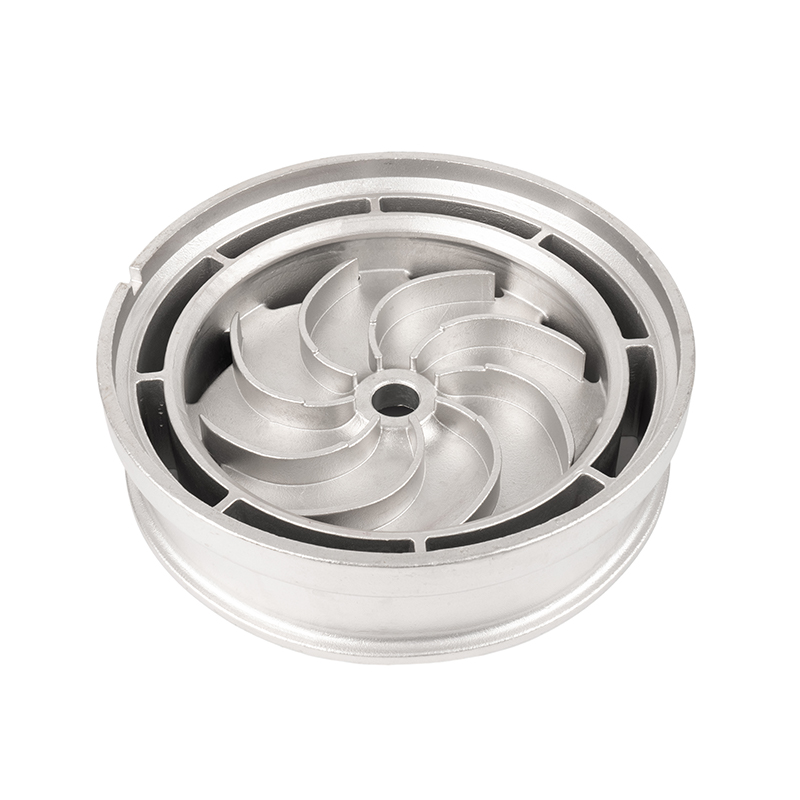
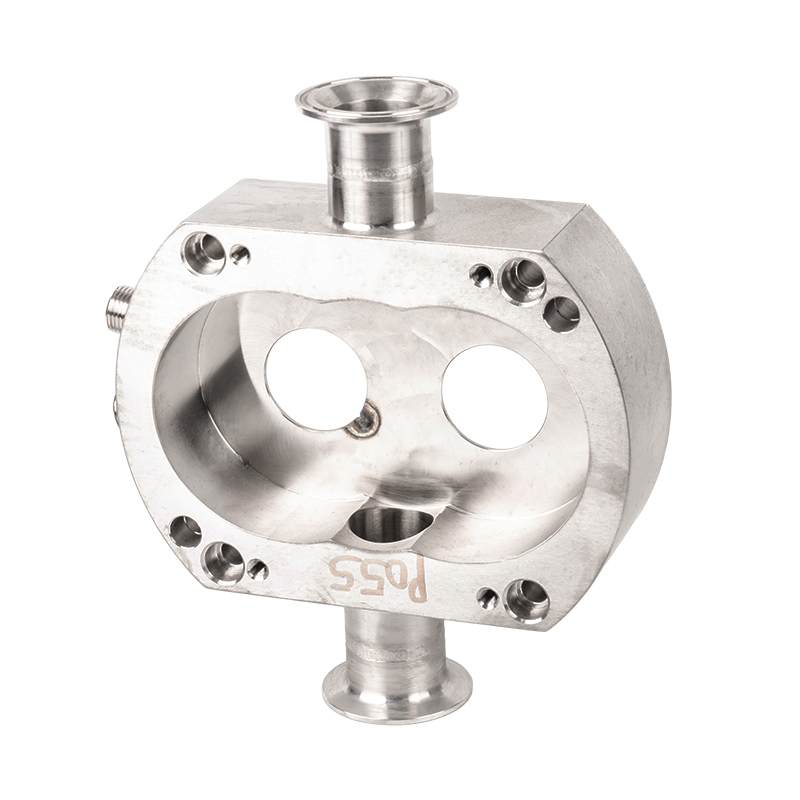
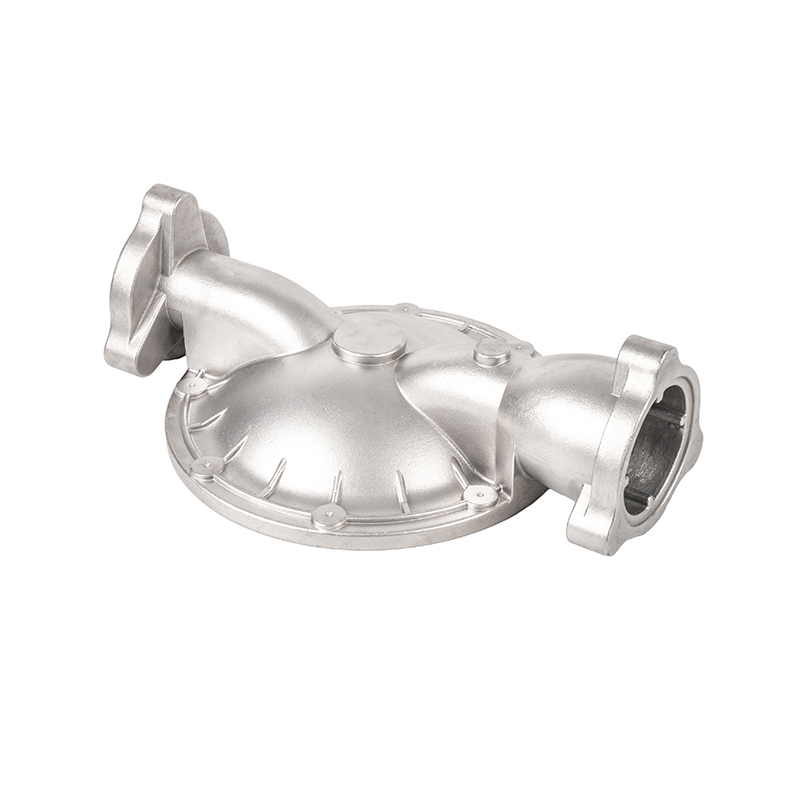
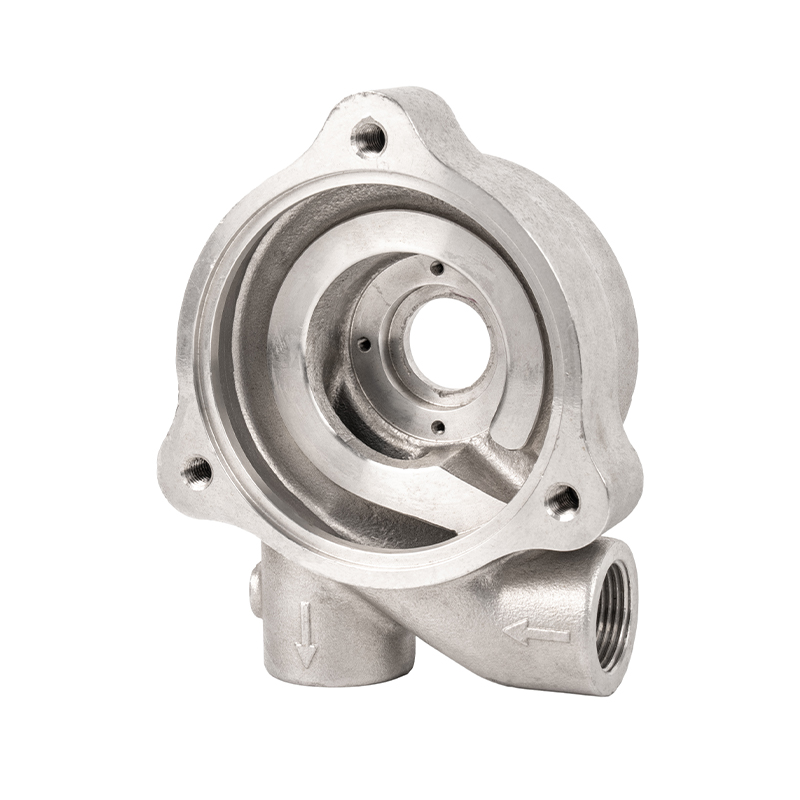
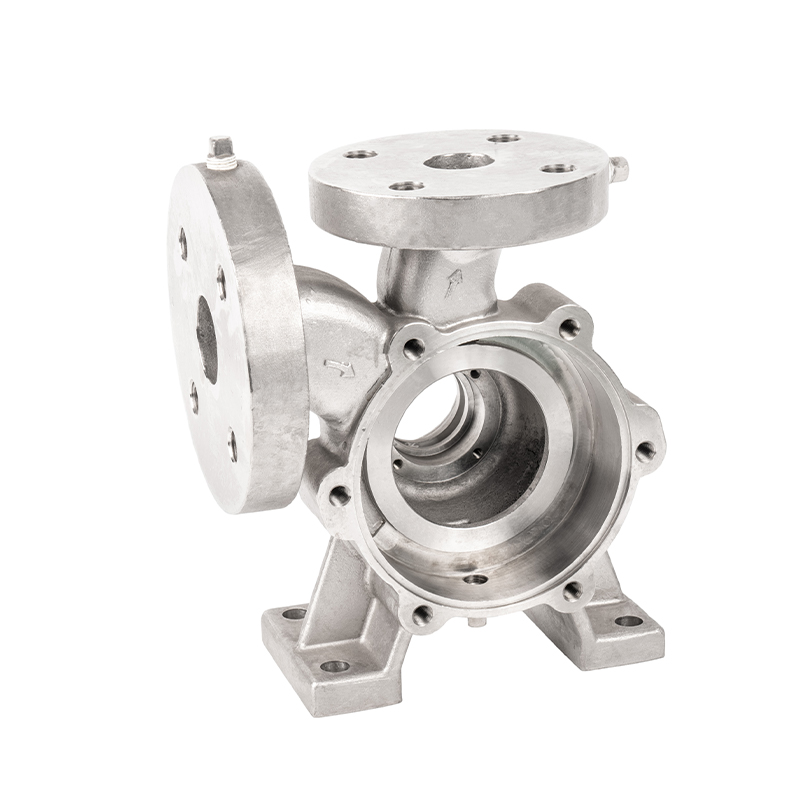
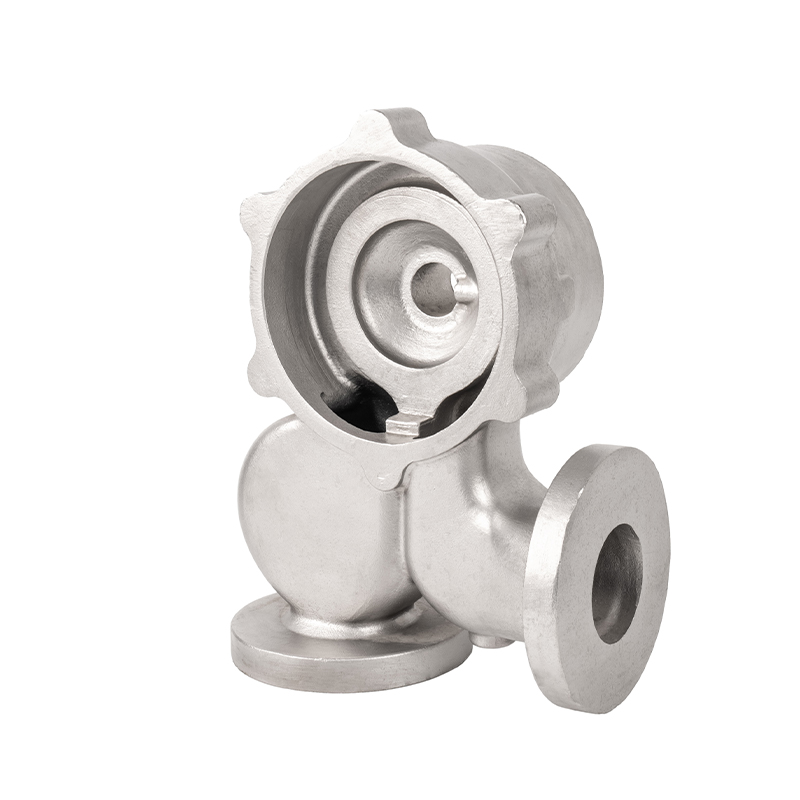
Centrifugal Pump Castings
When discussing Centrifugal Pump Castings, designers must select different casing structures based on fluid dynamic requirements. The pump casing is not just a container for the liquid; it is the critical component that converts kinetic energy into pressure energy.
The Heavy Duty of Pump Castings
As pressure vessels, pump casings face extremely high requirements for corrosion resistance, pressure strength, and flow path smoothness.
Why Choose Centrifugal Casting
In large cylindrical pump bodies or shaft sleeve components, this process offers significant quality advantages over sand casting, such as increased structural integrity and reduced porosity.
Material Selection
Differences in the application of cast iron, stainless steel, and duplex steel in the manufacturing of centrifugal pump casings are critical. For end users, the quality of Centrifugal Pump Castings directly determines the operating cycle of the pump unit. In practical applications, users are most concerned with:
Cavitation Resistance: The dense surface formed by centrifugal casting better resists the microscopic impacts caused by liquid vaporization.
Pressure Integrity: As pressure vessels, pump casings cannot have any minor shrinkage or porosity. Centrifugal casting utilizes directional solidification from the outside in, greatly reducing the risk of structural leakage.
Dynamic Balance Performance: Especially for high-speed pumps, the uniformity of mass distribution (no eccentricity) in the casting is vital.
What are the Different Casings of Centrifugal Pumps?
Volute Casing
This is the most common type, featuring a spiral cross-section that gradually expands. The purpose of this design is to gradually reduce the flow velocity after the liquid leaves the impeller, efficiently converting kinetic energy into static pressure.
Manufacturing Characteristics: Complex shape, usually requiring high-precision casting to ensure the smoothness of the internal flow channels.
Vortex / Diffuser Casing
A ring of fixed guide vanes (diffusers) is added around the impeller. The liquid enters the annular space after passing through these vanes.
Applicable Scenarios: Mostly used in multi-stage high-pressure pumps. It provides higher energy conversion efficiency but is more difficult to cast and requires extremely high erosion resistance from the material.
Double Volute Casing
To balance the radial forces in large-flow pumps during operation, designers set two symmetrical volute channels within the casing.
Structural Advantage: Significantly reduces the load on the bearings and extends the life of the pump.
Split Casing
Divided into horizontal split and vertical split types. This casing design allows for internal maintenance without disconnecting the piping.
Casting Challenge: The flatness of the mating surfaces is key. The casting must have excellent dimensional stability to prevent leakage over long-term operation.
What are the Disadvantages of Centrifugal Casting?
Although centrifugal casting excels in producing high-performance parts like Centrifugal Pump Castings, it has several limitations:
Shape Limitations
It is difficult to manufacture irregular shapes or parts with high degrees of asymmetry. The process relies heavily on rotational symmetry. For asymmetric parts or those with complex internal chambers (such as certain irregular pump casings with brackets), the implementation difficulty and cost of centrifugal casting soar.
Segregation
When dealing with alloys containing multiple elements, layering may occur under a strong centrifugal field due to the different atomic weights of the elements. Denser alloys may exhibit uneven component distribution, where heavier elements are flung to the outside, leading to chemical inconsistencies between the inner and outer walls.
Machining Costs
The inner diameter size control is imprecise, usually requiring significant additional machining allowance. In true centrifugal casting, the inner hole surface is formed naturally by centrifugal force; it is often rough and fluctuates in dimension, necessitating extra thickness to be machined away.
Equipment Investment
The high cost of balancing and maintaining high-speed rotating equipment and high-strength molds is a factor. Centrifugal units and dynamic balance molds capable of withstanding high speeds, high temperatures, and massive dynamic loads are expensive to build and maintain.
Casting Process Parameter Comparison
| Feature | Centrifugal Casting | Gravity Sand Casting | Die Casting |
| Tissue Density | Extremely High (Compressed) | General (Prone to pores) | High (Mechanical pressure) |
| Shrinkage Rate | Low (Continuous feeding) | Higher | Extremely Low |
| Surface Finish | Medium to Excellent | Poor | Excellent |
| Mechanical Strength | Increased by 20% - 30% | Base Level | Higher |
| Material Utilization | Higher (No risers) | Lower | Extremely High |
| Applicable Scale | Mid-to-Large Cylinders/Pump Castings | Almost No Limit | Small-to-Mid Parts Only |
FAQ: Product Knowledge and Common Questions
Is a centrifugal cast pump casing always better than a sand cast one?
Under high pressure, high speed, and corrosive environments, centrifugal cast parts usually have a longer fatigue life due to grain refinement and high density. However, for extremely complex single-unit pump shapes, sand casting still holds a place due to its design flexibility.
Why is the machining allowance on the inside of the pump casing usually larger than on the outside?
This is determined by the nature of the centrifugal process. Impurities and air bubbles in the metal liquid migrate toward the center under centrifugal force. The quality of the inner diameter surface is relatively poorer, so more thickness must be reserved for removal via machining.
Is this process friendly to stainless steel materials?
Very much so. Particularly when manufacturing Centrifugal Pump Castings from duplex stainless steel, centrifugal casting can effectively avoid uneven distribution of austenite and ferrite, enhancing resistance to chloride ion corrosion.
How does centrifugal force affect the dimensional stability of the casting?
Because it solidifies under high pressure, the residual stress distribution is relatively uniform. Compared to gravity casting, centrifugal castings exhibit less deformation after heat treatment, making them more suitable for precision fits.
Will repair welding on a worn centrifugal pump casing destroy the integrity of the original cast structure?
Repair welding creates a local Heat Affected Zone (HAZ), which may alter the original uniform equiaxed grain structure of the centrifugal casting. For high-performance pump casings, stress-relief annealing is usually recommended after welding to restore mechanical stability.
RELATED PRODUCTS
Do you have questions? Do not wait, Let's talk!
Contact Us
- Tel: +86-13967888380 / +86-13685858588
- +86-0574-86183698 / +86-0574-86183685
- Fax: +86-0574-86183696
- Email: [email protected]
[email protected] - Add: No. 68, Jiangbin Branch Road, Beilun Xiaogang Joint Development Zone, Ningbo, Zhejiang, China.
QR Code
Copyright © Ningbo Etdz Andrew Precision Cast Co., Ltd. All rights reserved
 Custom Metal Precision Casting Parts Manufacturers
