

 English
 Español
 русский
 中文简体
中文简体

Home / News / Industry News / Advanced Solutions for Intergranular Corrosion in Stainless Steel Elbow Reducer Castings
Industry News
Advanced Solutions for Intergranular Corrosion in Stainless Steel Elbow Reducer Castings
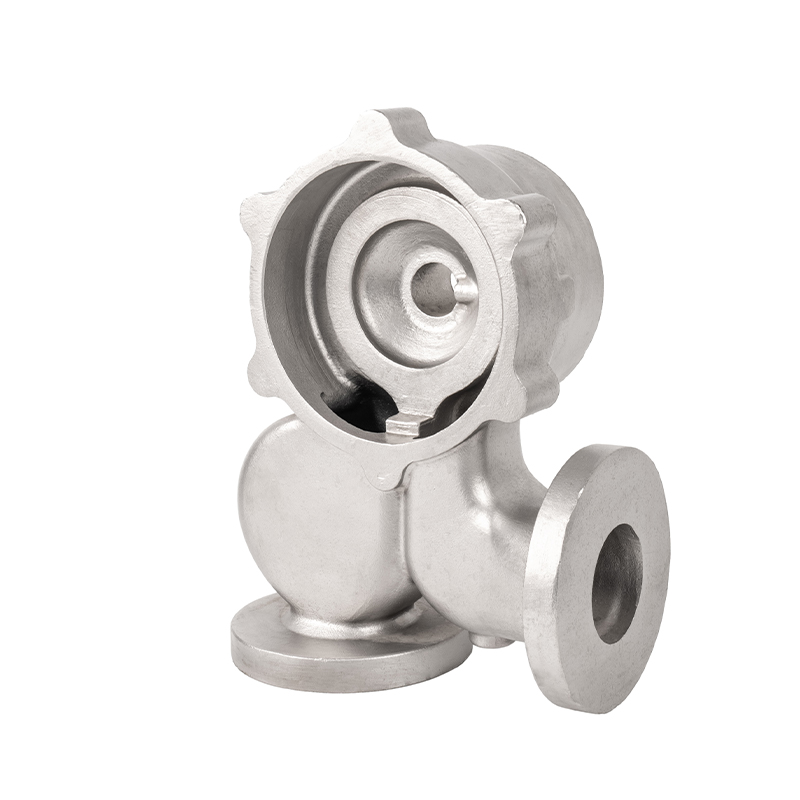
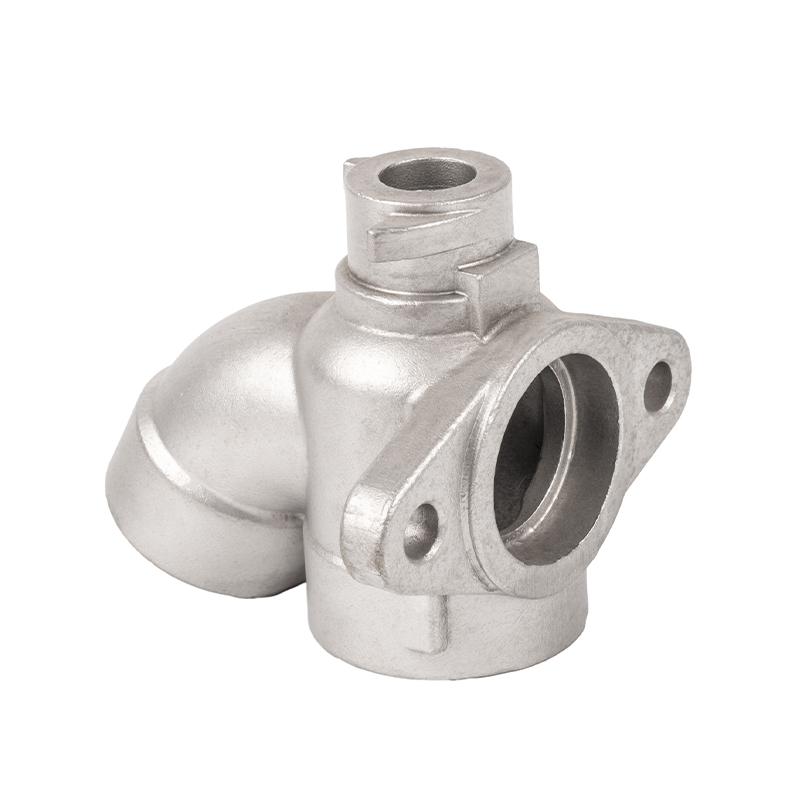
In the Stainless Steel Casting industry, Intergranular Corrosion is a critical challenge that threatens the long-term safety of industrial components. For specialized Stainless Steel Elbow Reducer Castings, the complex geometry—characterized by uneven wall thickness and variable cooling rates—increases the risk of entering the Sensitization Range during heat treatment. Without professional intervention, these castings can suffer from grain boundary embrittlement, leading to catastrophic failure in corrosive service environments.
The Mechanism of Sensitization and Corrosion
The corrosion resistance of Austenitic Stainless Steel depends primarily on the presence of chromium (Cr). When Stainless Steel Castings are exposed to temperatures between 425°C and 870°C, carbon atoms migrate toward the grain boundaries and react with chromium to form Chromium Carbides. This process creates a Chromium Depletion zone along the grain boundaries, reducing the local chromium content below the 12% threshold required for passivation. Under electrochemical stress, these depleted zones become anodic and corrode rapidly.
Thermal Challenges in Elbow Reducer Castings
Stainless Steel Elbow Reducer Castings present unique difficulties during the heat treatment cycle due to their irregular shapes:
Differential Cooling Rates: The large end and small end of a reducer, combined with the thick section of the elbow bend, cool at different speeds. During quenching, the interior of thicker sections may remain in the Sensitization Range for too long, allowing carbides to precipitate even if the surface appears correctly treated.
Residual Stress Concentration: Stresses from the casting process and riser removal can accelerate carbide precipitation if the Stress Relieving parameters are not precisely calibrated to avoid the danger zone.
Solution Annealing: The Primary Defense
To eliminate the risk of Intergranular Corrosion, a standard Solution Annealing process must be executed with technical precision.
Heating and Soaking Parameters
Castings such as 304 (CF8) or 316 (CF8M) must be heated to a temperature range of 1040°C to 1150°C. At this elevation, any existing Chromium Carbides are dissolved back into the austenite matrix. The soaking time must be calculated based on the maximum wall thickness of the Elbow Reducer to ensure a fully homogenous microstructure.
Rapid Quenching Requirements
Preventing re-sensitization requires Water Quenching. The transition from the furnace to the quench tank must be swift to "freeze" the carbon atoms in the solid solution before they can migrate to the grain boundaries. For heavy Stainless Steel Castings, high-volume water circulation is necessary to maintain a steep cooling gradient.
Alloy Optimization and Stabilization
Beyond heat treatment, metallurgical adjustments can significantly lower the risk profile of Stainless Steel Elbow Reducer Castings.
Low Carbon Grades: Utilizing L-Grade alloys (such as CF3M or 316L) restricts the carbon content to below 0.03%. With less carbon available, the formation of carbides is physically limited, providing a natural resistance to Sensitization.
Stabilized Alloys: For complex components that cannot be quenched rapidly, alloys containing Titanium (Ti) or Niobium (Nb) are used. These elements have a higher affinity for carbon than chromium does, forming stable carbides (TiC or NbC) and leaving the chromium in the matrix to maintain the protective oxide layer.
Verification via ASTM A262 Standards
To ensure the efficacy of the heat treatment, Stainless Steel Castings undergo rigorous Intergranular Corrosion Testing.
Oxalic Acid Etch (Practice A): A rapid screening method used to observe the microstructure for "ditch" structures under a microscope.
Strauss Test (Practice E): Specimens are boiled in a copper-copper sulfate-sulfuric acid solution and subsequently subjected to a 180-degree bend test. The absence of cracks confirms that the Solution Annealing was successful and the part is immune to intergranular attack.
RELATED PRODUCTS
Do you have questions? Do not wait, Let's talk!
Contact Us
- Tel: +86-13967888380 / +86-13685858588
- +86-0574-86183698 / +86-0574-86183685
- Fax: +86-0574-86183696
- Email: [email protected]
[email protected] - Add: No. 68, Jiangbin Branch Road, Beilun Xiaogang Joint Development Zone, Ningbo, Zhejiang, China.
QR Code
Copyright © Ningbo Etdz Andrew Precision Cast Co., Ltd. All rights reserved
 Custom Metal Precision Casting Parts Manufacturers
