

 English
 Español
 русский
 中文简体
中文简体

Home / News / Industry News / Technical Analysis of Porosity and Slag Inclusion in Stainless Steel Castings
Industry News
Technical Analysis of Porosity and Slag Inclusion in Stainless Steel Castings
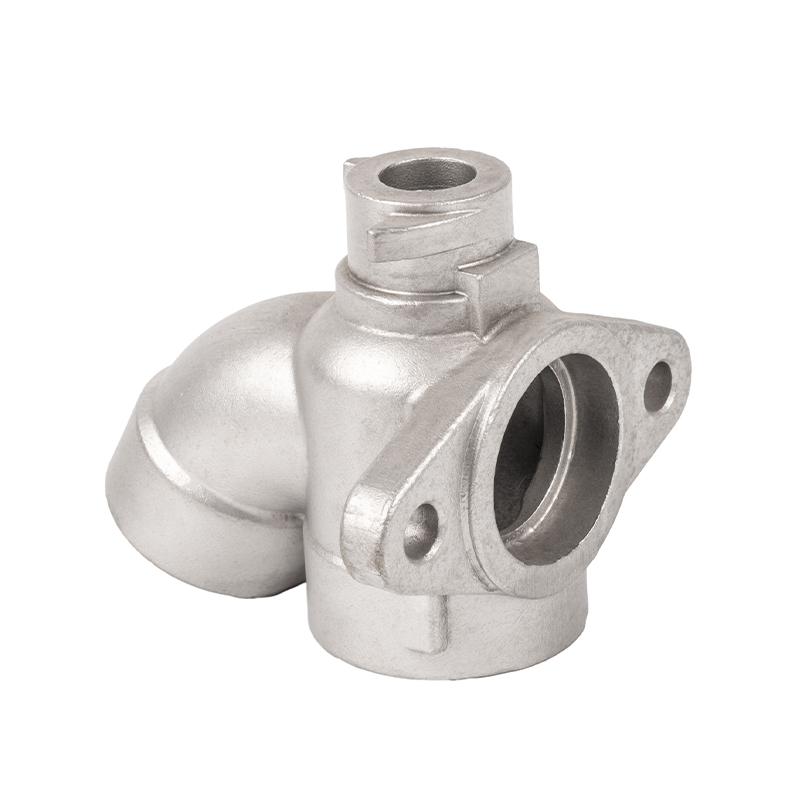
In the Stainless Steel Casting process, Porosity and Slag Inclusion represent two of the most critical quality challenges affecting structural integrity and corrosion resistance. For high-precision components like Stainless Steel Elbow Reducer Castings, these microscopic defects can lead to catastrophic failure during pressure testing or premature degradation in corrosive environments.
Root Causes of Porosity in Stainless Steel Castings
Porosity manifests as small voids or holes within the metal matrix. Depending on the formation mechanism, these are categorized into gas holes, reactive pores, and precipitation pores.
Gas Absorption During Melting
During the melting stage, molten stainless steel is highly susceptible to absorbing hydrogen (H) and nitrogen (N) from the atmosphere. As the temperature drops after pouring, the solubility of these gases in solid stainless steel decreases sharply. If the cooling rate is too high, the precipitated gases are trapped, forming Micro-porosity throughout the Stainless Steel Castings.
Shell Mold Outgassing
In Investment Casting, if the ceramic shell contains residual moisture or organic binders due to insufficient firing, a large volume of gas is generated the moment the molten steel enters. If the shell lacks sufficient Permeability, this gas is forced into the metal stream rather than escaping through the mold walls.
Incomplete Deoxidation
Stainless steel contains high levels of chromium, which oxidizes easily. If Deoxidizer agents are insufficient, oxygen (O) reacts with carbon (C) in the steel to produce carbon monoxide (CO) bubbles. This Reactive Porosity is frequently found in sections of Elbow Reducer castings where the wall thickness changes abruptly, affecting the flow dynamics.
Mechanisms of Slag Inclusion Formation
Slag Inclusion refers to non-metallic impurities trapped inside the casting. These inclusions disrupt the continuity of the stainless steel matrix and act as stress concentrators where cracks originate.
Oxidation Products from Melting
During induction furnace melting, alloying elements react with air to form oxides such as Al2O3 or SiO2. If these oxides are not given enough time to float to the surface slag layer before pouring, they are carried into the mold cavity and become embedded in the final product.
Gating System Turbulence
An improperly designed Gating System can cause the molten metal to become turbulent. In complex geometries like Elbow Reducer Castings, sudden changes in flow velocity create vortices that suck surface slag into the metal stream. Once inside the mold, these impurities are difficult to remove.
Refractory Erosion
The high-temperature molten steel exerts significant erosive force on ladle linings and gating cups. If the refractory materials have low thermal strength, particles may flake off and enter the mold, resulting in Sand Inclusion or solid slag defects that weaken the casting.
Impact on Machining and Field Applications
Defects in stainless steel often remain hidden until the Machining or pressure testing phase. Subsurface Porosity revealed during turning or milling creates visible pits on sealing surfaces, leading to leaks. Furthermore, in fluid handling systems, Slag Inclusion sites are prone to electrochemical corrosion because of chemical inhomogeneities, making them the weakest link in a piping network.
Utilizing X-ray Testing (RT) and Dye Penetrant Inspection (PT) allows manufacturers to identify and reject Stainless Steel Castings with internal defects, ensuring that every component meets ASTM A351 or EN 10213 standards for industrial safety.
RELATED PRODUCTS
Do you have questions? Do not wait, Let's talk!
Contact Us
- Tel: +86-13967888380 / +86-13685858588
- +86-0574-86183698 / +86-0574-86183685
- Fax: +86-0574-86183696
- Email: [email protected]
[email protected] - Add: No. 68, Jiangbin Branch Road, Beilun Xiaogang Joint Development Zone, Ningbo, Zhejiang, China.
QR Code
Copyright © Ningbo Etdz Andrew Precision Cast Co., Ltd. All rights reserved
 Custom Metal Precision Casting Parts Manufacturers
