

 English
 Español
 русский
 中文简体
中文简体

Home / News / Industry News / Agricultural Machinery Casting: Durable Precision Parts for Modern Farming
Industry News
Agricultural Machinery Casting: Durable Precision Parts for Modern Farming
Ask any farmer what matters most in a machine, and the answer is usually the same: it has to start in the morning and keep going through the season. Agricultural machinery casting is one of the main reasons modern equipment can meet that expectation. From engine components to irrigation pump bodies, cast metal parts carry the highest loads, absorb the worst impacts, and keep working in conditions that would defeat almost any other manufacturing method.
What Is Agricultural Machinery Casting?
Casting in agriculture means forming metal parts by pouring molten material into a mold that matches the required geometry. When the metal cools, it retains the mold's shape, producing a component that can then be cleaned, heat-treated, and machined to final tolerances.
The method is as old as metalworking itself, but modern agricultural machinery casting has moved far beyond rough iron. Precision casting processes now produce components with complex internal passages, thin walls, and tight dimensional tolerances, features that directly affect how efficiently a pump runs, how quietly a gearbox operates, and how long a linkage survives in dusty soil.
For a manufacturer, casting is attractive because it turns a component with complex contours into a single, continuous piece. That eliminates welds, reduces assembly time, and creates a part whose grain structure follows the shape of the casting, which means better strength in exactly the places where the part receives the heaviest loading.
Key Components Produced by Agricultural Machinery Casting
Every category of farm equipment depends on cast parts. Tractor builders use cast cylinder heads, transmission housings, brake brackets, and pedal arms. Harvesting machinery relies on cast gear housings, frames, and cutting-bar components that withstand nonstop impact. Tillage equipment, such as plows, harrows, and cultivators, uses cast points, coulter arms, and frame brackets that push through abrasive soil at high speed. Seeders and planters need dimensionally consistent cast brackets and metering housings so that every row gets the same seed depth and spacing.
| Application | Typical Components | Key Requirement |
|---|---|---|
| Tractors | Cylinder heads, housings, brackets | Strength and heat resistance |
| Harvesting machinery | Gear housings, frames, cutting components | Impact toughness and wear resistance |
| Tillage equipment | Coulter arms, plow points, frame brackets | Abrasion resistance |
| Seeders and planters | Metering housings, frame brackets | Dimensional accuracy |
| Irrigation systems | Pump casings, impellers, valve bodies | Pressure retention and corrosion resistance |
| Sprayers and spreaders | Nozzle holders, fan housings, mounting arms | Corrosion resistance and light weight |
At our foundry, agricultural machinery castings are a natural part of the work we do. The same engineering disciplines that go into our pump and valve castings, including careful material selection, controlled solidification, and rigorous inspection, apply to every bracket and housing we ship for farming applications. If your project involves a cast component for farm equipment, that is exactly the kind of work we do every day.
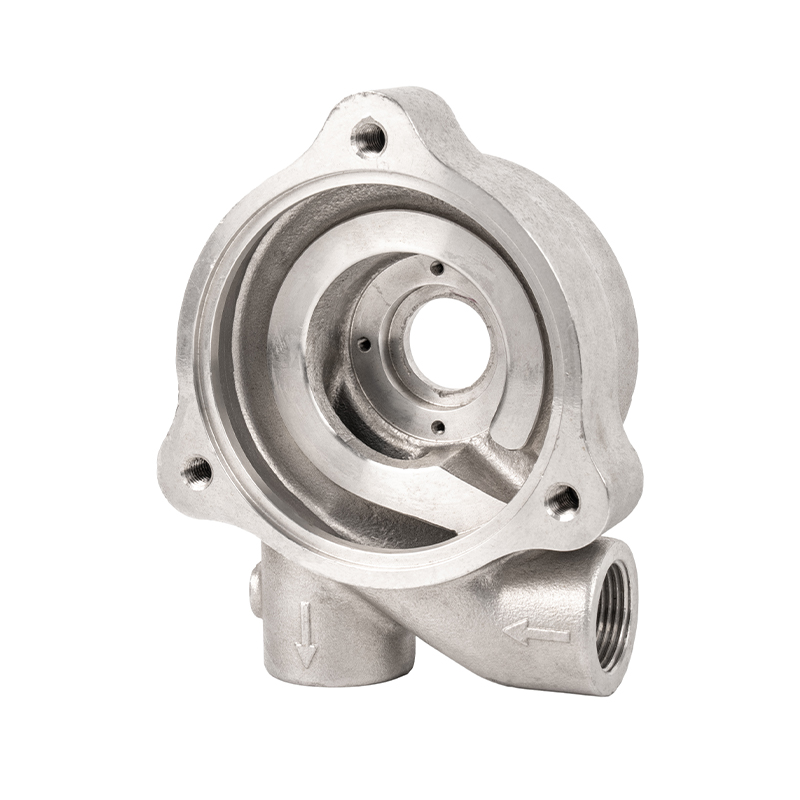
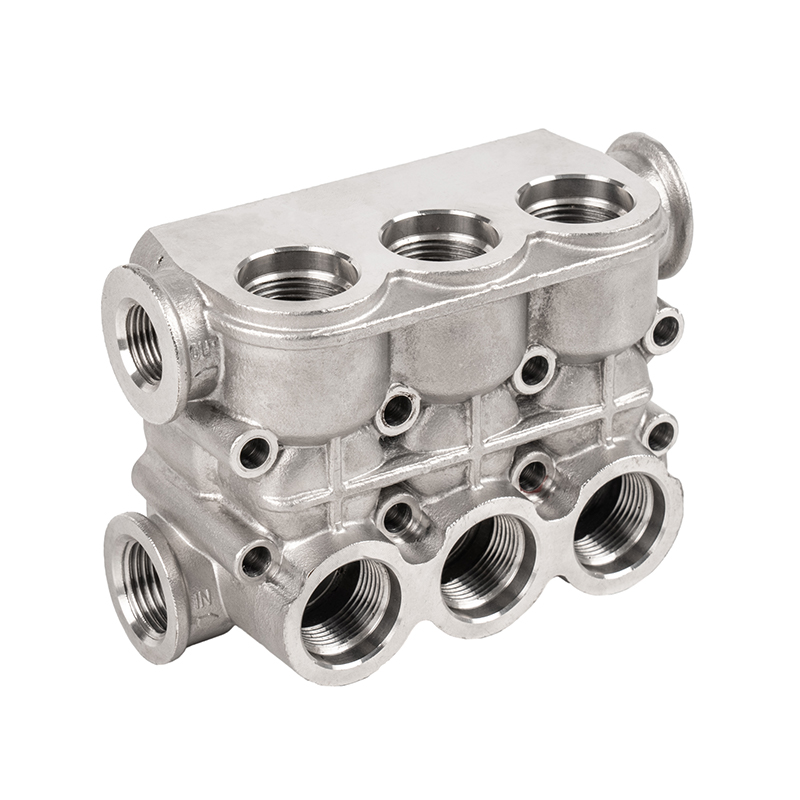
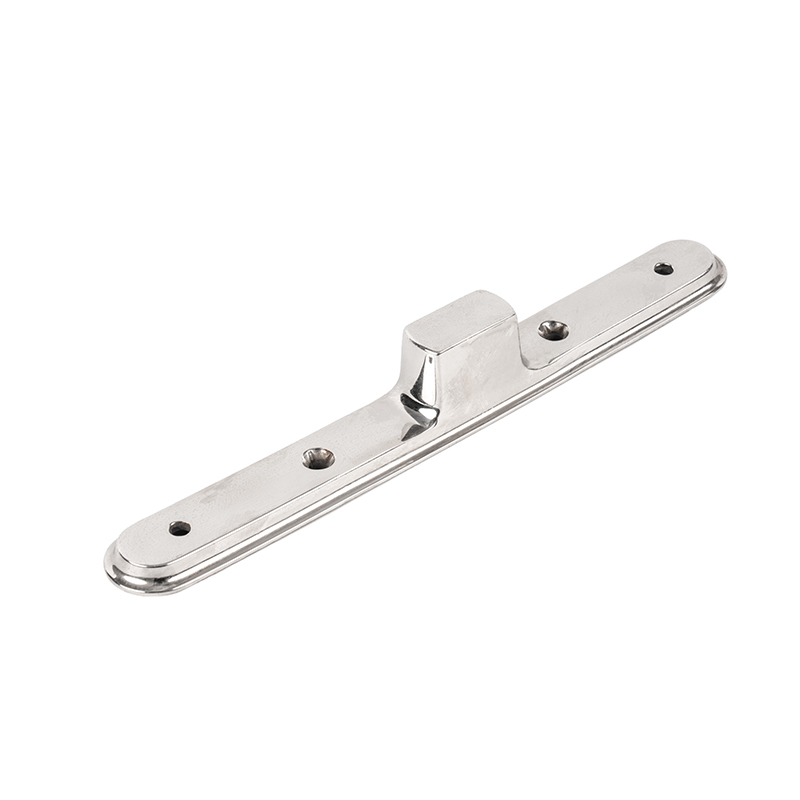
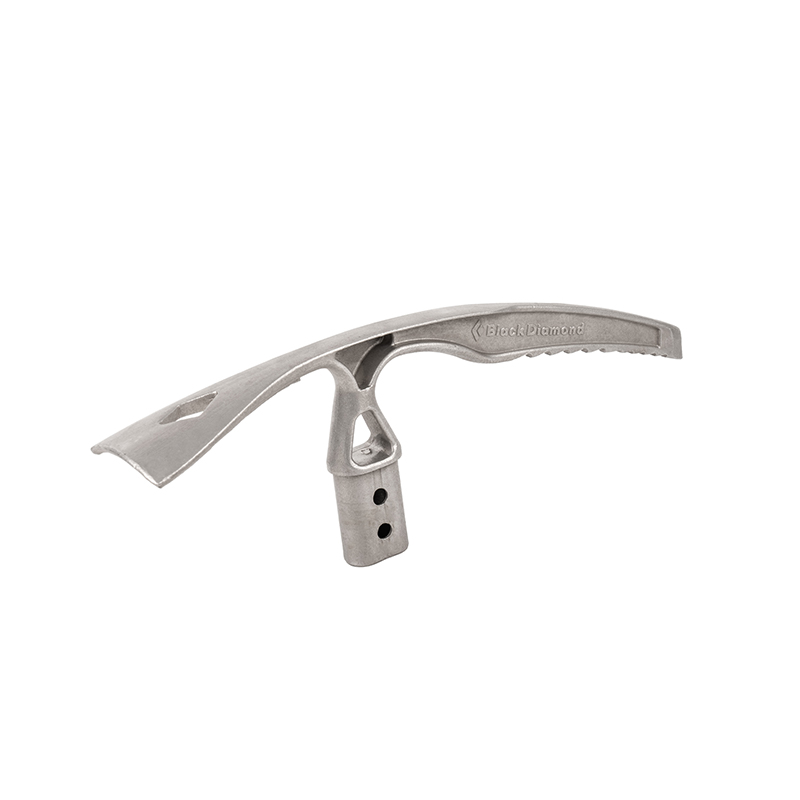 Stainless Steel Precision Agricultural Machinery Castings for Farm EquipmentThese cast components support farm machinery such as brackets and housings, produced with controlled solidification and rigorous inspection. Relevant for projects requiring durable, precise parts in agricultural equipment.View Product →
Castings for Irrigation and Fluid Handling
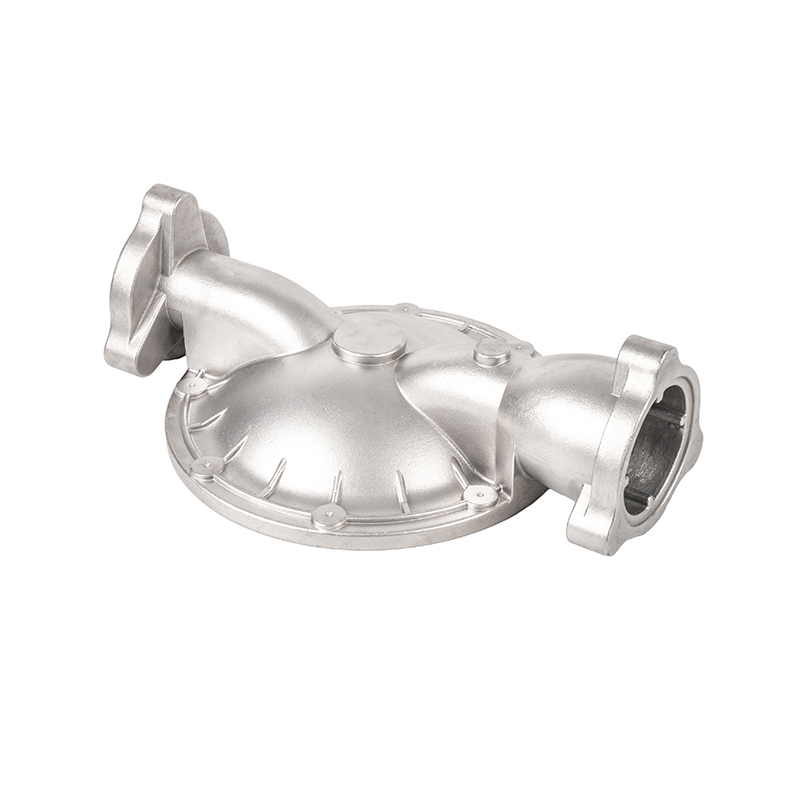
Water is the lifeblood of modern agriculture, and moving it efficiently requires cast components that can handle pressure, flow, and the occasional hard knock from debris. Centrifugal pump castings form the heart of most irrigation pumping stations; the casing must direct water smoothly while the impeller converts engine power into flow. Valve castings control the distribution of water across fields, holding pressure when closed and allowing full flow when open.
For these parts, precision matters more than simple strength. A slightly off-dimension impeller reduces efficiency for the life of the pump. A thin area in a valve body can become a leak under thermal cycling. That is why we treat irrigation castings with the same care as the most demanding industrial components, using controlled processes and dimensional verification on every batch. Centrifugal pump castings are a regular part of our production, and we know what it takes to keep them efficient and leak-free.
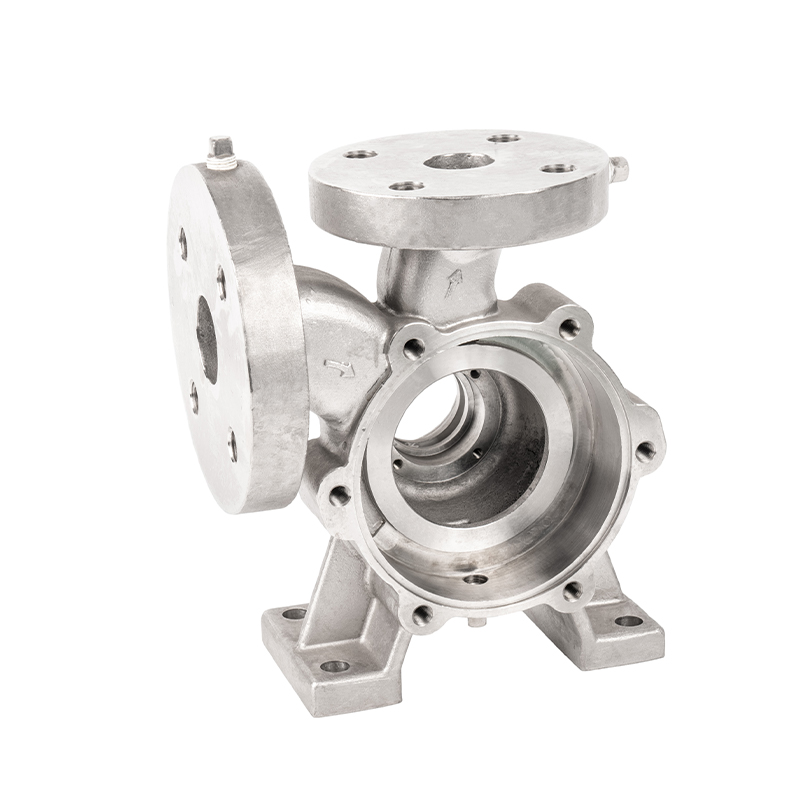
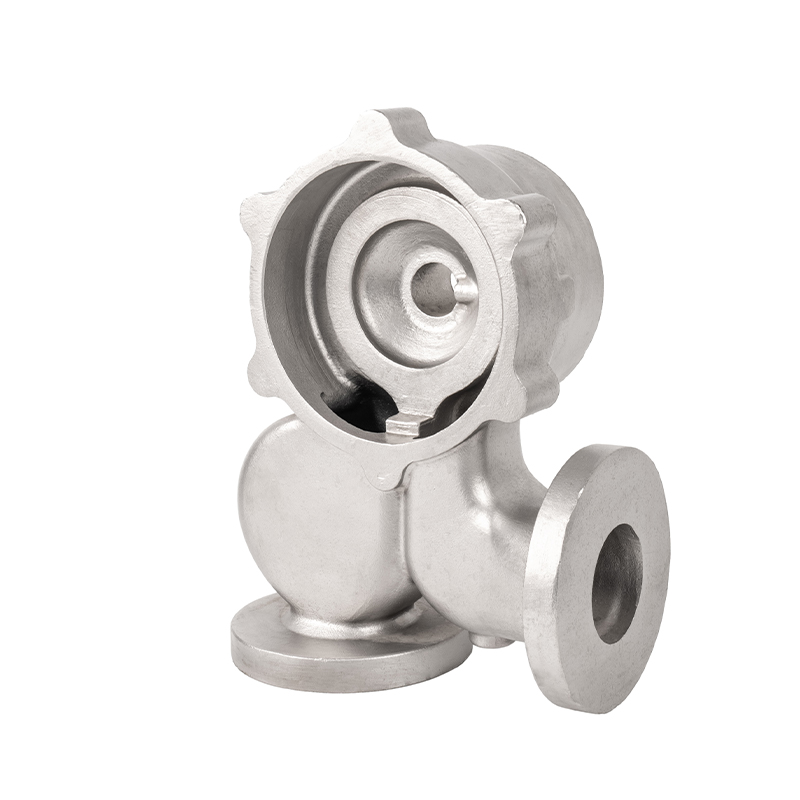 Stainless Steel Precision Centrifugal Pump Castings for Irrigation SystemsCentrifugal pump castings must deliver smooth water flow and dimensional accuracy to maintain efficiency and prevent leaks. This supplier emphasizes controlled processes and batch verification for reliable irrigation pump components.View Product →
Materials Used in Agricultural Castings
Choosing the right metal is half the battle in agricultural machinery casting. The material has to serve the mechanical load, resist the environment, and still be economical to cast and machine.
| Material | Key Properties | Typical Use |
|---|---|---|
| Gray cast iron | Good vibration damping and wear resistance | Housings, brackets, brake components |
| Ductile iron | High strength, toughness, and ductility | Hubs, yokes, crank arms |
| Carbon steel | Strong and weldable | Structural frames, brackets |
| Stainless steel | Excellent corrosion resistance | Sprayer parts, pump components |
| Aluminum | Light weight, good thermal conductivity | Covers, housings, fan components |
| Bronze and brass | Corrosion resistance and low friction | Valve trim, bushings, guides |
Most agricultural components settle into one of two camps: parts that need strength and toughness, where ductile iron or steel is the right answer, and parts that need corrosion resistance, where stainless steel or bronze carries the day. In many of our projects, the most valuable work we do is helping the customer choose a material that meets the real service conditions without paying for capabilities they will never use.
Choosing the Right Casting Process
The casting process should follow the part, not the other way around. Large, simple structural parts are often most economical as sand castings, where pattern cost is low and the process can handle big sections. When a component has complex undercuts, thin walls, or tight tolerances, such as impellers, valve bodies, or intricate brackets, precision investment casting is usually the better choice. It produces a cleaner surface and holds dimensions that reduce machining time.
For agricultural machinery casting, we often recommend investment casting when the customer wants repeatable quality across thousands of parts. The trade-offs are real, and we have written a detailed comparison of investment casting and sand casting for high-performance components if you want to dig deeper into the decision.
Shell molding, centrifugal casting, and die casting also have their place, particularly for cylindrical parts and high-volume non-ferrous components. What matters is that the process choice is made with part geometry, quantity, material, and cost per piece in mind.
Designing Cast Agricultural Parts for Real Field Conditions
Good design makes the difference between a casting that performs for a decade and one that fails in the first season. Wall thickness should be as uniform as possible to avoid shrinkage defects. Generous radii at internal corners reduce stress concentrations where shock loads hit. Draft angles help the pattern release cleanly and keep the surface sound.
Equally important is thinking about the environment. Components that sit in contact with soil face abrasion, so they need either a harder material or a wear allowance on the drawing. Parts exposed to fertilizers and chemicals, especially the ammonium-based compounds common in modern agriculture, should be specified in stainless steel or protected with a suitable coating. Our experience is that customers who share their service conditions openly get a casting design that fits the real needs.
How to Choose a Casting Partner for Agricultural Components
Quality control in agricultural machinery casting is not only about finding defects; it is about preventing them. Consistency across long production runs starts with controlled melting, stable molding parameters, and inspection at the right points. Dimensional verification, surface inspection, and, where required, non-destructive testing all play a part.
When you evaluate a casting partner, focus on three things:
- Process experience. A foundry that has cast pump and valve components understands pressure tightness, sealing surfaces, and internal flow passages, skills that transfer directly to agricultural equipment.
- Design collaboration. Look for a partner willing to discuss material selection and design for manufacturability at the quotation stage, not after the tooling is cut.
- Consistency. Confirm they can hold tolerances reliably over long production runs, with inspection data to back it up.
If you are evaluating a casting foundry for agricultural machinery components, we invite you to review our product range and see the kinds of parts we already produce. We apply the same discipline to agricultural machinery castings that we use for pump, valve, and machinery components. Whether your project is a simple bracket or a complex impeller, we are happy to talk through the material and process options.
RELATED PRODUCTS

Do you have questions? Do not wait, Let's talk!
Contact Us
- Tel: +86-13967888380 / +86-13685858588
- +86-0574-86183698 / +86-0574-86183685
- Fax: +86-0574-86183696
- Email: [email protected]
[email protected] - Add: No. 68, Jiangbin Branch Road, Beilun Xiaogang Joint Development Zone, Ningbo, Zhejiang, China.
QR Code
Copyright © Ningbo Etdz Andrew Precision Cast Co., Ltd. All rights reserved
 Custom Metal Precision Casting Parts Manufacturers
