

 English
 Español
 русский
 中文简体
中文简体

Home / News / Industry News / Vacuum Casting Advantages: How It Improves Metal Precision Casting Quality
Industry News
Vacuum Casting Advantages: How It Improves Metal Precision Casting Quality
Vacuum casting advantages are easiest to appreciate when a component cannot afford to fail. In precision metal manufacturing, vacuum casting describes a family of processes in which melting and pouring happen inside an evacuated chamber. By removing air before the molten alloy meets the mold, we prevent many of the defects that commonly cause leaks, cracks, and premature wear. At Ningbo Etdz Andrew Precision Cast Co., Ltd., we use vacuum-assisted approaches for components that must remain reliable under pressure, heat, and continuous operation. This article explains what vacuum casting is, why it produces better castings, and where the advantages matter most. We also look at when the process is worth its cost, because vacuum casting is not the right answer for every part.
What Is Vacuum Casting for Metal Components?
In the context of metal casting, vacuum casting is usually combined with investment casting. A wax or printed pattern is coated with a ceramic shell, and the shell is fired to create a precise mold. That mold is placed inside a vacuum chamber, where the alloy is melted and poured without exposure to the atmosphere. The liquid metal therefore travels through a clean, low-pressure environment, which changes how it fills the mold and how it solidifies.
It is worth distinguishing this process from plastic vacuum casting, which uses silicone molds and liquid resins and is mainly used for prototypes and visual models. Metal vacuum casting is chosen for a different reason: metallurgical quality. The process is not about making a quick copy; it is about giving a structural component the best possible internal soundness. For engineered parts such as pump bodies, valve bodies, and impellers, that difference is decisive.
The basic sequence in vacuum investment casting follows a familiar set of steps:
- A ceramic shell mold is produced around the part geometry.
- The mold is loaded into the vacuum chamber.
- The alloy is melted under vacuum.
- The mold is poured under vacuum.
- The casting cools under controlled conditions before removal and finishing.
The Core Vacuum Casting Advantages
Every casting process has strengths, but vacuum casting advantages tend to appear exactly where other processes struggle: internal soundness, surface quality, and consistency. The table below summarizes the main benefits and the reasons behind them.
| Advantage | What happens in the process | Benefit to the component |
|---|---|---|
| Reduced gas porosity | Dissolved gases are removed and air cannot re-enter | Pressure-tight walls with fewer leaks |
| Better mold filling | The evacuated cavity lets metal flow into thin sections | Thin walls, sharp corners, and fine detail |
| Cleaner alloy chemistry | No oxidation during melting and pouring | Suitable for stainless and nickel-based alloys |
| Denser structure | Solidification without trapped gas | Higher strength and longer fatigue life |
| Less finishing work | Fewer surface and subsurface defects | Lower machining cost and faster delivery |
For a pressure-containing component, gas porosity is one of the most common reasons for rejection. A tiny subsurface bubble can open up during machining and ruin an otherwise good part. Vacuum casting removes that risk at the source, so the foundry does not discover the problem after hours of processing.
Internal soundness is not a cosmetic issue. In a rotating impeller or a sealing valve body, porosity concentrates stress, encourages corrosion, and shortens fatigue life. Vacuum casting produces a denser, more uniform microstructure, and that microstructure is what the engineer relies on when the part goes into service.
Where Vacuum Casting Advantages Deliver the Most Value
The clearest value appears in fluid handling, where a casting must contain fluid, resist corrosion, and keep its shape under dynamic loads. A porous runner impeller, for example, can corrode unevenly and create vibration when the pump is running. A dense, vacuum-cast runner impeller keeps the hydraulic profile stable and extends the service life of the entire pump.
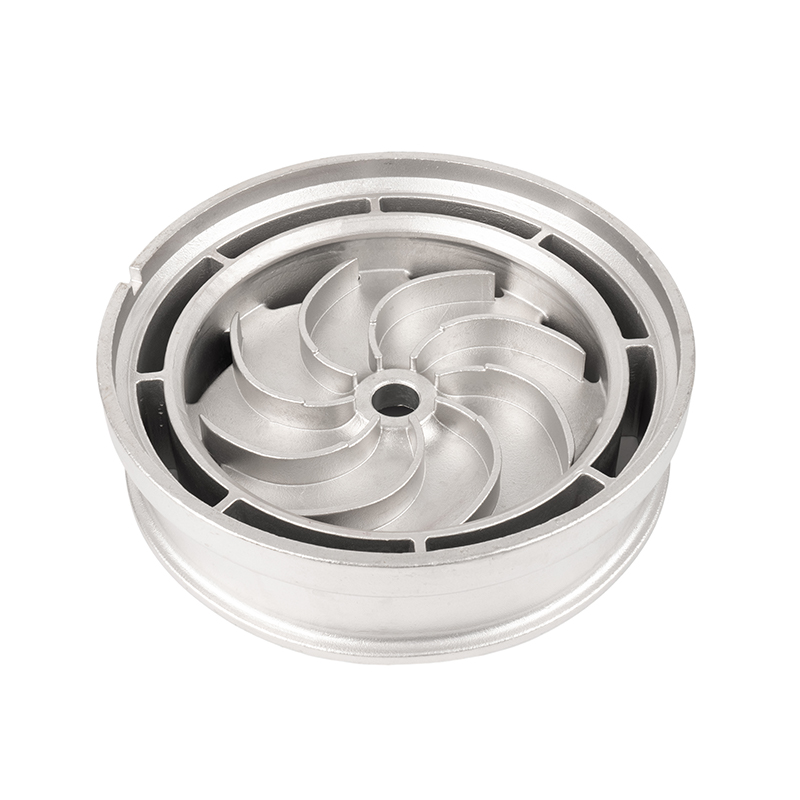 Stainless Steel Precision Runner Impeller Castings for Durable Pump PerformanceThis runner impeller casting is engineered for fluid handling applications where porosity can cause corrosion and vibration. Vacuum casting ensures a dense structure, helping maintain a stable hydraulic profile and extend pump service life.View Product →
Valve components face a similar challenge. A ball valve casting that leaks through microporosity is a field failure waiting to happen, particularly in systems carrying aggressive or high-pressure media. Vacuum casting gives the dense structure that sealing surfaces need, and it helps the machining operation hold a reliable surface finish.
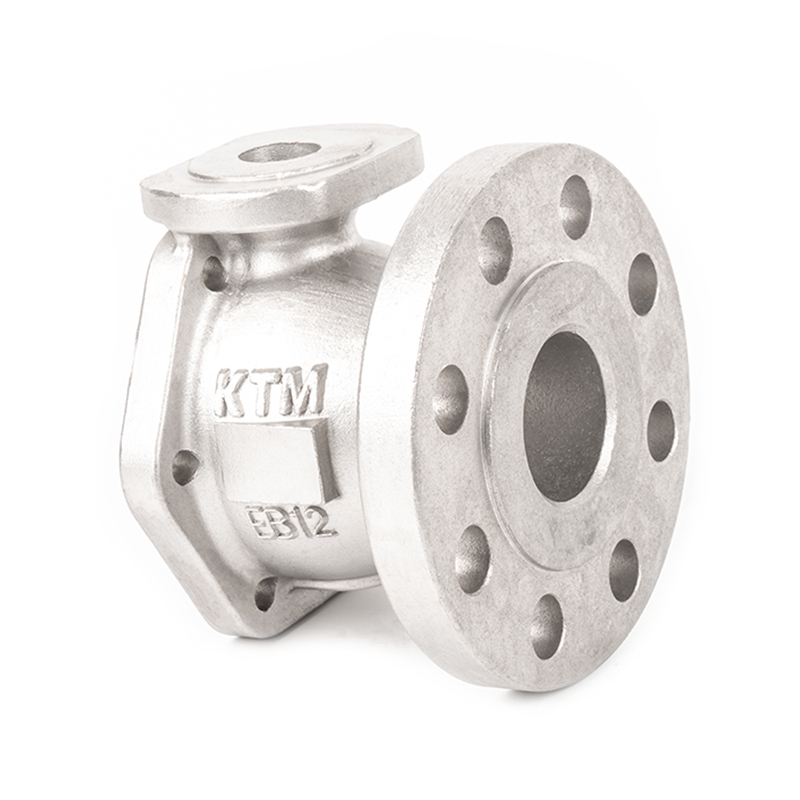 Stainless Steel Precision Ball Valve Castings for Reliable SealingDesigned for aggressive or high-pressure media, this ball valve casting benefits from vacuum casting to eliminate microporosity. The dense structure supports dependable sealing surfaces and consistent machining finish, reducing the risk of field failures.View Product →
Water pump castings are another typical application. From centrifugal pumps to mixed-flow and axial-flow designs, the impeller and casing must withstand cavitation, pressure cycling, and sometimes abrasive media. When a customer asks us to guarantee pressure tightness and batch-to-batch consistency, vacuum casting is often the answer. The same applies to pump casings, where a leak that develops after months of service is far more expensive than a sound casting made from the start.
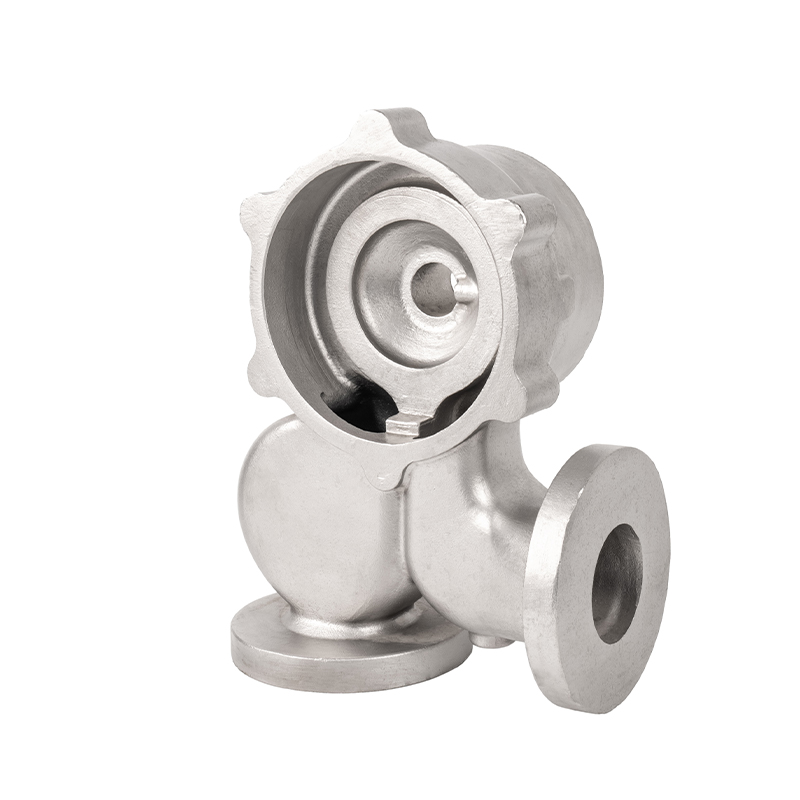 Stainless Steel Precision Centrifugal Pump Castings for Pressure TightnessFor centrifugal pump impellers and casings, this casting offers vacuum-induced density to withstand cavitation, pressure cycling, and abrasive media. It ensures batch-to-batch consistency and pressure tightness, addressing the high cost of future leaks.View Product →
The same logic applies to high-temperature automotive castings, pipe castings, and rail components. Wherever the service condition is severe and the cost of failure is high, this process pays for itself.
Vacuum Casting vs. Conventional Gravity Casting
To understand the advantage properly, it helps to place vacuum casting next to a conventional gravity pour in air. The difference is dramatic in terms of quality, although the extra process steps are modest.
| Criterion | Vacuum casting | Conventional casting in air |
|---|---|---|
| Gas porosity | Very low | Higher risk |
| Mechanical properties | Consistent and predictable | More variation |
| Alloy compatibility | Reactive alloys cast cleanly | Oxidation limits alloy choice |
| Mold filling | Excellent for thin sections | May need higher pouring temperature |
| Cost per part | Slightly higher | Lower |
| Best fit | High-integrity, low-to-mid volume precision parts | High-volume parts with looser requirements |
Notice that vacuum casting is not a replacement for every casting method. It is a targeted tool for components that must perform. When a drawing calls for pressure testing, radiographic inspection, or a demanding fatigue life, the process is usually worth its cost. It also matters for parts that undergo machining on critical sealing surfaces; a defect hidden just below the surface can turn a finished part into scrap.
Design and Sourcing Considerations
Vacuum casting is not necessary for every component, but a few clear signs suggest that it will be worthwhile.
- Pressure-containing surfaces or leak-tightness requirements
- Thin walls or complex internal passages
- Stainless, duplex, or nickel-based alloys that are sensitive to oxidation
- High cycle loads and fatigue-critical applications
- A history of porosity problems in conventionally cast parts
When choosing a casting partner, ask about experience with the specific alloy and part family. A foundry that has cast thousands of impellers knows where porosity tends to hide and how to adjust gating, vacuum level, and solidification conditions. For a broader comparison of process selection, our professional guide on investment casting versus sand casting explains when precision casting is the right choice.
You can review our capabilities through our product overview, or send us a drawing with your service requirements. Once the loading conditions, pressure rating, and quality targets are clear, the right process choice usually becomes obvious.
Vacuum casting advantages are not about adding complexity; they are about avoiding hidden problems. Reduced porosity, cleaner alloy chemistry, and consistent mechanical properties translate directly into fewer field failures, longer service life, and lower total ownership cost for the user. Whether the project involves runner impellers, ball valve castings, or centrifugal pump castings, the goal is the same: deliver a component that performs correctly on the first attempt and keeps performing for years. That is what vacuum casting gives us as a precision casting manufacturer.
RELATED PRODUCTS


Do you have questions? Do not wait, Let's talk!
Contact Us
- Tel: +86-13967888380 / +86-13685858588
- +86-0574-86183698 / +86-0574-86183685
- Fax: +86-0574-86183696
- Email: [email protected]
[email protected] - Add: No. 68, Jiangbin Branch Road, Beilun Xiaogang Joint Development Zone, Ningbo, Zhejiang, China.
QR Code
Copyright © Ningbo Etdz Andrew Precision Cast Co., Ltd. All rights reserved
 Custom Metal Precision Casting Parts Manufacturers
