

 English
 Español
 русский
 中文简体
中文简体

Home / News / Industry News / Benefits of Sand Casting: Cost, Flexibility, and Design Freedom Explained
Industry News
Benefits of Sand Casting: Cost, Flexibility, and Design Freedom Explained
Sand casting is the oldest metal shaping method still running in daily production, and it remains the most widely used casting process in the world. That longevity is not nostalgia. It comes down to a set of practical benefits that matter just as much today as they did a century ago, particularly for the pump, valve, impeller, and machinery parts we produce week after week.
Below we walk through what sand casting genuinely gives you, where it beats other processes, where it does not, and how to make the most of it on a real project.
What Actually Happens Inside a Sand Mold
The principle is straightforward. A pattern shaped like the finished component is packed into sand, the sand is compacted around it, and the pattern is withdrawn, leaving a cavity behind. Two mold halves are joined, cores are set in place to form internal passages, and molten metal is poured into the cavity. After the metal solidifies, the mold is broken away, the casting is cleaned, and it moves on to heat treatment, machining, and inspection.
That sequence is unglamorous, and it is exactly why the advantages below hold up. Nothing in the process depends on expensive hardened tooling or on a narrow window of part geometry.
The Core Benefits of Sand Casting
These are the reasons customers keep coming back to sand cast components, even when other processes are technically available.
Low Tooling Cost and Fast Pattern Making
Patterns can be made from wood, resin, or metal, and they cost a fraction of a machined steel die. For a new design, that difference is often the single largest number in the quotation. It also means you do not need to commit to enormous volumes to justify starting production.
Design Freedom for Complex and Hollow Shapes
Because the mold is destroyed after each pour, there is no need to design around a rigid die that must eject the part. Undercuts, deep pockets, internal channels, and varying wall thicknesses are all achievable. Complex internal geometry that would require multiple welded or machined pieces elsewhere can often be produced as one casting.
A Very Wide Choice of Metals and Part Sizes
Sand casting handles cast iron, carbon and low-alloy steel, stainless steel, aluminum, bronze, and brass. Size range is equally broad, from components weighing a few hundred grams to housings that need a crane to move. Few other processes span that range so comfortably.
Low-Cost, Low-Risk Design Changes
If a prototype reveals that a boss needs to move or a wall needs thickening, the pattern is modified rather than rebuilt from scratch. That flexibility shortens development cycles considerably and lowers the cost of getting a design right.
Production Runs That Scale Both Ways
Sand casting is economical for a single prototype and still sensible for thousands of pieces a year. You are not forced into a minimum order quantity that only makes sense at mass-production scale.
Sand Is Reusable
After shakeout, most of the molding sand is reclaimed, reconditioned, and returned to the line. This keeps consumable costs down and reduces the amount of material sent to waste.
Sand Casting Compared with Die Casting and Investment Casting
No process wins everywhere. The table below summarizes the trade-offs in the terms that usually decide a project.
| Factor | Sand Casting | Die Casting | Investment Casting |
|---|---|---|---|
| Tooling cost | Low | High | Medium to high |
| Tooling lead time | Days to weeks | Weeks to months | Weeks |
| Typical part size | Very small to very large | Mostly small to medium | Small to medium |
| Surface finish | Moderate, machining often needed | Good | Good to excellent |
| Best volume range | One-off to thousands | Tens of thousands and up | Hundreds to thousands |
| Design change flexibility | High | Low | Moderate |
Where These Benefits Pay Off in Real Parts
The advantages above stop being abstract the moment you look at actual components. In our own production, the strongest fit is fluid handling equipment, where housings and bodies are large, geometrically complicated, and rarely ordered in die-casting quantities.
Pump bodies are a good example. A centrifugal pump casing has curved internal flow channels, thick sections around the volute, and thin sections near the discharge, all in one piece. Sand casting forms that geometry in a single pour, and the tooling cost stays manageable across the different sizes a pump manufacturer may offer.
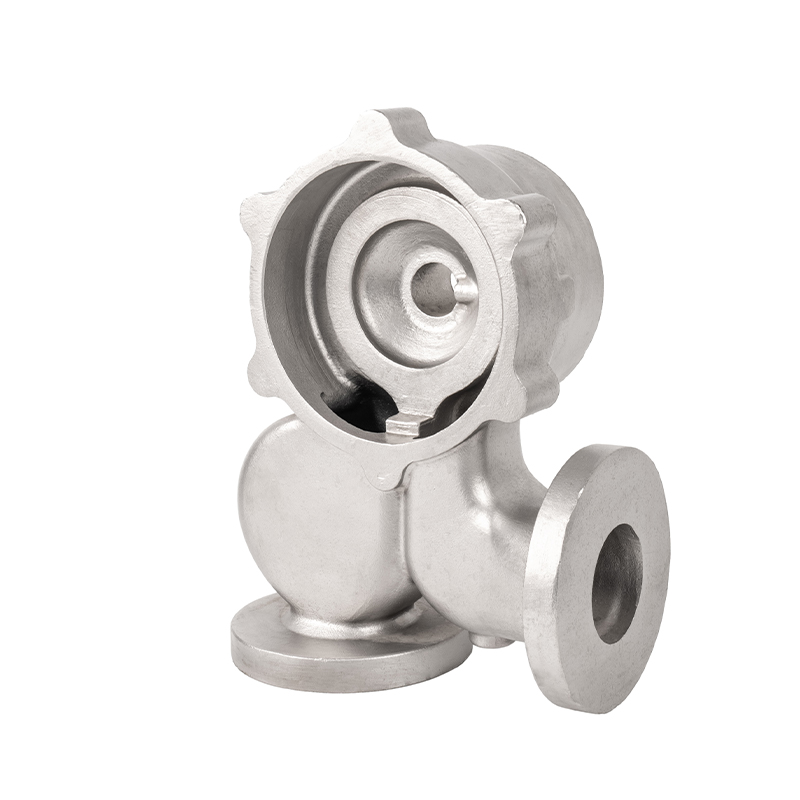 Custom Stainless Steel Centrifugal Pump CastingsOEM stainless steel castings for centrifugal pump casings, impellers, shafts, and bearings, suited to fluid transport across chemical, water, and energy industries.View Product →
Valve bodies follow the same logic. A ball valve body needs a precise internal bore, a sealing surface, and often a fairly heavy wall for pressure retention. Sand casting delivers the blank reliably, and subsequent machining brings the critical surfaces to tolerance.
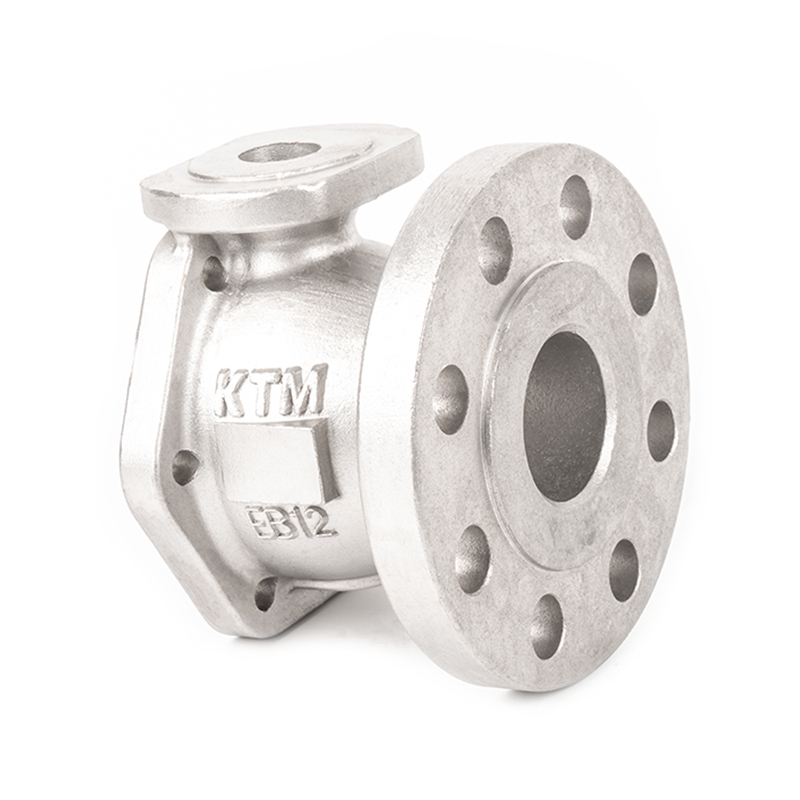 Custom Stainless Steel Ball Valve CastingsOEM ball valve castings in stainless, carbon, or alloy steel for fluid control, with flange, threaded, or welded connection options for industrial systems.View Product →
Impellers add a different challenge, because the blades are thin, curved, and must be balanced. Sand casting with well-designed cores produces the blade profile in one piece rather than welding blades onto a hub, which removes a whole class of weak points.
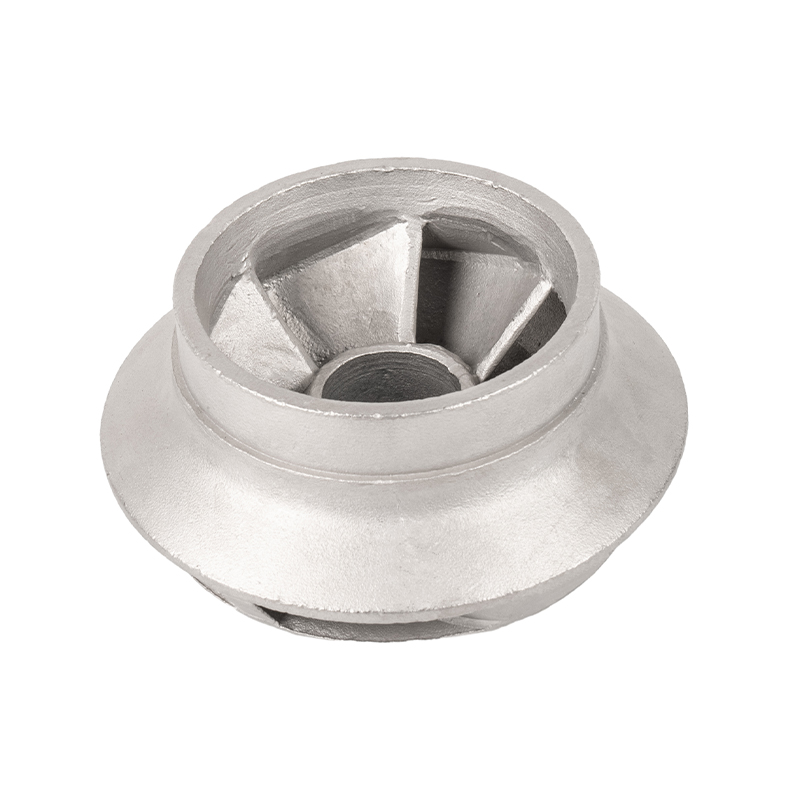 Custom Stainless Steel Precision Blade Impeller CastingsOEM blade impeller castings for pumps, turbines, and fans, made from corrosion-resistant alloys to support rotation, energy conversion, and long service life.View Product →
Beyond fluid equipment, the same reasoning applies to motor housings, cylinder heads, exhaust components, reducer housings, pipe fittings, and construction hardware. Whenever the shape is complex, the volume is moderate, or the part is large, sand casting tends to offer the best balance of cost and capability.
The Limits Are Real, and Worth Planning For
We would rather be honest about the constraints than pretend they do not exist. Knowing them at the design stage saves far more money than discovering them at the inspection stage.
- As-cast surface finish is rougher than die casting or investment casting, so machining allowances are usually built into the drawing.
- Dimensional tolerances are wider than precision processes, and critical features normally require machining after casting.
- Minimum wall thickness is limited, and very thin sections can cool too quickly and cause misruns.
- Porosity, sand inclusion, and shrinkage are inherent risks that must be controlled through gating design, pouring temperature, and process discipline.
- Labor content per part is higher than in fully automated die casting, which matters at very high volumes.
If your application can tolerate a machining operation and a sensible tolerance band, none of these points is disqualifying. If it cannot, it is worth examining precision casting alternatives before committing.
How to Capture the Full Benefit
Getting the most from sand casting is mostly a matter of preparation rather than luck. The quality of the molding sand itself sets the ceiling on everything that follows; grain size distribution, binder content, and moisture all influence mold strength and surface finish. We have covered that subject in more detail in our notes on how casting sand quality shapes the finished part.
Beyond the sand, three habits consistently produce better castings. First, agree on the machining allowance and datum points early, so the pattern is built with the finished part in mind. Second, keep wall thickness transitions gradual, since abrupt changes concentrate stress and promote shrinkage defects. Third, define the acceptance criteria up front, whether that means dimensional checks, pressure testing, or radiographic inspection, so both sides are measuring the same thing.
Questions Buyers Ask Us
Is sand casting only suitable for low volumes?
No. It is most competitive at low and medium volumes, but it remains viable for thousands of pieces per year, particularly for large components where die casting tooling would be impractical.
Is sand casting cheaper than investment casting?
For most medium and large parts, yes, largely because pattern costs are lower and the process tolerates simpler tooling. For small, highly detailed parts with tight tolerances, investment casting can be the better economic choice.
Which metals can be sand cast?
Cast iron, carbon steel, low-alloy and stainless steels, aluminum alloys, bronze, and brass are all common. The right choice depends on the operating environment, mechanical load, and any corrosion or temperature requirements.
How good will the surface be?
Expect a functional as-cast surface that is usually machined where it matters. Sealing faces, bores, and mating surfaces are normally finished after casting, which is standard practice rather than a shortcoming.
Sand casting has survived for so long because it solves a genuinely difficult problem: producing complex metal shapes in useful sizes, in sensible quantities, without forcing the buyer into tooling costs that only make sense at massive scale. That combination of design freedom, material range, and cost control is hard to beat, and it is why the process still sits at the center of industrial component manufacturing.
If you would like to see the kind of work this covers, you are welcome to browse the precision castings we produce, or send us a drawing and let us tell you honestly whether sand casting is the right route for it.
RELATED PRODUCTS
Do you have questions? Do not wait, Let's talk!
Contact Us
- Tel: +86-13967888380 / +86-13685858588
- +86-0574-86183698 / +86-0574-86183685
- Fax: +86-0574-86183696
- Email: [email protected]
[email protected] - Add: No. 68, Jiangbin Branch Road, Beilun Xiaogang Joint Development Zone, Ningbo, Zhejiang, China.
QR Code
Copyright © Ningbo Etdz Andrew Precision Cast Co., Ltd. All rights reserved
 Custom Metal Precision Casting Parts Manufacturers
