

 English
 Español
 русский
 中文简体


Home / News / Industry News / Centrifugal Pump Castings: How Precision Foundry Affects Pump Performance
Industry News
Centrifugal Pump Castings: How Precision Foundry Affects Pump Performance
Centrifugal Pumps Call for Dependable Castings
Centrifugal pumps are everywhere. You will find them in municipal water stations, chemical plants, food processing lines, and aboard ships. Their job is simple: keep fluid moving. The way they do it, however, relies on a precisely balanced set of rotating and stationary parts. As a precision casting foundry with extensive experience in pump components, we have seen how small casting variations can make the difference between a pump that runs for decades and one that struggles after a few months.
When engineers talk about a pump's hydraulic performance, the casting quality is often assumed rather than questioned. But the casing, the impeller, and the internal flow passages are truly the heart of the machine. In this guide, we look at how centrifugal pumps work, which castings matter most, and what you should consider when specifying pump components.
How Does a Centrifugal Pump Work?
The working principle of a centrifugal pump is elegant. An external driver, such as an electric motor, rotates a shaft connected to an impeller. The impeller sits inside a spiral-shaped casing called the volute. As the impeller spins, liquid enters through an inlet at the center of the impeller, also known as the eye. The rotating blades accelerate the liquid outward, imparting velocity. The volute then gradually expands, causing the fluid to slow down and its pressure to rise.
This energy conversion step is highly sensitive to geometry. The curvature of the impeller blades, the width of the passages, and the shape of the volute all influence how much head the pump can achieve and how much power it consumes. Even a modest casting defect can disturb the flow pattern, lower efficiency, and create vibration. For that reason, reliable pumps start with reliable castings.
The Cast Parts That Make a Pump Work
A single-stage centrifugal pump consists of a casing, an impeller, wear rings, and a cover. Each of these components is typically produced by casting. The casing collects the flow and converts velocity into pressure. The impeller adds energy to the fluid. Wear rings prevent internal recirculation between the casing and the impeller, which would otherwise reduce efficiency.
Impellers are available in a range of hydraulic designs. Closed impellers have shrouds on both sides and are efficient for clean fluids. Semi-open impellers have a single shroud and are more forgiving with fibrous particles. Open impellers are used for slurries and solids. The casting process must faithfully reproduce the blade profile, because even a slight deviation in thickness or angle leads to an unbalanced rotor and premature bearing failure.
At our foundry, we produce impeller castings in a variety of materials, from CF8M stainless steel to duplex grades, depending on the operating environment. The choice of material affects not just corrosion resistance, but also the casting's ability to hold tight tolerances during solidification.
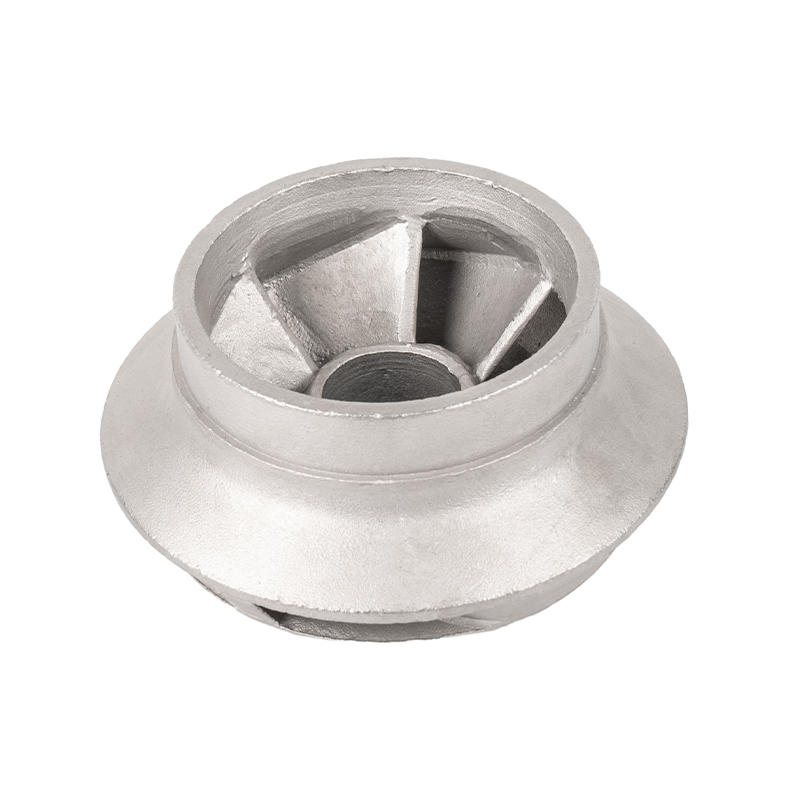 Precision Blade Impeller Castings for Fluid MachineryThese stainless steel impeller castings are designed for radial, axial, or mixed flow pumps. Their corrosion-resistant alloys ensure reliable performance in demanding applications like chemical and energy sectors.View Product →
Centrifugal Pump Types Across Industries
Centrifugal pumps are not one-size-fits-all. Designers classify them by the direction of flow through the impeller and by their specific speed. The three main families are radial flow, axial flow, and mixed flow pumps. Radial flow pumps generate high pressure at moderate flow rates, which makes them suitable for boiler feed and high-rise water supply. Axial flow pumps move huge volumes at low pressure, often used for storm water and irrigation. Mixed flow pumps combine both characteristics, handling medium heads and flows.
| Pump Type | Flow Direction | Typical Applications |
|---|---|---|
| Radial | Outward from impeller | Boiler feed, high-pressure supply |
| Axial | Along the shaft axis | Flood control, irrigation |
| Mixed | Diagonal outward | Cooling water, municipal boosting |
Selecting the right pump type is only half the battle. The material of the casing and impeller must match the fluid being pumped. Marine pumps, for example, are frequently made of bronze or CF3M stainless to resist saltwater corrosion. In food and pharmaceutical processing, cast parts may need to be certified for the product contact surface and able to withstand daily cleaning with aggressive chemicals. Our experience in casting centrifugal pump components for these sectors has taught us that material and casting process must be chosen together.
 Custom Stainless Steel Centrifugal Pump CastingsThis product line covers pump casings and impellers made from 304, 316, or duplex stainless steel, tailored for efficient fluid handling and long service life in various industries.View Product →
Casting Quality: What Really Affects Performance
The performance and life of a centrifugal pump are tied directly to the soundness of its castings. Internal defects such as porosity, shrinkage, and inclusions act as stress raisers. Under cyclic hydraulic loads, these defects can grow into cracks, causing leaks or catastrophic failure. Surface roughness inside the flow passages is another hidden factor. A rough surface increases friction, reduces pump efficiency, and may trigger cavitation in high-shear zones.
Precision casting techniques, such as investment casting and advanced sand casting, are essential for producing pump parts with smooth internal channels and dimensional accuracy. This is where a specialist foundry adds value. For water pump castings, we use tooling and process controls that minimize distortion and maintain wall thickness consistency. The result is a pump that performs close to the hydraulic design curve and requires less energy over its life.
To fully appreciate how a pump casting is created, you can explore our overview of the precision casting process for water pump castings.
When evaluating a casting supplier, look beyond the material certificate. Ask about their quality checks, their control of the melting and pouring stages, and how they handle heat treatment and repair. At our facility, we combine well-documented procedures with practical inspection experience, which is why pump manufacturers trust us for critical parts.
When you next review a pump casting supply, consider these points:
- Confirm the alloy grade and heat treatment match the pumped fluid.
- Ask for a full dimensional report on critical mounting surfaces.
- Review the internal cleanliness and surface finish with non-destructive testing.
- Remember that a small investment in casting quality prevents long-term operational costs.
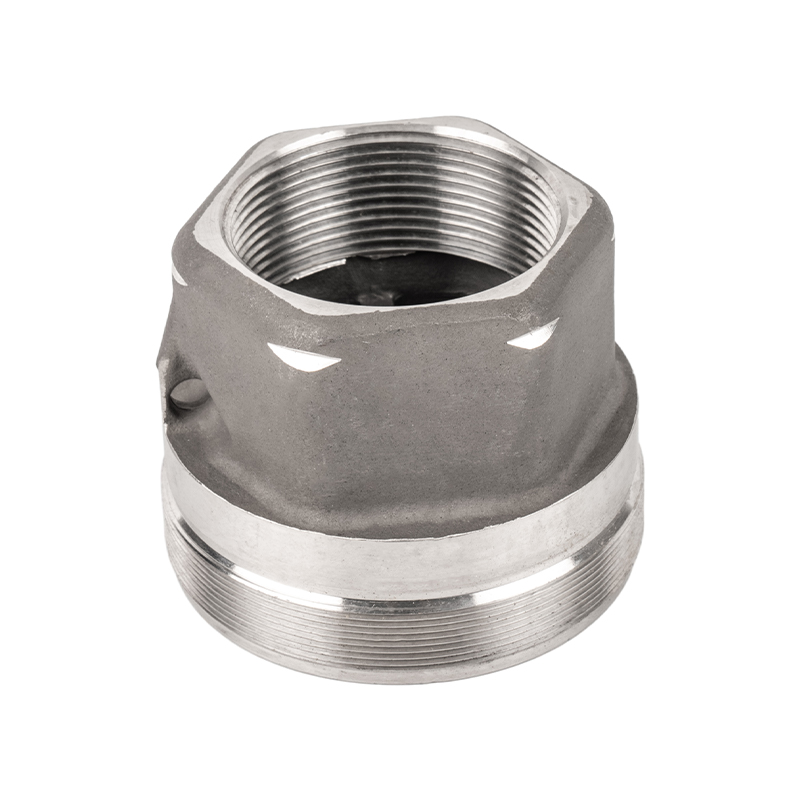 Axial Flow Pump Castings for High-Volume ApplicationsThese custom castings for axial flow pumps are built with corrosion-resistant materials, ideal for water supply, drainage, and marine systems needing large flow rates and reliable operation.View Product →
Common Failure Modes and How Castings Help
Cavitation is a leading cause of impeller damage in centrifugal pumps. When pressure drops below the vapor pressure of the liquid, bubbles form and then collapse violently, producing shock waves that chip away at metal surfaces. A casting with a smooth surface finish and a tough, fine-grained microstructure can resist cavitation erosion better than a rough or porous part. We often recommend high-nickel stainless steels or other cavitation-resistant alloys for impellers in demanding services.
Corrosion is another frequent enemy. Chlorides, acids, or even brackish water can attack the pump casing from the inside, especially at stagnant locations. Castings with micro-porosity are particularly vulnerable because corrosive fluids can wick into the pores and cause localized pitting. By controlling solidification and using appropriate heat treatments, we reduce the risk of such defects and help pump makers deliver a longer-lasting product.
Regular maintenance, such as inspecting the impeller edges and checking the wear ring clearance, can extend pump life. However, the foundation for reliability is the quality of the initial castings. A little extra attention at the foundry pays back with years of trouble-free operation.
Closing Thoughts from a Casting Manufacturer
As a company that has been casting intricate parts for fluid handling equipment, we have a clear view of what makes centrifugal pumps successful. It is not just the motor or the seals; it is the cast housings and impellers that meet the challenge of pressure, corrosion, and wear. A well-designed pump casting can reduce energy costs, minimize downtime, and prevent environmental incidents.
Whether you are designing a new pump or sourcing replacement parts, take the time to evaluate the casting partner. Look for a foundry that has the right alloy experience, the process discipline, and a genuine interest in your application. That is the kind of partnership that leads to pumps that truly perform.
RELATED PRODUCTS
Do you have questions? Do not wait, Let's talk!
Contact Us
- Tel: +86-13967888380 / +86-13685858588
- +86-0574-86183698 / +86-0574-86183685
- Fax: +86-0574-86183696
- Email: [email protected]
[email protected] - Add: No. 68, Jiangbin Branch Road, Beilun Xiaogang Joint Development Zone, Ningbo, Zhejiang, China.
QR Code
Copyright © Ningbo Etdz Andrew Precision Cast Co., Ltd. All rights reserved
 Custom Metal Precision Casting Parts Manufacturers
