

 English
 Español
 русский
 中文简体


Home / News / Industry News / What Is a Centrifugal Pump? A Clear Guide to How It Works and Where It Is Used
Industry News
What Is a Centrifugal Pump? A Clear Guide to How It Works and Where It Is Used
A centrifugal pump is one of those machines that seems simple until you need it to perform well. At its core, it uses a rotating impeller to give a liquid velocity, then lets the casing turn that velocity into pressure. That basic idea explains both its wide popularity and its limits.
What Is a Centrifugal Pump?
A centrifugal pump is a rotodynamic pump that moves liquid by spinning it. A motor turns a shaft, the shaft turns an impeller, and the impeller flings fluid outward from its center. The casing guides the fast-moving liquid into the discharge and converts much of its velocity into pressure.
Unlike a positive displacement pump, it does not trap a fixed volume and push it along. Its flow depends on the system it is connected to: change the pipe resistance, and the operating point on the pump curve moves. This is why the same pump can behave very differently in two installations.
Most standard centrifugal pumps are not self-priming. They need liquid in the suction line and casing before startup, unless they are specifically designed as self-priming models. Running dry can damage seals and other close-clearance parts.
How a Centrifugal Pump Works
The basic flow path is easy to follow:
- Liquid enters the suction inlet and moves toward the eye of the impeller.
- The rotating impeller accelerates the liquid outward through its passages.
- The volute or diffuser slows the liquid and converts velocity into pressure.
- The liquid leaves through the discharge outlet and travels into the system.
The impeller is the heart of the machine. Its diameter, speed, blade shape, and internal passage geometry all shape the pump curve. A larger impeller or higher speed usually increases head, but it also changes power demand and suction behavior.
Suction conditions matter just as much. If pressure at the impeller eye falls below the liquid's vapor pressure, cavitation can begin. That is why NPSH margin, pipe layout, and liquid temperature deserve attention early in the design.
Main Parts of a Centrifugal Pump
Most centrifugal pumps share a familiar set of components:
- Impeller: the rotating element with blades or passages that adds energy to the liquid.
- Casing or volute: the chamber that collects the liquid and helps convert velocity into pressure.
- Shaft and bearings: the shaft transmits rotation, while the bearings support it with minimal friction.
- Shaft seal: controls leakage where the shaft passes through the casing.
- Suction and discharge connections: the inlet and outlet paths that tie the pump into the piping system.
- Wear rings and close-clearance parts: help maintain internal clearances and hydraulic efficiency.
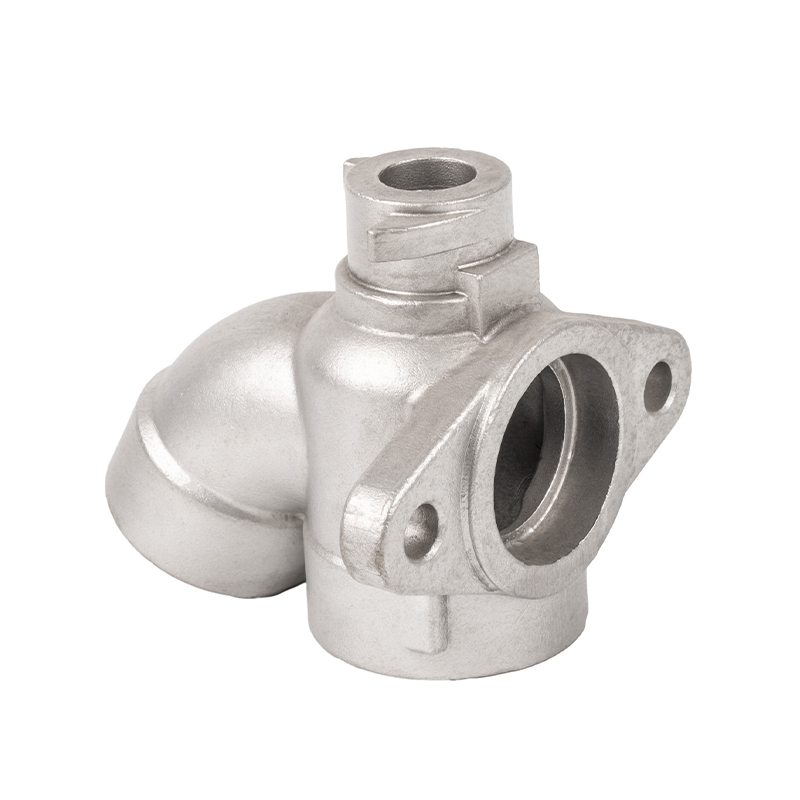
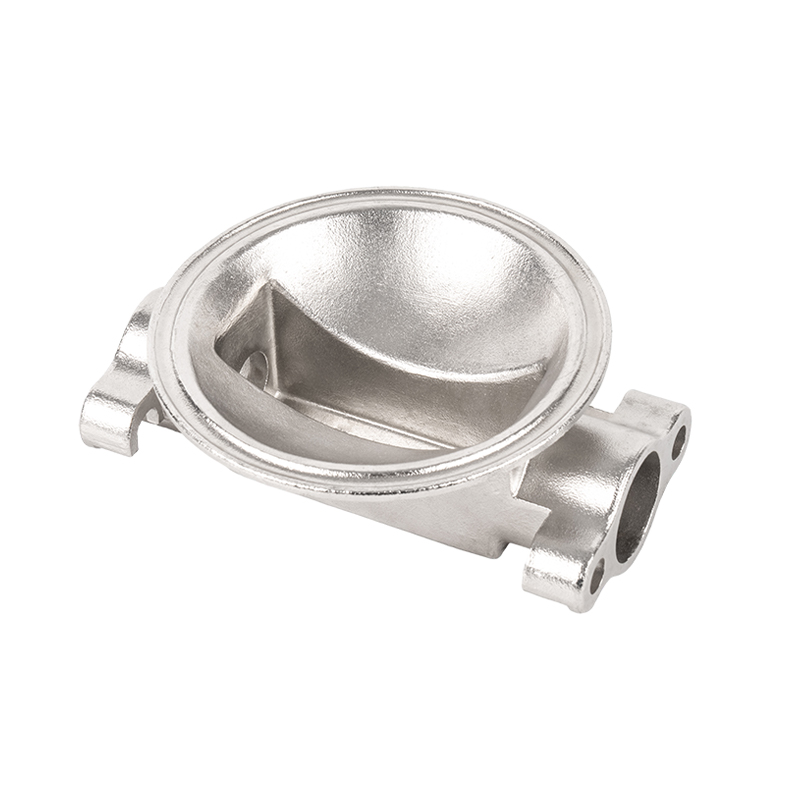
From a foundry perspective, the casing and impeller are more than shapes on a drawing. They set the internal flow passages, wall thickness, flange faces, and sealing surfaces that influence efficiency, strength, and service life.
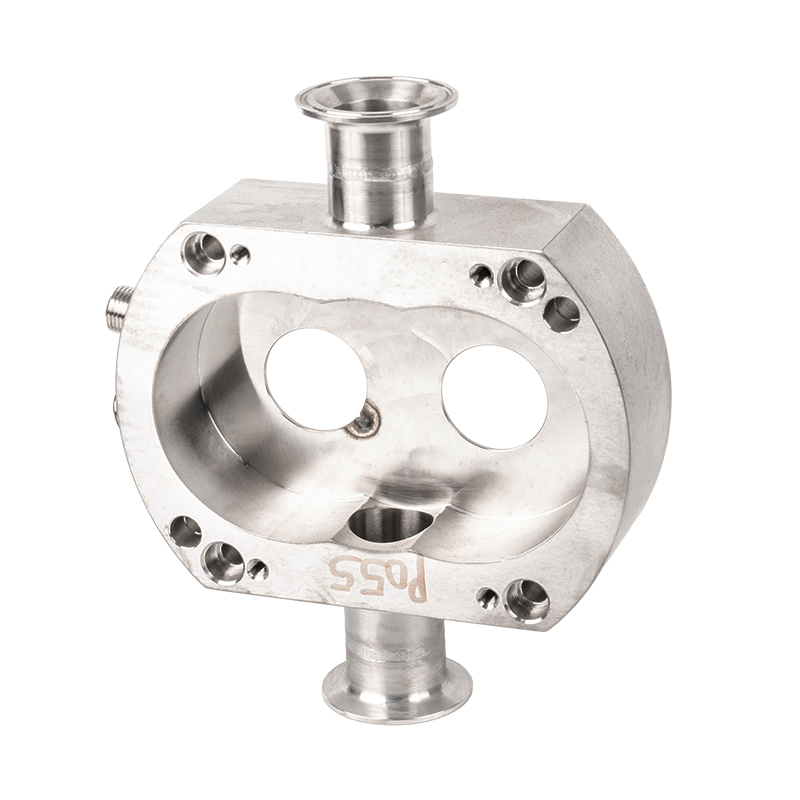
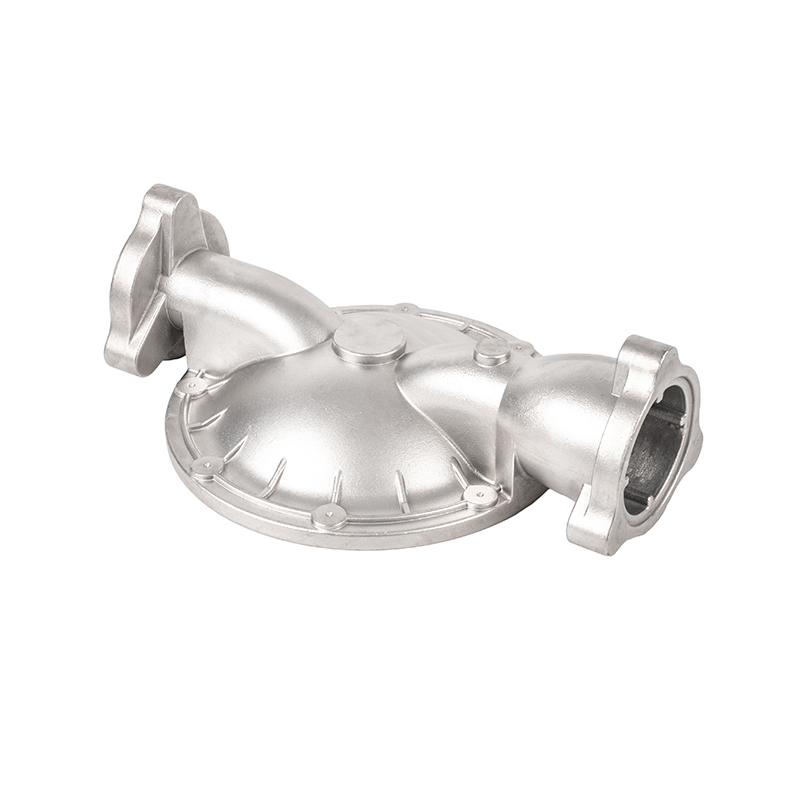
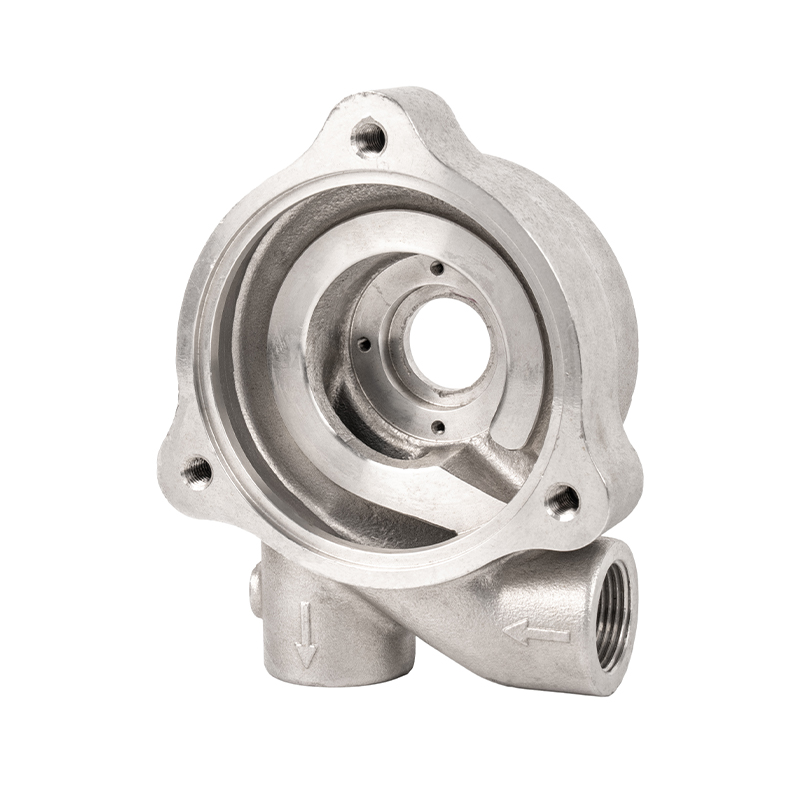
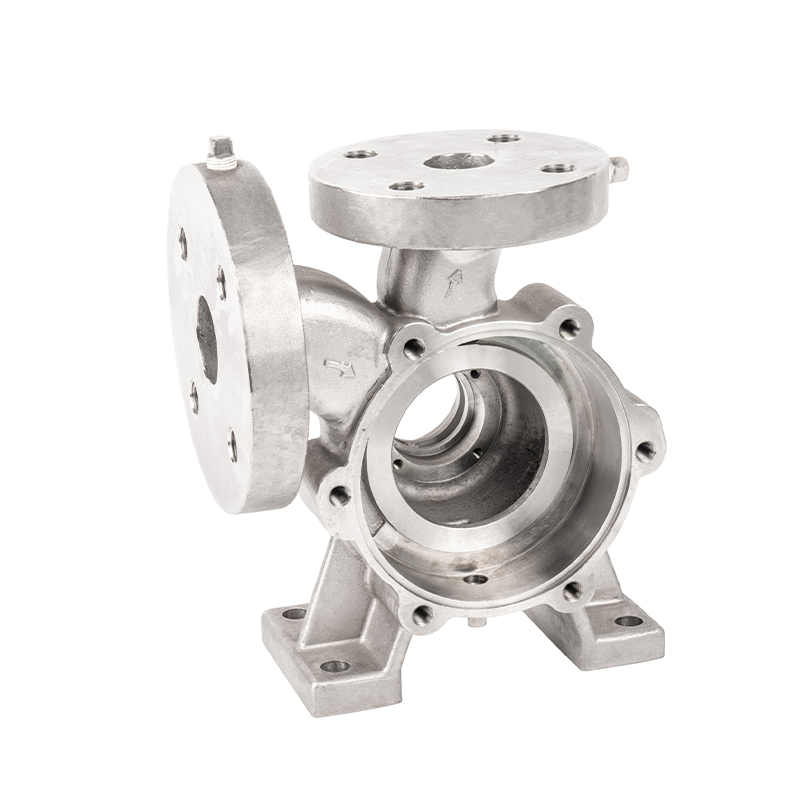
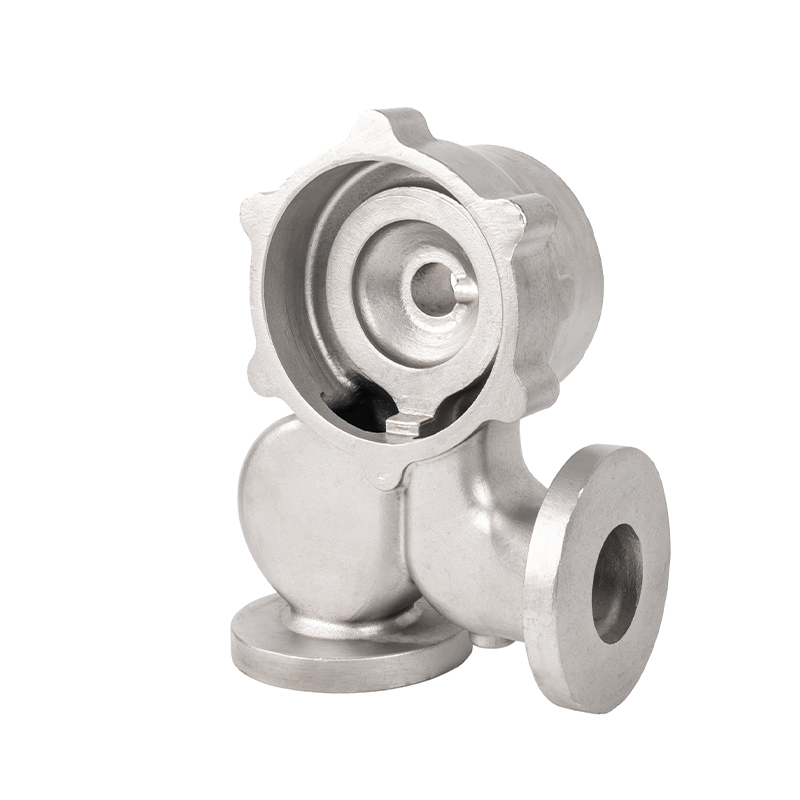 Stainless Steel Precision Centrifugal Pump CastingsReview these custom OEM castings for pump casings and impellers, with attention to internal passages, wall thickness, and sealing surfaces that affect machining and performance.View Product →
Good castings give the machinist a stable starting point. A sound casting also reduces the chance of porosity or inclusions appearing on a critical sealing face after machining.
Impeller Types and Pump Classification
Centrifugal pumps are often classified by impeller geometry or casing arrangement:
- Closed impellers have shrouds on both sides and suit clean liquids where efficiency matters.
- Open and semi-open impellers are more tolerant of some solids and fibrous material.
- Single-stage pumps use one impeller, while multistage pumps use several in series for higher head.
- End-suction, inline, split-case, and submersible describe installation and casing layout.
Impeller flow pattern is another useful way to compare designs:
| Impeller style | Flow direction | Typical strength | Common duty |
|---|---|---|---|
| Radial | Mostly outward, then radial | Higher head at lower flow | Booster, process, clean-water transfer |
| Mixed flow | Part radial, part axial | Balanced head and high flow | Large water transfer, circulation |
| Axial | Mostly parallel to the shaft | Very high flow at low head | Flood control, cooling water, drainage |
The right choice depends on the duty point, not on a single headline number. A design that is excellent at high flow may be a poor fit for a high-head application.
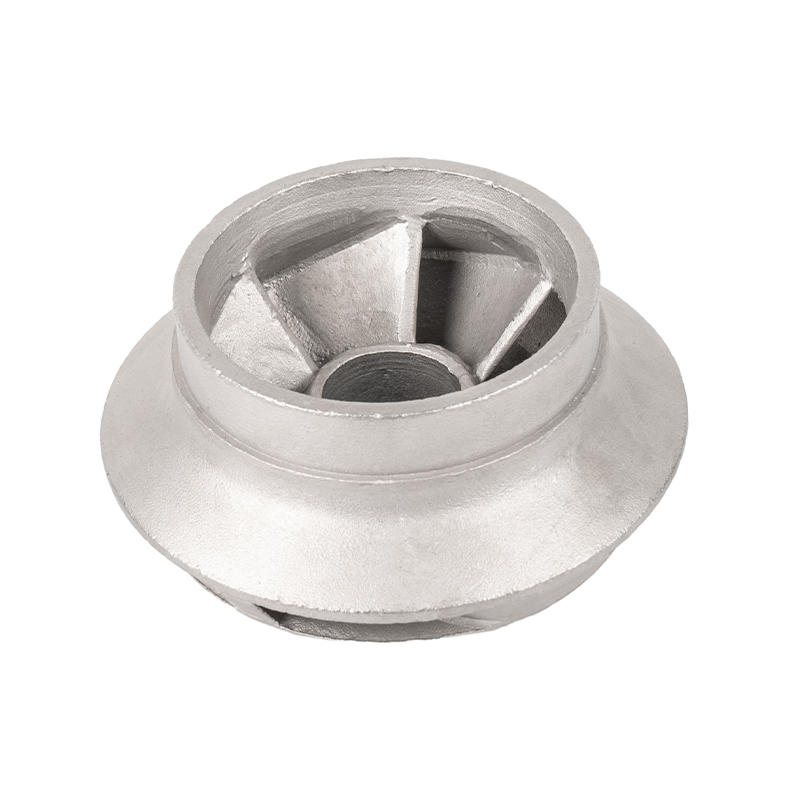 Custom Stainless Steel Blade Impeller CastingsView these custom blade impeller castings for pumps and turbines, where blade shape, passage quality, corrosion resistance, and fluid-dynamics design influence efficiency, noise, and cavitation behavior.View Product →
Blade shape and passage quality are especially important because small changes in the impeller can shift efficiency, noise, and cavitation behavior.
Where Centrifugal Pumps Are Used
You will find centrifugal pumps in many everyday and industrial duties:
- Municipal water supply and booster systems
- HVAC heating and cooling loops
- Irrigation and agricultural water transfer
- Wastewater treatment and drainage
- Chemical transfer, where materials and seals must match the fluid
- Food and beverage processing, where hygiene and cleanability matter
- Fire protection systems and general industrial circulation
The common thread is a relatively low-viscosity liquid and a duty that needs steady flow rather than a metered dose.
What to Check When Selecting a Centrifugal Pump
Selection is mostly a matter of matching the pump to the system, not choosing the biggest model on the page. The main questions are:
- Flow and head: What flow rate is needed, and what total head must the pump overcome?
- Fluid properties: Is the liquid clean, corrosive, abrasive, or sensitive to contamination?
- Temperature: Will thermal expansion, material strength, or seal life be affected?
- Solids and viscosity: Can the impeller pass the expected solids without clogging?
- NPSH margin: Is there enough suction pressure to avoid cavitation?
- Efficiency and operating point: Will the pump run near its best efficiency point for most of its life?
- Materials and surface finish: Do the wetted parts suit the liquid and cleaning regime?
- Seal and motor arrangement: Is the drive package appropriate for the environment?
It also helps to think about the parts that are hardest to replace. For pump builders, water pump castings are not interchangeable commodities; passage geometry, material consistency, and dimensional repeatability all shape final hydraulic performance.
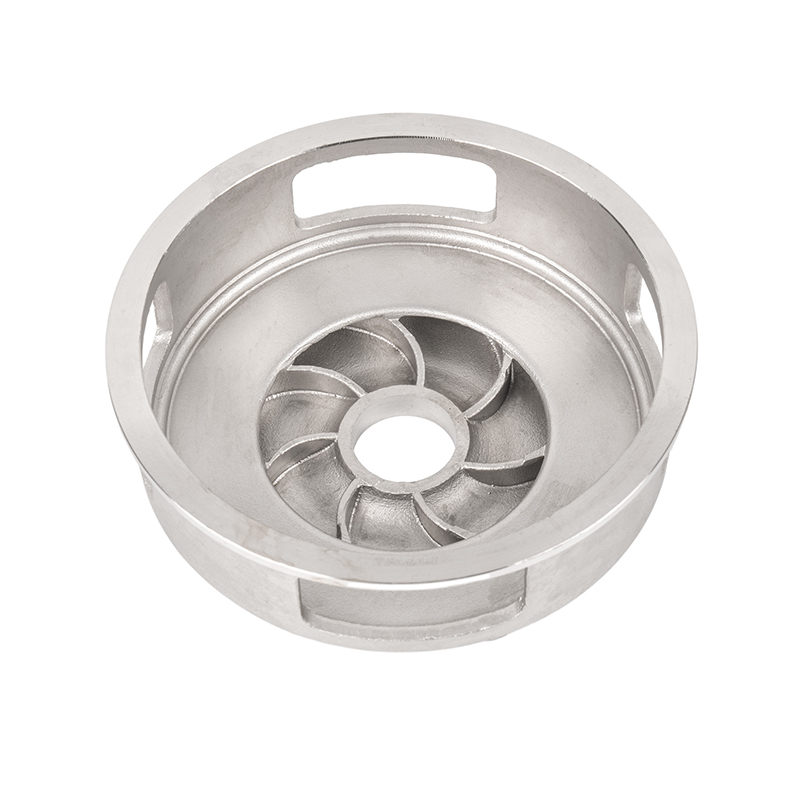 Stainless Steel Spiral Centrifugal Impeller CastingsConsider these spiral centrifugal impeller castings for water pumps, where blade geometry, material consistency, and dimensional repeatability can affect hydraulic performance and efficiency.View Product →
For higher-head or higher-efficiency duties, small improvements in impeller design can make a visible difference over years of operation.
Castings, Reliability, and the Details That Matter
In our day-to-day work with pump castings, the conversation usually comes back to a few fundamentals: clean internal passages, stable wall sections, sound material, and sealing faces that machine cleanly.
In that sense, the role of centrifugal pump castings in a centrifugal pump goes beyond forming a shell around the impeller. The casing and impeller together define the hydraulic path, so casting quality can influence efficiency, vibration, and maintenance intervals.
A practical review usually covers material chemistry, dimensional layout, wall thickness, internal soundness, surface condition, and machining allowance. These details are not glamorous, but they are where reliable pump performance is often won.
Quick Answers to Common Questions
Do centrifugal pumps self-prime?
Most standard models do not. Self-priming versions exist, but a normal centrifugal pump needs a filled suction line or a priming arrangement before startup.
Is head the same as pressure?
Not exactly. Head describes energy per unit weight of liquid, while pressure depends on liquid density. A pump can produce the same head with different liquids but different pressure readings.
Can a centrifugal pump handle thick or abrasive liquids?
It can handle some challenging fluids, but high viscosity usually favors positive displacement designs. Abrasive slurries call for careful material selection, low speed, and robust wear protection.
Understanding what a centrifugal pump is comes down to a simple idea: a spinning impeller adds energy to a liquid, and the casing turns that energy into useful pressure and flow. If you are evaluating a pump design, start with the duty point, work back to the hydraulic components, and give the cast parts the same attention as the motor and seal. That is where quiet reliability is often won or lost.
RELATED PRODUCTS
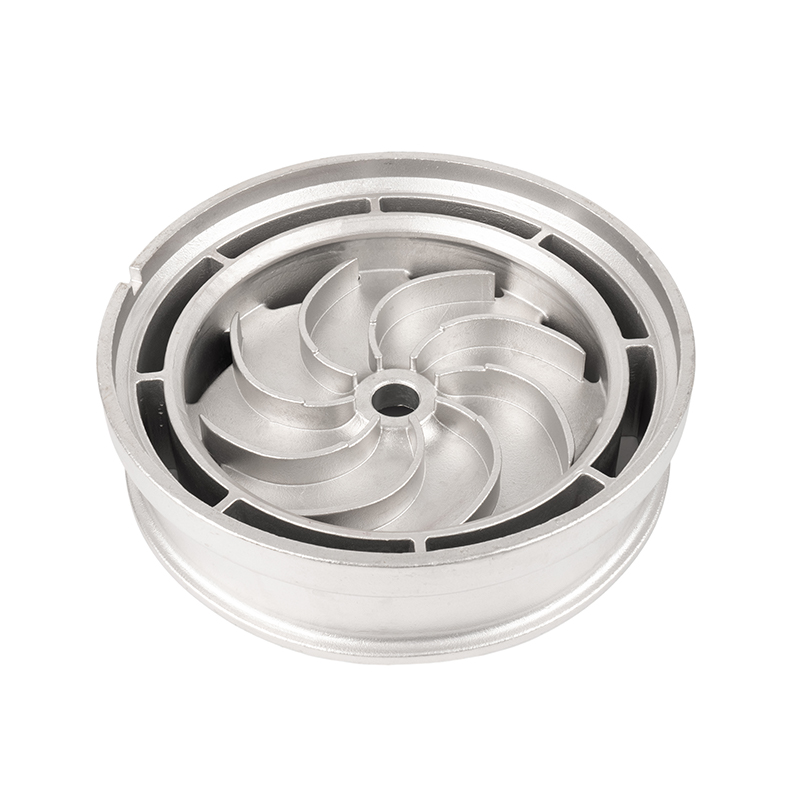
Do you have questions? Do not wait, Let's talk!
Contact Us
- Tel: +86-13967888380 / +86-13685858588
- +86-0574-86183698 / +86-0574-86183685
- Fax: +86-0574-86183696
- Email: [email protected]
[email protected] - Add: No. 68, Jiangbin Branch Road, Beilun Xiaogang Joint Development Zone, Ningbo, Zhejiang, China.
QR Code
Copyright © Ningbo Etdz Andrew Precision Cast Co., Ltd. All rights reserved
 Custom Metal Precision Casting Parts Manufacturers
