

 English
 Español
 русский
 中文简体
中文简体

Home / News / Industry News / Centrifugal Impeller Castings: Types, Design Factors, and Selection Guidance
Industry News
Centrifugal Impeller Castings: Types, Design Factors, and Selection Guidance
What Is a Centrifugal Impeller and Why Does It Matter?
A centrifugal impeller is the rotating component inside a centrifugal pump, fan, or compressor that transfers mechanical energy from the drive motor to the fluid. It is the single most influential part of the machine: the impeller's geometry determines flow rate, head, hydraulic efficiency, and net positive suction head behaviour. If the impeller is incorrectly shaped or poorly cast, no other component in the system can fully compensate for the resulting loss in performance.
The impeller works together with the casing, wear rings, diffusers, and seals, all of which must be hydraulically compatible. That is why understanding the role of centrifugal pump castings in the pump assembly matters as much as the impeller design itself. Design engineers, pump repair specialists, and procurement teams all converge on the same questions when evaluating rotating equipment: what kind of impeller is needed, and how should it be manufactured to hold the required tolerances over the life of the machine?
How a Centrifugal Impeller Works
Fluid enters the impeller eye at the centre of the rotation axis and is captured by the vanes. As the impeller spins, centrifugal force accelerates the fluid radially outward, giving it kinetic energy. The fluid then leaves the impeller at the outer diameter and enters the volute casing or diffuser, where velocity is converted into pressure energy.
Three variables dominate this process:
- Rotational speed. Higher speed produces more head but increases vane stress, radial loads, and the risk of cavitation at the inlet.
- Impeller diameter. Maximum head scales roughly with the square of the outer diameter, while power consumption scales with the cube.
- Vane geometry. Vane angle, depth, and count set the shape of the pump curve, the best-efficiency point, and the minimum continuous flow.
Because the vane passages are narrow and curved, the internal surface finish of the impeller has a measurable effect on friction losses. A rough as-cast surface can reduce efficiency by several points compared with a smooth, precision-cast surface.
Types of Centrifugal Impellers
Impellers are typically grouped by whether the vanes are enclosed between two shrouds or left open, and by how the flow path is arranged. Each configuration offers a different trade-off between efficiency, solids-handling ability, and ease of maintenance.
Open, Semi-Open, and Closed Impellers
Open impellers have vanes mounted directly on the hub with no shroud covering the vane tips. They handle slurries, wastewater, and fluids with suspended solids well, because the open passage is less likely to clog. The trade-off is lower efficiency and faster wear at the vane tips, which must be kept close to the casing for acceptable performance.
Semi-open impellers add a partial back shroud, which stiffens the vanes and reduces axial thrust. They sit between open and closed designs in both efficiency and solids tolerance, and are common in food processing, chemical transfer, and pulp applications.
Closed or enclosed impellers place the vanes between a front and back shroud. This configuration offers the highest hydraulic efficiency and the most stable performance over a wide flow range. It is the default choice for clean or lightly contaminated fluids in HVAC, water supply, and industrial process pumps.
Special-Purpose Impellers
Vortex impellers are recessed inside the casing so the fluid passes through a volute chamber rather than between the vanes. They move stringy solids, rags, and abrasive slurries without contacting the vanes, at the cost of the lowest efficiency among common impeller types.
Mixed-flow impellers, also called semi-axial, generate head through a combination of centrifugal force and axial lift, making them suitable for high-flow, medium-head applications such as large drainage and irrigation pumps.
Cutter impellers incorporate a cutting edge at the inlet, allowing them to chop fibrous material before it enters the vane passages. They are widely used in sewage pumps.
| Impeller Type | Typical Efficiency | Solids Handling | Common Applications |
|---|---|---|---|
| Open | Moderate | Good | Slurries, wastewater, paper stock |
| Semi-open | Good | Fair to good | Foods, chemicals, pulp |
| Closed | Highest | Poor | Clean water, HVAC, process pumps |
| Vortex | Lowest | Excellent | Raw sewage, stringy solids |
| Mixed-flow | Good | Fair | Irrigation, flood control |
For applications that need both reasonable efficiency and good clog resistance, spiral centrifugal impeller castings provide a proven middle ground by combining a swept feed section with enclosed vanes.
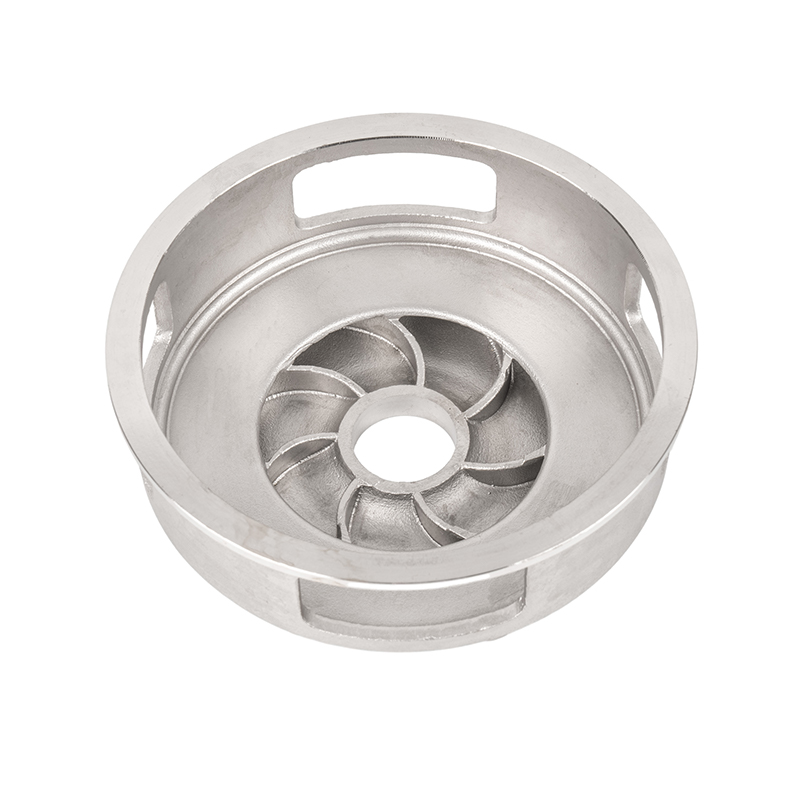 Custom Stainless Steel Spiral Centrifugal Impeller Castings Manufacturers, OEM SNingbo Etdz Andrew Precision Cast Co., Ltd. is China Spiral Centrifugal Impeller Castings Manufacturers and Custom Stainless Steel Precis...View Product →
Design Factors That Affect Impeller Performance
Beyond the basic type, several design parameters define how a centrifugal impeller performs at a given operating point.
Impeller Diameter and Trim
The outer diameter sets the maximum head. Many pumps are shipped with an oversized impeller that is lathe-trimmed to match the exact duty point. Because head varies with the square of diameter, a 10 percent trim reduces head by roughly 19 percent. This relationship is predictable, but trimming also changes the impeller balance and the clearance at the wear rings, so it must be done carefully.
Vane Depth, Width, and Inlet Angle
Vane depth and width control the flow area at the impeller eye, which affects how much fluid the pump can move without cavitation. A wider eye lowers inlet velocity and improves net positive suction head margins but reduces the area available for the vane leading edges. Inlet angle is tuned to match the incoming flow direction at the design speed; a matched angle minimises shock losses at the inlet.
Surface Finish and Hydraulic Smoothness
The internal vane passages are essentially miniature ducts. Every surface irregularity, such as roughness, step changes at the shroud joint, or casting flash, costs efficiency and can promote localised cavitation. Precision casting is the most cost-effective way to obtain smooth, repeatable flow passages in complex vane geometries. We analysed how stainless steel impeller design impacts efficiency in different applications in a separate technical article.
Dynamic Balance
An impeller spinning at 1,500 to 3,600 rpm generates enormous centrifugal forces. Even a small amount of residual unbalance produces vibration that shortens seal and bearing life. Castings should be supplied with uniform wall thickness and consistent material density so that balancing remains a minor correction rather than a major machining operation.
Why Casting Quality Matters for Centrifugal Impellers
Centrifugal impellers are almost always cast rather than machined from solid bar, because the twisted, converging vane passages are impractical to produce economically by machining alone. But casting is only an advantage if the foundry controls the variables that affect hydraulic performance.
Material Selection
For water and mild chemicals, CF8 stainless steel, the cast equivalent of 304, and CF8M, equivalent to 316, dominate. For chloride-rich environments, duplex alloys such as CD4MCu provide higher strength and pitting resistance. Bronze and brass impellers remain common in marine and fire-fighting service. Each alloy has a different shrinkage rate, fluidity, and solidification range, and the foundry must adapt gating and feeding accordingly.
Stainless steel impeller castings are particularly valued where corrosion resistance and surface finish need to coexist. The advantages of stainless steel blade impeller castings over other materials are most visible in demanding media such as seawater, chemicals, and food products.
Dimensional Accuracy and Wall Thickness Control
Vane thickness affects both strength and hydraulic capacity. Castings with inconsistent wall thickness shift the pump curve and create residual unbalance. Precision investment casting can hold vane thicknesses to within a few tenths of a millimetre, which is why most performance-critical impellers are investment cast rather than sand cast.
Internal Soundness
Porosity, shrinkage, and inclusions in the vane or shroud are catastrophic risks, because the impeller is a pressure boundary rotating at speed. Radiographic inspection and dye penetrant testing are standard quality gates for impeller castings. A proper feeding design and disciplined melting practice are what separate a reliable impeller casting from one that fails in service.
If your design relies on blade-type impellers for high-efficiency clean-liquid service, precision-cast blade impeller castings deliver the dimensional consistency needed to keep the pump curve where the engineer calculated it.
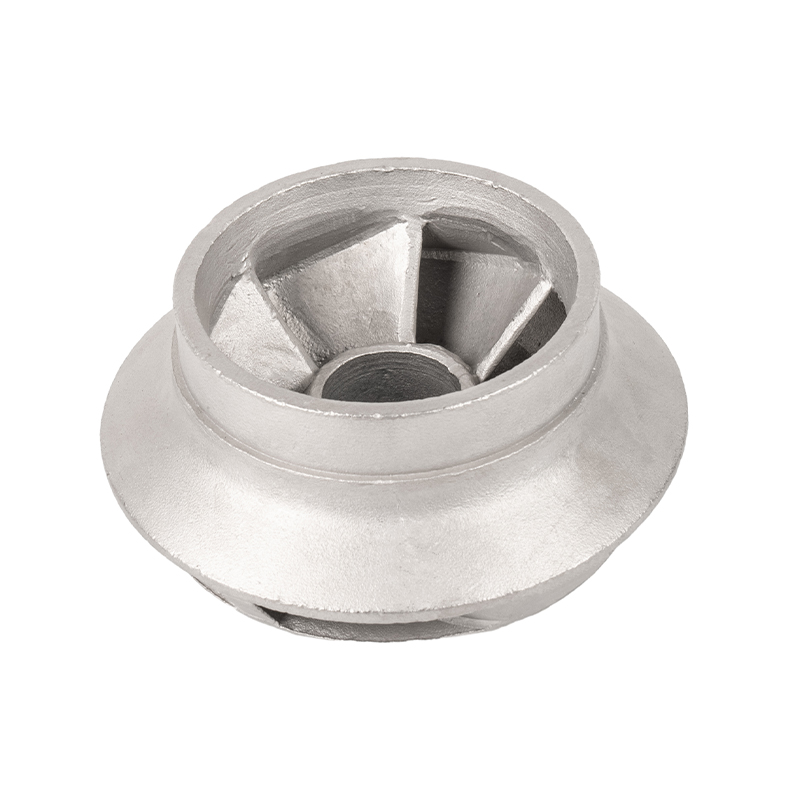 Custom Stainless Steel Blade Impeller Castings Manufacturers, OEM SuppliersNingbo Etdz Andrew Precision Cast Co., Ltd. is China Blade Impeller Castings Manufacturers and Custom Stainless Steel Precision Blade Imp...View Product →
How to Specify and Select Centrifugal Impeller Castings
When sourcing impeller castings, buyers should look past the basic material grade and price and examine the supplier's process controls.
- Request the casting drawing review: the foundry should review the vane geometry, apply the correct shrinkage allowance, and confirm that the part can be fed soundly.
- Define minimum wall thickness and verify it by sectioning on the first article.
- Agree on surface finish expectations for the vane passages and on allowable cosmetic imperfections in non-flow areas.
- Confirm balancing requirements, including residual unbalance limits per ISO 21940 or your own tolerance class.
- Check inspection coverage: chemical analysis, mechanical testing, and non-destructive examination on a sampling plan you can trust.
For complete pump builds, the impeller must also match the casing and wear-ring clearances. Ordering the impeller together with centrifugal pump castings from the same foundry reduces fitment risk across the assembly. A foundry with impeller-specific experience can usually advise on wall thickness, feedability, and material grade much earlier than a general-purpose supplier.
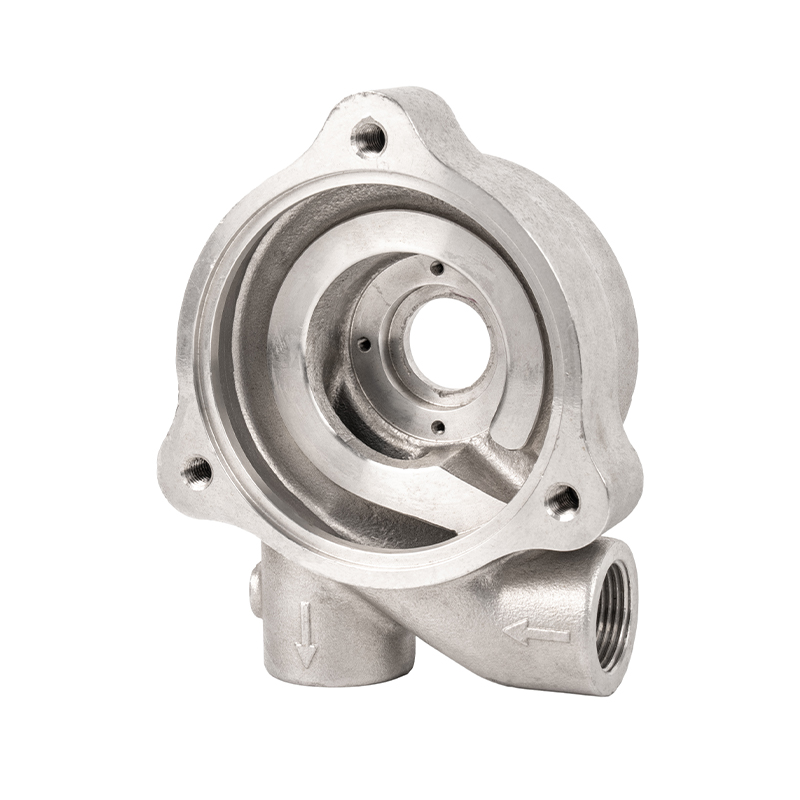
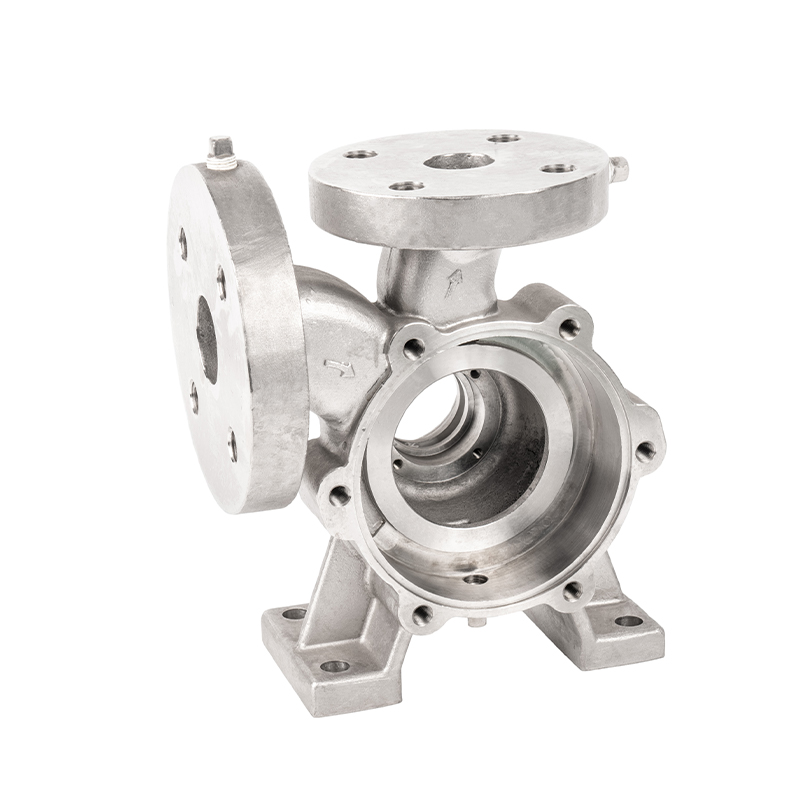
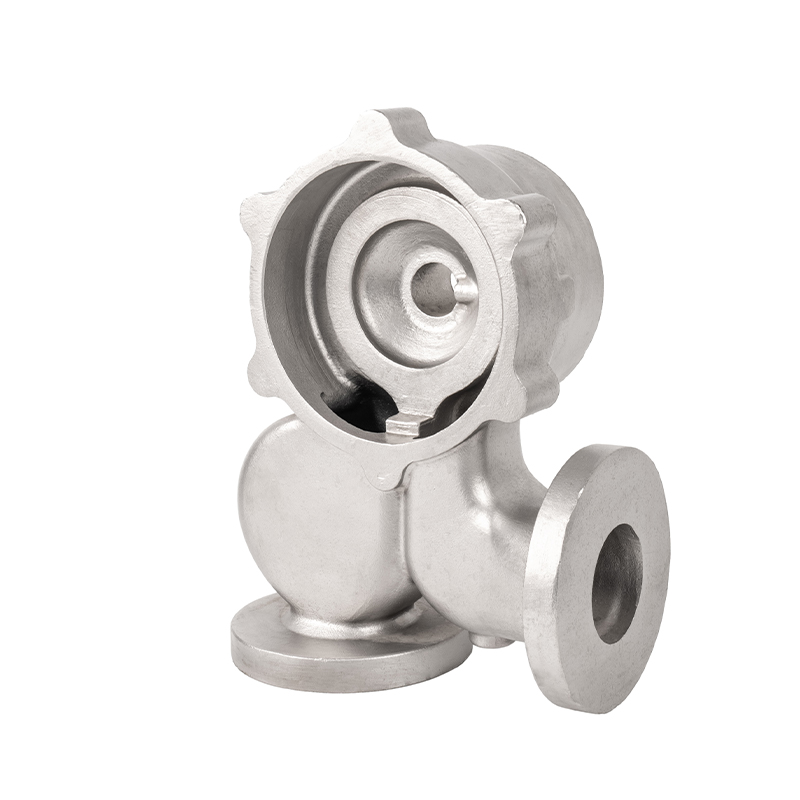 Custom Stainless Steel Centrifugal Pump Castings Manufacturers, OEM SuppliersNingbo Etdz Andrew Precision Cast Co., Ltd. is China Centrifugal Pump Castings Manufacturers and Custom Stainless Steel Precision Centrif...View Product →
The Bottom Line on Centrifugal Impellers
The centrifugal impeller is the heart of rotating fluid machinery. Its geometry sets the hydraulic performance, its material determines corrosion and wear resistance, and its casting quality decides how long the machine stays reliable.
Choosing the right impeller type and having it precision-cast with controlled vane geometry, internal soundness, and dimensional consistency is the difference between a pump that runs for years at its best-efficiency point and one that is plagued by vibration, cavitation, and premature failure. Start with the hydraulic requirements, then select a casting partner that treats impellers as engineered components rather than generic cast parts.
RELATED PRODUCTS

Do you have questions? Do not wait, Let's talk!
Contact Us
- Tel: +86-13967888380 / +86-13685858588
- +86-0574-86183698 / +86-0574-86183685
- Fax: +86-0574-86183696
- Email: [email protected]
[email protected] - Add: No. 68, Jiangbin Branch Road, Beilun Xiaogang Joint Development Zone, Ningbo, Zhejiang, China.
QR Code
Copyright © Ningbo Etdz Andrew Precision Cast Co., Ltd. All rights reserved
 Custom Metal Precision Casting Parts Manufacturers
