

 English
 Español
 русский
 中文简体
中文简体

Home / News / Industry News / Pump Vibration Causes and Prevention: A Casting Manufacturer's Perspective
Industry News
Pump Vibration Causes and Prevention: A Casting Manufacturer's Perspective
Why Pump Vibration Deserves More Than a Quick Fix
A maintenance team once replaced a mechanical seal on a 30 kW centrifugal pump three times in five months. The rotor was balanced, the coupling aligned, and the foundation re-grouted. Vibration readings still exceeded the limits of ISO 10816-3. The overlooked variable was the condition of the cast parts upstream: the impeller core had shifted slightly during casting, leaving one passage wall thinner than the others. That small deviation created a hydraulic imbalance at vane-pass frequency, which is exactly the kind of problem that survives routine balancing.
Pump vibration is not a single-point failure. It is the measured consequence of mechanical, hydraulic, and structural forces acting on the rotating and stationary pump internals. Casting geometry and internal soundness are part of that equation. Waiting until the pump is in the field makes the problem expensive; solving it at the casting stage makes it preventable.
The Main Causes of Pump Vibration
Field experience with both pump OEMs and end users shows that most vibration problems fall into three categories: mechanical, hydraulic, and system-related. A single pump often shows a combination of two or three, which is why a component-by-component approach fails.
| Category | Typical Source | Vibration Signature | Casting-related? |
|---|---|---|---|
| Mechanical | Rotor unbalance, shaft misalignment, bearing wear, soft foot | Dominant 1x running speed radial peak | Partly: impeller mass distribution, casing bore alignment |
| Hydraulic | Cavitation, recirculation, vane-pass interaction, part-load operation | Broadband high frequency or vane-pass peak | Directly: flow path geometry, surface finish |
| System and Installation | Pipe strain, weak foundation, resonance, suction starvation | Low-frequency or speed-dependent peak | Indirectly: casing wall stiffness and damping |
Mechanical Sources
Rotor unbalance is the most common mechanical source. It can come from a partially blocked impeller, erosion, or uneven material distribution in a cast impeller where core shift created thick and thin sections. Misalignment between motor and pump shafts, worn bearings, and soft foot all produce typical vibration signatures, but they rarely begin without something amplifying them. If a cast impeller is unsound, even a flawless alignment will not remove the 1x running-speed peak.
Hydraulic Sources
Hydraulic excitation comes from the pressure field inside the pump. Cavitation, suction recirculation, part-load recirculation, and vane-pass interaction all generate fluctuating forces. The flow passages of the casing and impeller determine how strongly those forces develop. Casting roughness, sudden changes in wall thickness, or an incorrectly blended volute tongue can raise turbulence levels and create an unsteady pressure field.
System and Installation Sources
Pipe strain, foundation stiffness, and resonance amplify whatever mechanical and hydraulic forcing is already present. When the natural frequency of the pump casing, baseplate, or piping system coincides with a forcing frequency, small defects produce large vibration. The casing stiffness is controlled by its wall construction and material modulus; a casting with non-uniform walls may have a calculated stiffness that does not match reality.
How Casting Quality Makes Vibration Better or Worse
Many field faults traced to castings originate in the hydraulic path: the impeller, wear surfaces, and casing volute. Precision casting offers two advantages: near-net shape that minimizes material distortion and repeatable internal integrity across production runs.
Impeller Geometry and Rotor Balance
Impeller flow passages are usually left as-cast except for the hub, bore, and wear-ring areas. Therefore, the casting process defines the thickness of each blade and the shape of every flow channel. Core shift, shrinkage porosity, and misaligned cores cause mass imbalance and uneven fluid admission. A high-quality blade impeller casting with controlled wall thickness gives balancing machines a much lighter job and lowers residual unbalance in service.
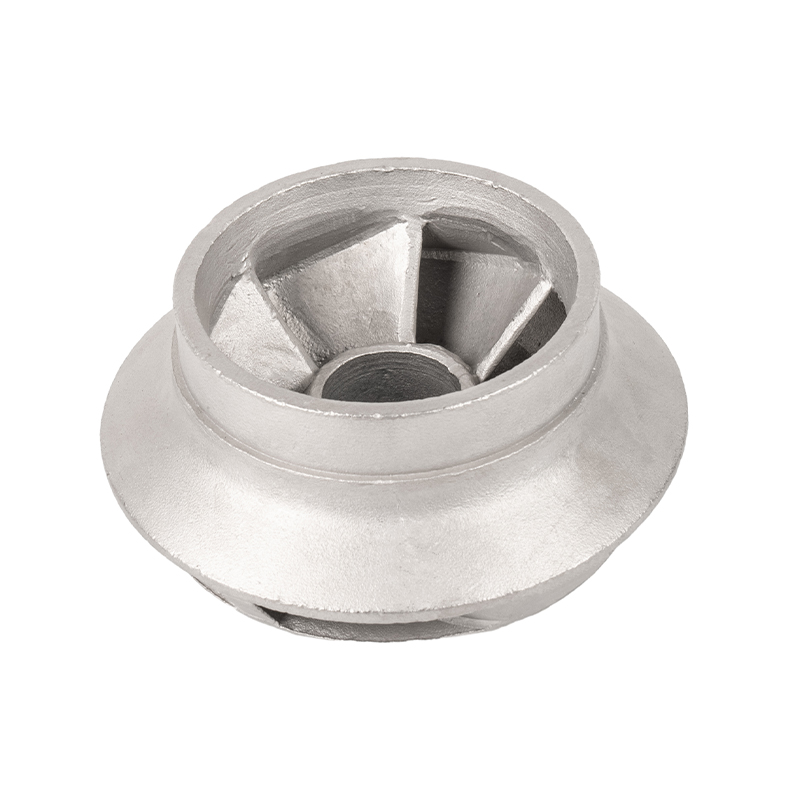 Custom Stainless Steel Blade Impeller Castings Manufacturers, OEM SuppliersNingbo Etdz Andrew Precision Cast Co., Ltd. is China Blade Impeller Castings Manufacturers and Custom Stainless Steel Precision Blade Imp...View Product →
Pump Casing Wall Consistency and Natural Frequency
The casing is the largest cast component and the main structural constraint of the rotor. If the casing walls vary because of core movement or porosity, stiffness and damping change locally. This can shift a natural frequency into the operating speed range. Precision centrifugal pump castings produced with uniform sections allow designers to trust their finite element model and avoid surprises during commissioning.
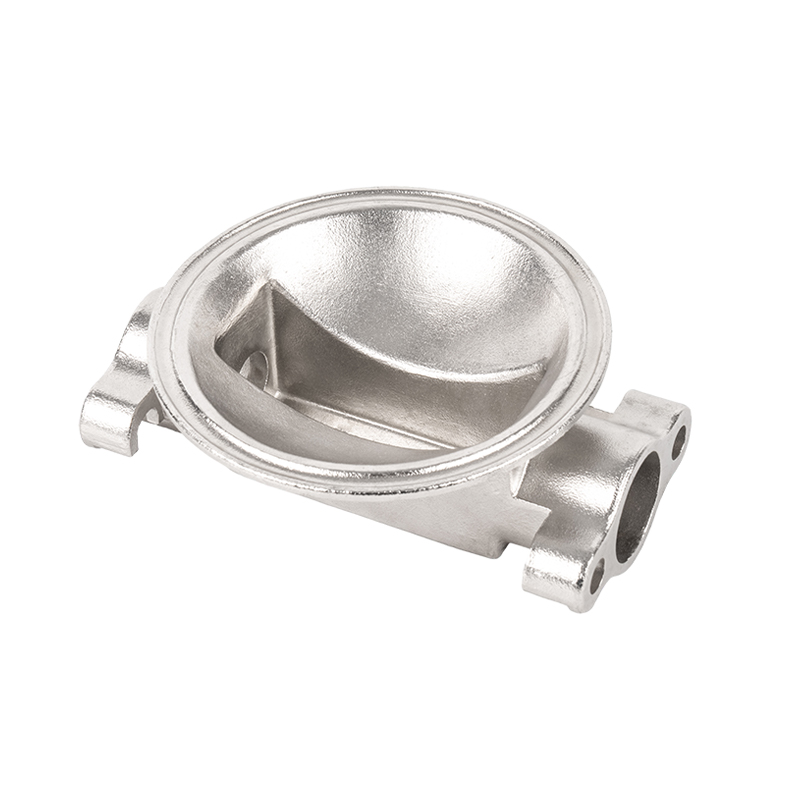
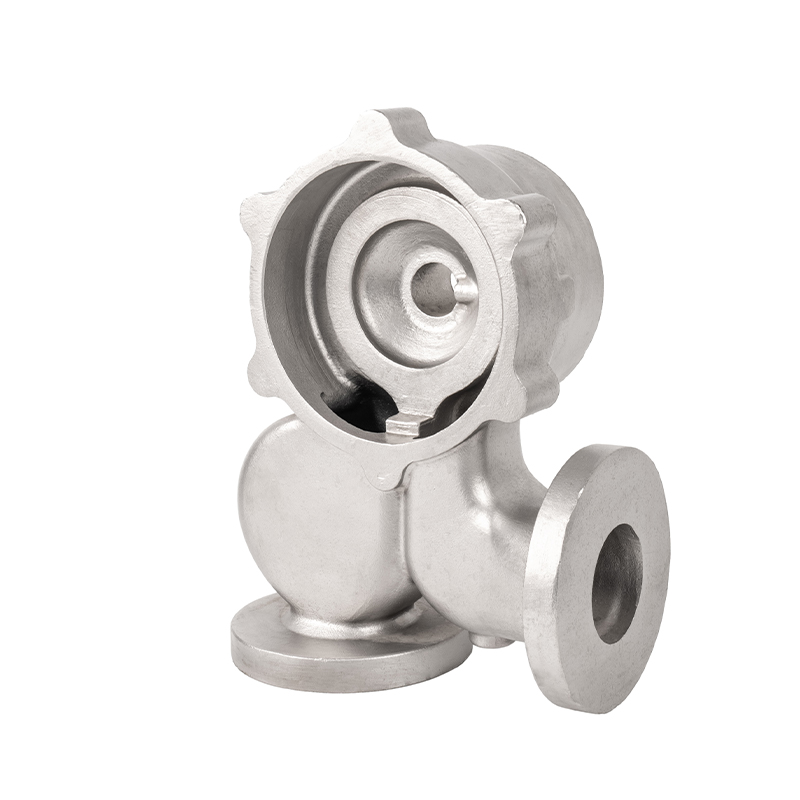 Custom Stainless Steel Centrifugal Pump Castings Manufacturers, OEM SuppliersNingbo Etdz Andrew Precision Cast Co., Ltd. is China Centrifugal Pump Castings Manufacturers and Custom Stainless Steel Precision Centrif...View Product →
Surface Finish and Hydraulic Excitation
Surface roughness inside the pump accelerates boundary-layer growth and increases hydraulic losses. More importantly, rough surfaces generate higher turbulence that reaches the volute tongue and impeller blades, raising vane-pass noise and vibration. The investment casting surface is smoother than typical sand casting, so the pump runs quieter and the excitation level stays lower. This is not a cosmetic issue; it is a measurable mechanical behavior.
A Practical Way to Diagnose Pump Vibration
Use a structured path instead of replacing parts. First, compare vibration at the pump and motor bearings in horizontal, vertical, and axial directions at 1x running speed and in broadband levels. Second, look at the frequency content: 1x usually indicates unbalance or eccentricity; 2x indicates misalignment; vane-pass frequency means a hydraulic excitation; high-frequency random content may mean cavitation. Third, check the pump duty point. If it runs far from best efficiency, recirculation forces can appear even with a perfect machine. Fourth, verify NPSHa versus NPSHr.
Only after these checks should you consider internal parts: inspect the impeller and casing with dimensional measurement, wall thickness ultrasound, and dye penetrant. Many so-called mysterious vibrations become clear when an impeller is found to have a wall thickness deviation of 3 mm and a porosity cluster in one passage.
What to Look for in a Casting Supplier
When a pump vibration problem has a metallurgical or geometrical origin, the value of a precision casting supplier becomes visible. What matters is not the brochure but four specific capabilities. First, process repeatability: the ability to reproduce the same core assembly and shell thickness on every batch. Second, material soundness: low porosity and no trapped slag in hydraulic areas. Third, dimensional control: conformance to ISO 8062 CT tolerances that keep wall thickness and port alignment within a narrow band. Fourth, surface quality: a consistent finish that does not need extensive grinding, which can distort the flow path.
Our precision casting facility applies these criteria to every pump component, from small impellers to large volute casings. For applications with abrasive or fibrous media, for example, spiral centrifugal impeller castings provide a clog-resistant, low-vibration alternative when the casting geometry is held accurately.
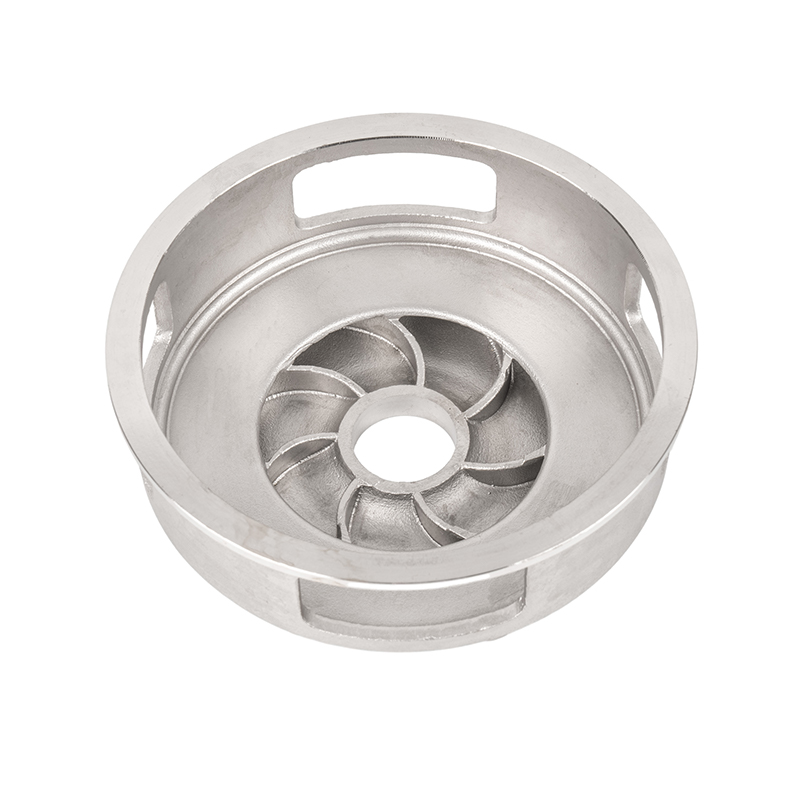 Custom Stainless Steel Spiral Centrifugal Impeller Castings Manufacturers, OEM SNingbo Etdz Andrew Precision Cast Co., Ltd. is China Spiral Centrifugal Impeller Castings Manufacturers and Custom Stainless Steel Precis...View Product →
The best time to discuss vibration is before the component drawing is frozen. A supplier who understands casting-induced imbalance, wall-thickness sensitivity, and hydraulic surface requirements can adjust the design to avoid hidden sources of excitation. That is far more effective than any vibration-monitoring system installed later.
Conclusion
Pump vibration never has a single cause, but the manufacturing quality of cast components is a common denominator that is frequently underestimated. Unbalance, vane-pass turbulence, resonance, and instability can all be traced back to geometry and material soundness of the impeller and casing. Selecting a casting partner that controls wall thickness, internal integrity, and surface finish reduces the probability of a vibration issue before the pump ships. The next time a pump vibrates beyond its limit, look at the metal, not just the machine.
RELATED PRODUCTS

Do you have questions? Do not wait, Let's talk!
Contact Us
- Tel: +86-13967888380 / +86-13685858588
- +86-0574-86183698 / +86-0574-86183685
- Fax: +86-0574-86183696
- Email: [email protected]
[email protected] - Add: No. 68, Jiangbin Branch Road, Beilun Xiaogang Joint Development Zone, Ningbo, Zhejiang, China.
QR Code
Copyright © Ningbo Etdz Andrew Precision Cast Co., Ltd. All rights reserved
 Custom Metal Precision Casting Parts Manufacturers
