

 English
 Español
 русский
 中文简体


Home / News / Industry News / Choosing the Best Mechanical Seal for High-Pressure Refinery Pumps: A Practical Guide
Industry News
Choosing the Best Mechanical Seal for High-Pressure Refinery Pumps: A Practical Guide
High-pressure refinery pumps are not a place for guesswork. A seal that looks fine on a datasheet can fail quickly when it meets severe pressure, hot hydrocarbon, poor flush, and a seal chamber that is a few thousandths out of alignment. The best mechanical seal for high-pressure refinery pumps is therefore not a single catalog number. It is the seal arrangement, face materials, support system, and installation detail that together match the duty.
That is good news for engineers and bad news for anyone hoping for a one-line answer. In many high-pressure refinery services, the practical starting point is a balanced, cartridge-style, dual pressurized seal. From there, the details decide whether the seal runs for years or fails in weeks.
Define the Duty Before You Name the Seal
Refinery high-pressure pumps cover a wide range of services: crude charge, hydrocracker feed, reformer recycle, coker, amine, sour water, and product transfer. Each fluid behaves differently. The word “high pressure” alone tells you very little. You need pressure range, temperature, shaft speed, solids, vapor pressure, corrosivity, volatility, and the applicable API 682 category.
A clean, low-risk stream may be sealed with a single cartridge and a well-designed flush. A volatile or toxic hydrocarbon at high pressure usually calls for a dual pressurized arrangement, where barrier fluid pressure is held above the seal chamber pressure so the process side runs against clean barrier fluid rather than dirty process fluid. API 682 and ISO 21049 give a useful framework, but they do not replace a review of the actual pump, seal chamber, and operating case.
Match the Seal Arrangement to the Risk
A single mechanical seal has one face pair and relies on the process fluid for lubrication and cooling. It can be entirely adequate for clean, cool, low-hazard streams when the flush plan is correct and the seal is balanced for the pressure. In high-pressure refinery service, however, a single seal is often the wrong choice when leakage to atmosphere is unacceptable or when the fluid is dirty, hot, or prone to flashing.
A dual unpressurized, or tandem, seal places a buffer between two seals. The inner seal handles process pressure while the outer seal contains the buffer. This can be a sensible compromise when barrier pressure cannot safely be maintained above process pressure. It still needs a balanced inner seal and a carefully controlled buffer, because the process seal continues to see the difficult duty.
A dual pressurized seal runs both face pairs in barrier fluid, with barrier pressure higher than the seal chamber pressure. For many high-pressure refinery pumps, especially those handling hazardous or volatile fluids, this is the most reliable arrangement. The barrier fluid keeps the seal faces clean and cool, and it provides a controlled place for leakage to go. The trade-off is complexity: the seal is only as good as its support system, instrumentation, and operating discipline.
Cartridge construction is usually the right choice for high-pressure service. It sets the sleeve, faces, gland, and alignment in one factory assembly, removing much of the measurement and handling risk of a component seal. A balanced seal is also essential at high pressure because it reduces the hydraulic closing force on the faces. Without balance, the face load can become high enough to generate heat, wear, and cracking.
If you want a back-to-basics review of common seal arrangements, our guide to mechanical seals in centrifugal pumps covers the main types and installation points.
Face Materials and Elastomers: Where High Pressure Meets Chemistry
Face materials often decide whether a seal survives. At high pressure, the face pair must carry load, resist thermal distortion, and tolerate the fluid’s chemistry without spalling, cracking, or wearing too quickly. Silicon carbide is common in refinery service because it is hard, corrosion-resistant, and stable at high pressure and temperature. Tungsten carbide is tougher and can suit abrasive duty, but its binder phase must be checked against the process chemistry. Carbon graphite can run dry and has low friction, yet its pressure and speed limits usually rule it out for severe high-pressure hydrocarbon service unless the application has been reviewed carefully.
| Face pair | Strengths | Typical fit | Watch points |
|---|---|---|---|
| Silicon carbide / silicon carbide | Hard, corrosion-resistant, good at high pressure and temperature | Clean to mildly abrasive refinery hydrocarbons, water, amine, and many general services | Less forgiving of dry running and thermal shock; grade and sintering quality matter |
| Silicon carbide / tungsten carbide | Tough face pair with good resistance to abrasion and pressure load | High-pressure services with some solids or slurry risk | Confirm corrosion resistance of the binder phase; it is not automatically a chemical answer |
| Carbon graphite / silicon carbide | Good dry-running behavior and low friction | Lower-pressure, lower-speed, clean services and some utility duties | Pressure and speed limits; usually a poor choice for severe high-pressure hydrocarbon duty without review |
Elastomers deserve the same care. FKM is common for many refinery hydrocarbons, while FFKM is used where temperature or chemistry exceeds FKM. EPDM and other materials have their place, but they are not interchangeable. Choose the elastomer from the fluid, temperature, and seal environment, not from habit. Aromatic and polar streams can rule out otherwise popular materials.
Wetted metals also matter. Stainless steel is not universal. Duplex, alloy 20, and nickel alloys appear where chlorides, acids, or sour service demand better corrosion resistance. A seal with excellent faces and the wrong metal parts is still a maintenance problem waiting to happen.
The Support System Is Half the Seal
A high-pressure dual seal without a properly controlled support system is just an expensive leak path. The seal and the API plan must be designed together. For single seals, plans such as 11, 13, 21, 23, and 32 control flush, recirculation, quench, or external water. For dual pressurized seals, plans such as 53A, 53B, 53C, and 54 maintain barrier pressure, cooling, and circulation. Plan 62 or 65 may be used for quench and containment in other arrangements.
Pay close attention to barrier pressure margin, flow, temperature, filtration, and gas removal. Pressure switches, flow indicators, and alarms are not accessories; they are part of the seal. A dirty barrier fluid will lap away the faces. A low barrier pressure can let process fluid into the barrier circuit. A high barrier pressure can overload the faces. The seal vendor should define the margin, and the operating procedure should protect it.
On the cast hardware side, brackets, flanges, and support fittings need to be flat, square, and consistent so piping and instruments line up without strain. Small dimensional variations can become misalignment at the seal gland or at the flush connection. Good castings do not make a bad seal plan work, but poor castings can undermine a good one.
Casting Quality, Tolerances, and Installation
A seal is only as good as the chamber and shaft alignment it runs in. Seal chamber bore, face squareness, surface finish, flange flatness, and bearing frame rigidity all affect face loading. Porosity or inclusions that open during machining can create leak paths or force rework. Residual stress can move a dimension after machining. Sound castings reduce those variables before the seal is even installed.
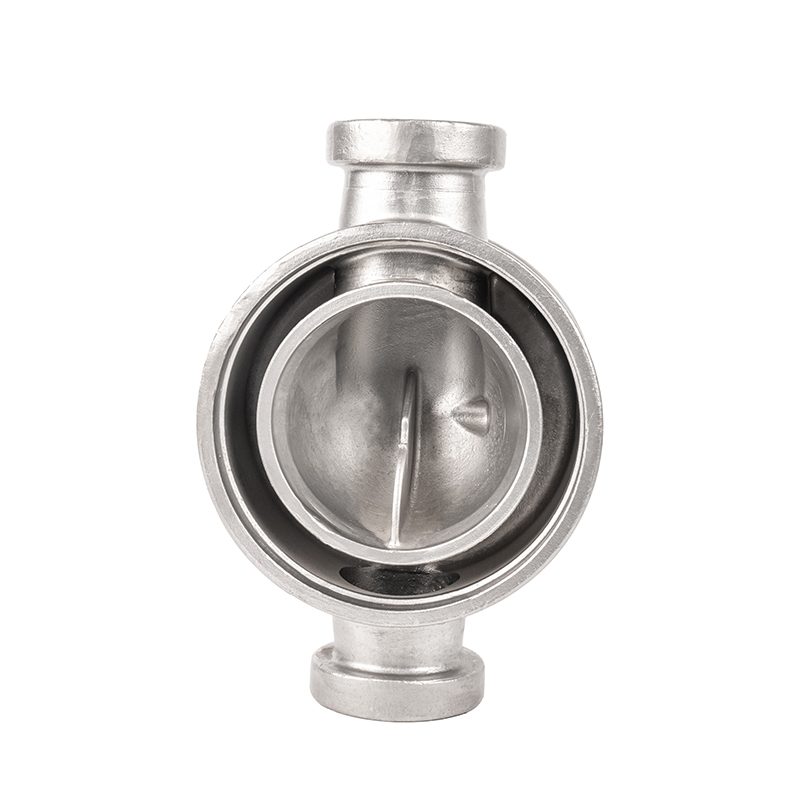 Custom Stainless Steel Centrifugal Pump CastingsPrecision custom/OEM castings for pump casings, impellers, shafts, and bearings, with stainless steel options supporting seal chamber alignment and refinery pump reliability.View Product →
Impeller balance and hydraulic fit also matter. An impeller with poor balance or unstable axial thrust loads the bearings and shaft, and that often shows up as seal misalignment. For refinery pumps, a sound impeller casting is part of seal reliability, not a separate topic.
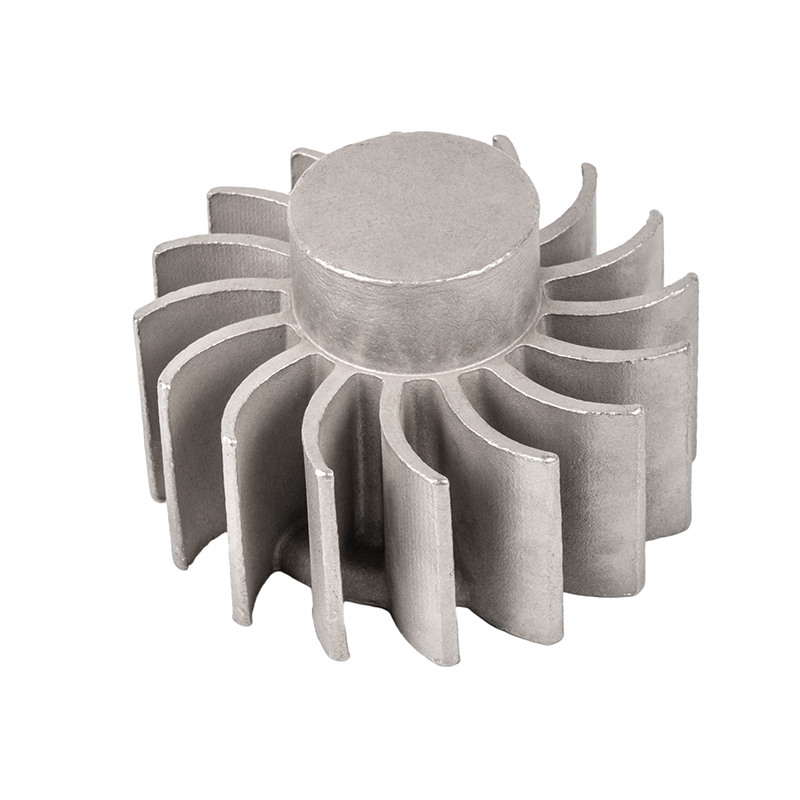 Custom Stainless Steel Precision Blade Impeller CastingsPrecision cast impellers for pumps and fluid machinery, using stainless steel and attention to blade geometry to support balance, hydraulic fit, and installation reliability.View Product →
Installation remains the final control point. Keep flush piping clean, confirm concentricity and runout, follow the OEM and seal vendor instructions, and do not rely on “close enough” at high pressure. Commissioning records, barrier fluid checks, and spare cartridges are cheap compared with an unplanned refinery shutdown.
A Practical Selection Checklist for Refinery Service
- Write the duty: fluid, pressure, temperature, speed, solids, vapor pressure, and API 682 category.
- Decide what leakage means: to atmosphere, to drain, or to a barrier. This drives single versus dual.
- For high-pressure hazardous duty, start with a balanced, dual pressurized cartridge seal.
- Select face materials and elastomers for chemistry, pressure, and temperature; do not use carbon graphite by habit.
- Match the API plan to the seal: flush, quench, barrier, cooling, filtration, and instrumentation.
- Check the seal chamber and shaft: bore, squareness, finish, runout, bearing condition, and piping cleanliness.
- Agree on barrier pressure margin, alarm and trip settings, and startup procedure with the seal vendor.
- Keep commissioning records and spare cartridges; high-pressure seals rarely fail without a warning in temperature, pressure, or flush flow.
Reliability Beats a Catalog Label
The best mechanical seal for high-pressure refinery pumps is the one that matches the process, has a support system that keeps it cool and clean, and sits in a pump whose cast components hold their tolerances. A premium seal in a distorted chamber is not a premium solution. A well-chosen cartridge with a disciplined flush plan, sound materials, and consistent castings is.
If you are building or repairing refinery pump packages, our team can discuss pump casing and impeller castings with you early, before the seal selection is fixed. It is easier to align the seal chamber, impeller, and support hardware in the design stage than to correct a mismatch at startup.
RELATED PRODUCTS
Do you have questions? Do not wait, Let's talk!
Contact Us
- Tel: +86-13967888380 / +86-13685858588
- +86-0574-86183698 / +86-0574-86183685
- Fax: +86-0574-86183696
- Email: [email protected]
[email protected] - Add: No. 68, Jiangbin Branch Road, Beilun Xiaogang Joint Development Zone, Ningbo, Zhejiang, China.
QR Code
Copyright © Ningbo Etdz Andrew Precision Cast Co., Ltd. All rights reserved
 Custom Metal Precision Casting Parts Manufacturers
