

 English
 Español
 русский
 中文简体
中文简体

Home / News / Industry News / Corrosion-Resistant Pumps & Valves for Acidic Food Systems: Materials Guide
Industry News
Corrosion-Resistant Pumps & Valves for Acidic Food Systems: Materials Guide
When a tomato paste line runs at 85°C with 2% citric acid, a standard 304 stainless steel pump can develop pitting within weeks. The same is true for a vinaigrette dosing valve or a pickle brine transfer pump. Acidic food media attack the passive oxide layer that makes stainless steel "stainless," and once that layer breaks down, corrosion advances quickly. The conclusion is simple: the material grade and the casting quality are the two factors that determine whether your pump and valve components last one season or five. Precision casting gives you control over both.
Why Acidic Food Media Is a Different Corrosion Problem
Acidic food products create aggressive conditions that generic stainless steel cannot always handle. The acids involved are mostly organic—citric, acetic, lactic, malic, phosphoric—and they behave differently from mineral acids.
Three factors determine severity:
- Acid type and concentration. Citric acid at 3% attacks the passive film differently than acetic acid at the same concentration.
- Chloride content. Many food streams contain chloride from salt or sanitizing agents, which can turn a mild acid situation into a pitting problem.
- Temperature. Corrosion rates typically accelerate as process temperatures rise above 60°C.
Pitting, crevice corrosion, and stress corrosion cracking are the three failure modes that matter most. Once a pit forms, it acts as a site for further attack. In pumps and valves, this shows up as premature wear of impellers, erosion of valve seats, and eventually leakage.
Material Grades That Hold Up to Acidic Food Media
The practical question for any food plant is: which grade should you actually cast the pump and valve components from? The answer depends on the acids you process, the temperature, and how much chloride is present.
| Cast Grade | Wrought Equivalent | Molybdenum | Corrosion Resistance in Acidic Food Media |
|---|---|---|---|
| CF8 | 304 | None | Suitable for low-concentration acids and mild washes. Vulnerable to pitting when chlorides are present at elevated temperature. |
| CF8M | 316 | 2–3% | The workhorse for most food acids. Handles 2% citric acid at 80°C and resists chloride pitting in CIP solutions. |
| CF3M | 316L | 2–3% | Similar corrosion resistance to CF8M with lower carbon content, which improves weldability and reduces sensitization risk after repair. |
| CD4MCu | 2205 Duplex | 2–3% + Cu | Higher strength and excellent resistance to stress corrosion cracking. Recommended for hot acid loops with chloride carryover. |
The difference between CF8 and CF8M is the presence of molybdenum. Molybdenum helps stabilize the passive layer against chloride attack. In acidic food systems, this addition is what separates a part that needs replacement every few months from one that lasts for years.
When you order cast components, ask for a material test certificate that confirms the actual composition. A certificate that says "316" is not enough—the foundry must verify that the chromium, nickel, and molybdenum levels meet the specified range for the cast grade.
Where Pumps and Valves Fail First
In an acidic food line, certain components are far more exposed than others. Understanding the failure pattern helps you prioritize materials and inspection during procurement.
Pump Components
The impeller is the most dynamic part of a pump. It faces high velocity, impingement, and continuous acid exposure. A cast impeller with rough surfaces or trapped porosity will pit faster than one made from a solid, dense material. The pump casing and suction cover are also directly exposed to the process fluid and must be specified in the same grade as the impeller.
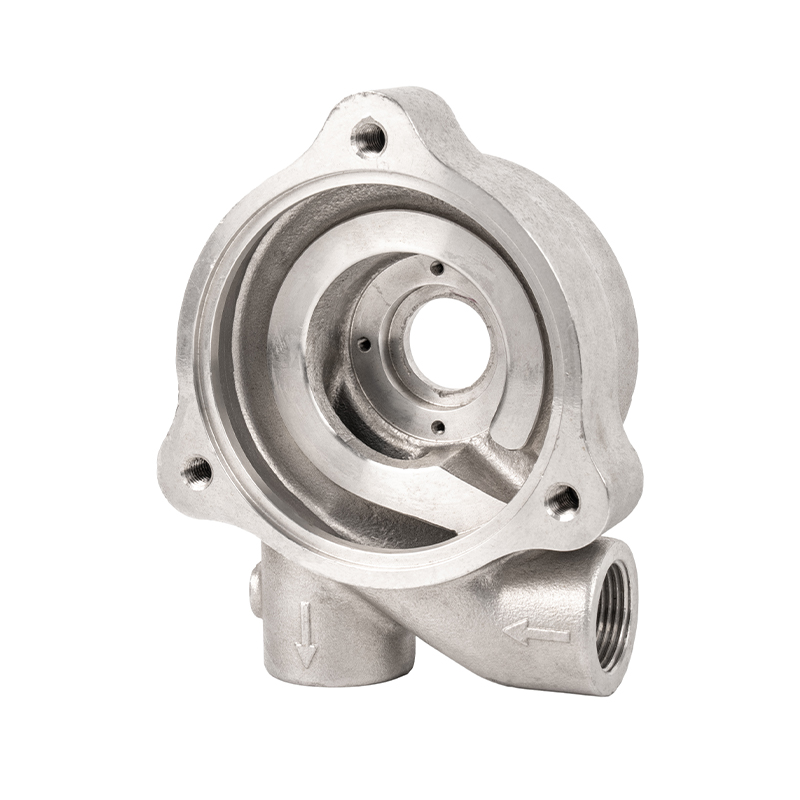
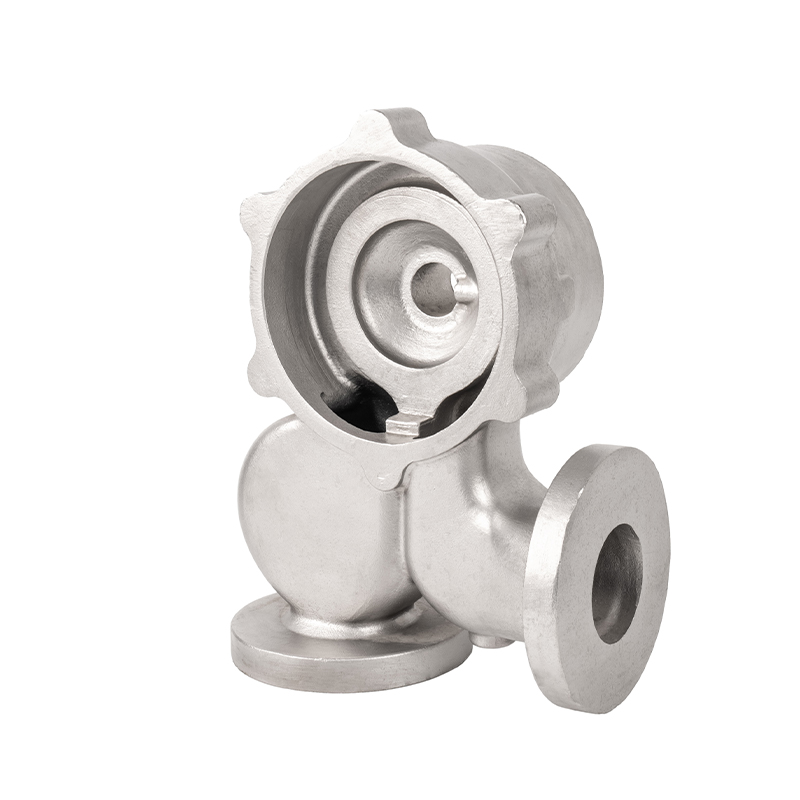 Stainless Steel Precision Centrifugal Pump Castings for Acidic MediaThese castings are made from dense stainless steel to resist pitting and corrosion from continuous acid exposure, ensuring durable pump components for food processing systems.View Product →
In food applications, the pump body also needs to support hygienic cleaning. Smooth internal surfaces reduce the chance of product buildup, which in turn reduces the risk of localized corrosion under deposits.
Valve Components
Valve bodies, balls, discs, and stems handle the same acidic media but with additional exposure to stress and intermittent flow. A ball valve used in a tomato line can develop leaking seats if the ball surface is not sufficiently corrosion resistant. Butterfly valves in food service are equally sensitive to pitting on the disc edge.
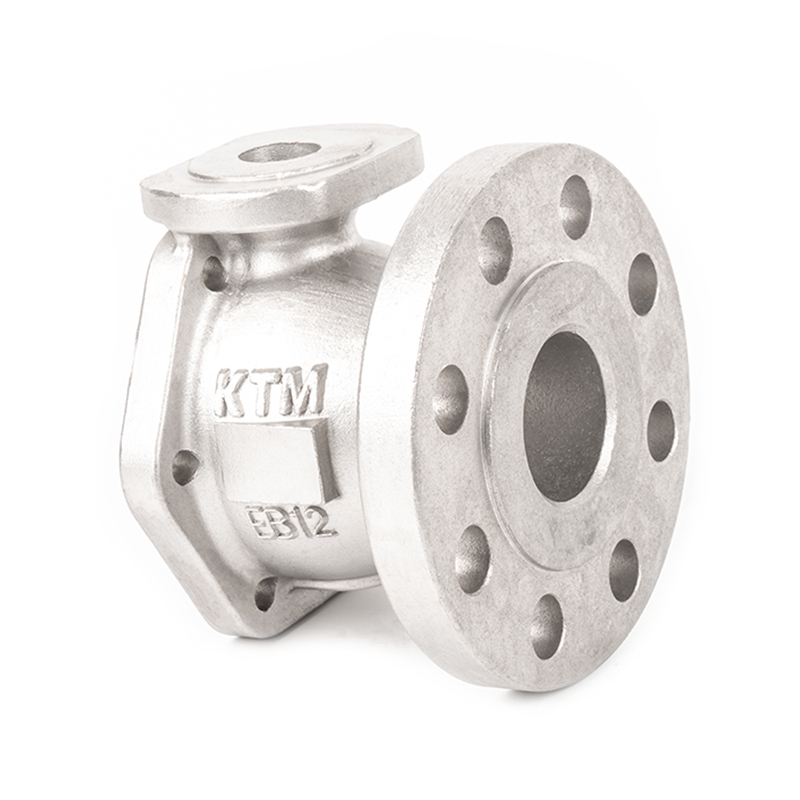 Stainless Steel Precision Ball Valve Castings for Corrosive ServiceBall valve components require high corrosion resistance to prevent seat leakage and pitting in acidic food lines; these castings offer reliable performance in such demanding conditions.View Product →
This is why valve castings need the same attention to material and surface as pump components—and why they should be specified from a single, traceable casting source.
Why Precision Casting Reduces Corrosion Failure
Corrosion resistance is not only a question of alloy chemistry. The way a component is cast affects how it behaves in an acidic environment.
Three casting quality factors matter most:
- Surface finish. A smooth surface has fewer sites for pitting to initiate. Precision investment castings can achieve a surface roughness around Ra 3.2 µm or better, compared to rougher surfaces from sand casting.
- Porosity. Gas holes and shrinkage porosity create stress concentrations where acid can penetrate. Tight process control during shell building and pouring reduces these defects.
- Wall thickness uniformity. Thin sections in a pump housing are the first to corrode through. Precision casting allows designers to maintain consistent wall thickness, which translates into more predictable service life.
The design of the impeller also plays a decisive role. A well-designed stainless steel impeller balances hydraulic efficiency with material durability, and the casting process must reproduce that geometry faithfully. In practice, the way a blade impeller is configured—blade angle, thickness distribution, and surface condition—can change both the hydraulic performance and the corrosion risk in an acidic system. You can read more about how impeller design affects efficiency and performance in our technical article on the subject.
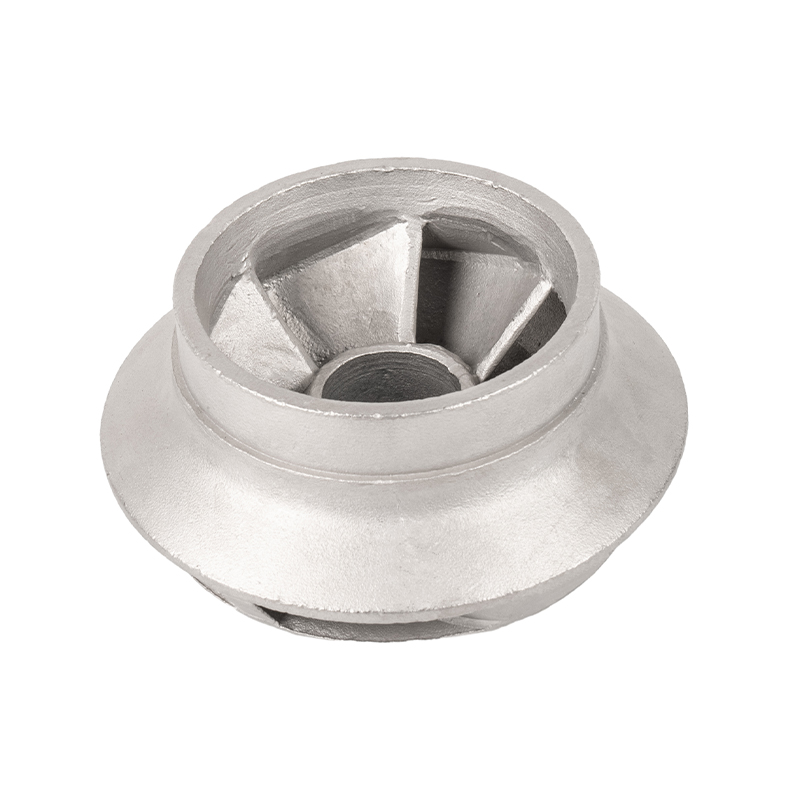 Stainless Steel Precision Blade Impeller Castings for Pump EfficiencyBlade impeller castings reproduce precise geometry to balance hydraulic efficiency and material durability, reducing corrosion risk in acidic pumping systems.View Product →
What to Specify When You Order Cast Components
Pump and valve castings are not off-the-shelf parts. When ordering corrosion-resistant components for acidic food systems, specify the following in your RFQ:
- Material grade with a certificate. Ask for a material test certificate that states the actual chemical composition and mechanical properties.
- Surface finish requirement. Specify Ra values for internal and external surfaces, especially for impellers and valve components that contact product.
- Dimensional tolerances. Precision casting can hold tighter tolerances than sand casting, and you should state the acceptable deviation range for critical dimensions.
- Inspection requirements. Include pressure testing, dye penetrant, or radiography for components that hold liquid under pressure.
- Post-cast treatment. If the part contains molybdenum or duplex grades, ask about solution annealing and passivation, which restore corrosion resistance after casting.
Material choice is only one part of the equation. Stainless steel blade impeller castings outperform impellers made from other materials in acidic food service for several reasons, including their ability to hold a smooth surface finish and resist pitting over repeated cleanings.
The Bottom Line
Corrosion-resistant pumps and valves for acidic food systems start with the right material and end with the right casting process. CF8M grade components with a smooth surface finish and controlled porosity will outperform a lower-grade material of identical geometry. Specify the grade, tolerance, and inspection requirements up front, and work with a precision casting supplier who can deliver those requirements consistently. That combination is what protects your line from acid attack and extends the service life of pumps and valves.
RELATED PRODUCTS

Do you have questions? Do not wait, Let's talk!
Contact Us
- Tel: +86-13967888380 / +86-13685858588
- +86-0574-86183698 / +86-0574-86183685
- Fax: +86-0574-86183696
- Email: [email protected]
[email protected] - Add: No. 68, Jiangbin Branch Road, Beilun Xiaogang Joint Development Zone, Ningbo, Zhejiang, China.
QR Code
Copyright © Ningbo Etdz Andrew Precision Cast Co., Ltd. All rights reserved
 Custom Metal Precision Casting Parts Manufacturers
