

 English
 Español
 русский
 中文简体
中文简体

Home / News / Industry News / Corrosion-Resistant Wastewater Pumps for Coastal Environments: Casting Materials
Industry News
Corrosion-Resistant Wastewater Pumps for Coastal Environments: Casting Materials
At a coastal wastewater plant, the pump transferring raw sewage from a lift station to the treatment trains will not last long if its wetted parts are made from ordinary cast iron. Chloride ions in salt spray, humid air, and occasional seawater intrusion attack carbon steel and unprotected cast iron in a way that becomes visible as pitting and rust staining within a few months. The practical answer is not to choose a pump with a higher motor rating. It is to select corrosion-resistant castings for the pump body, impeller, and volute from the start.
Why Coastal Wastewater Environments Demand Corrosion-Resistant Pump Materials
Coastal environments are aggressive mainly because of chloride ions. Chlorides penetrate passive oxide films on metal surfaces. When combined with oxygen, warm temperatures, and wet-dry cycles, they make stainless steel vulnerable to pitting and crevice corrosion. In wastewater, additional constituents such as hydrogen sulfide and ammonia lower pH and increase the corrosive load. Chlorine compounds added in disinfection create stronger oxidizing conditions.
For pump suppliers, the practical implication is straightforward. The casting material must be chosen and produced to resist these mechanisms rather than simply to withstand pressure. Duplex stainless steel grades with higher chromium, molybdenum, and nitrogen content are often preferred because they provide a higher pitting resistance equivalent number. A precision casting process can deliver those alloys in pump housings, impellers, and seal plates with the required wall thickness and internal flow paths.
Material Selection: From Pump Bodies to Impellers
Material choice is the first cost driver. The table below summarizes common options for wastewater pump castings in coastal service. The intent is to help a pump buyer compare alloys and coatings on the basis of service life, not upfront price.
| Material | Corrosion Resistance | Typical Pump Components | Coastal Suitability |
|---|---|---|---|
| 316L Stainless Steel | Good resistance to chloride pitting in mild conditions | Pump bodies, impellers, seal plates | Moderate |
| Duplex 2205 | High resistance to pitting and stress corrosion cracking | High-pressure pump bodies, impellers | Excellent |
| Nickel-Aluminum Bronze | Excellent seawater corrosion resistance and wear behavior | Impellers, wear rings | Very Good |
| Cast Iron with Epoxy Coating | Lowest cost, coating must remain intact | Non-critical housings | Limited |
Among stainless steels, 316L is frequently used for sewage pump parts in mild salt exposure. However, in warm or highly chlorinated wastewater, duplex 2205 is a better choice because it resists chloride-induced pitting and stress corrosion cracking more effectively. For abrasive duty, nickel-aluminum bronze impellers offer excellent seawater corrosion resistance and good wear behavior, but they are more expensive and require a different casting process.
Casting Quality Factors That Determine Long-Term Performance
Alloy selection is only half of the equation. A cast defect such as microshrinkage can become a corrosion cell because it creates a crevice with low oxygen concentration. Surface roughness is another risk factor. A smooth stainless surface resists chloride accumulation, while a rough surface gives contaminants a place to attach. As explained in our article on ensuring surface finish of stainless steel water pump castings, the final finish of pump castings affects both corrosion behavior and hydraulic efficiency. For a coastal pump, specifying a surface finish below 6.3 Ra is a reasonable starting point.
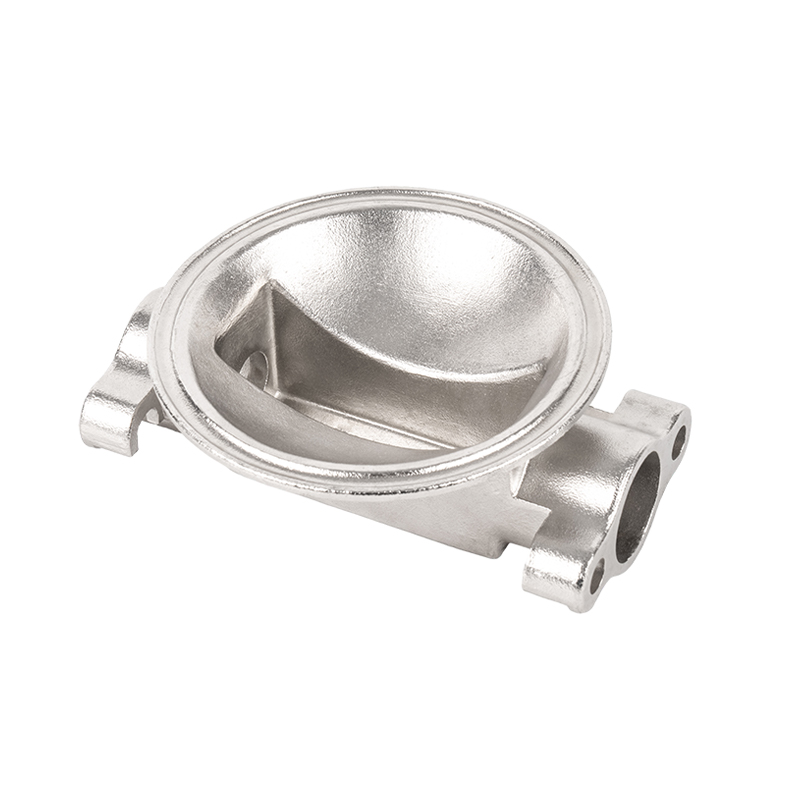
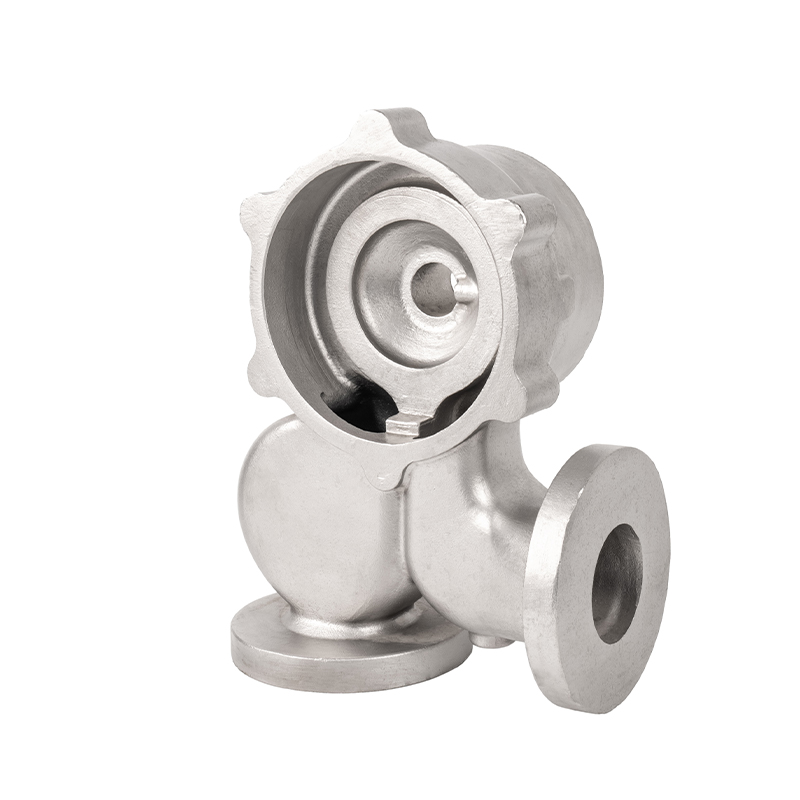 Precision Cast Stainless Steel Centrifugal Pump ComponentsPrecision casting provides near-net shape and consistent material distribution, reducing machining and preserving the cast skin for better corrosion resistance in coastal pump applications. This supplier specializes in stainless steel pump castings with tight dimensional control.View Product →
Precision casting also improves dimensional consistency. When pump bodies and impellers are cast to near-net shape, less machining of the wetted surface is required. This preserves the original cast skin and avoids exposing machined surfaces to premature attack. The distribution of material through the pump's hydraulic channels can also be kept uniform across a production batch.
Practical Selection Criteria for Coastal Pump Procurement
Before placing an order, a pump buyer should ask a foundry or pump manufacturer five questions:
- What material standard does the casting follow, and can you supply material reports?
- How is the chloride content in the operating environment accounted for, and what pitting resistance number is achieved?
- Does the factory perform non-destructive testing for porosity and cracks on pressure-bearing castings?
- What surface treatment and passivation practices are in place?
- Have you supplied similar pump castings for coastal or marine projects before?
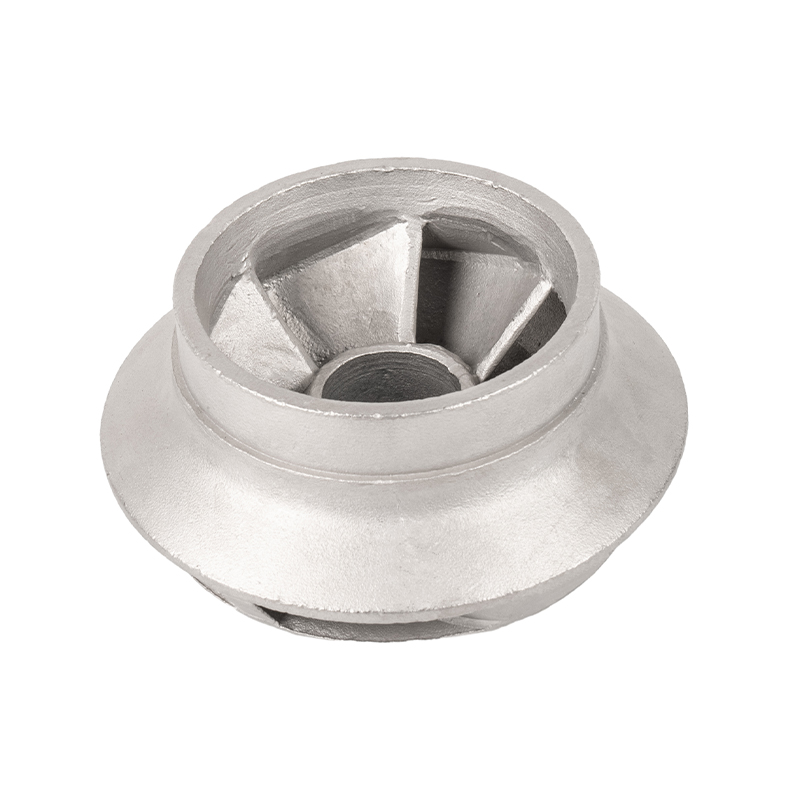 Stainless Steel Precision Cast Blade Impellers for PumpsThese blade impeller castings are produced with precision casting to ensure uniform wall thickness and smooth surfaces, essential for hydraulic efficiency and corrosion resistance. The supplier can provide alloy certifications and test data for quality assurance.View Product →
These questions narrow the gap between a low-bid casting and one that will survive the next decade. A foundry using stainless steel precision casting can provide the alloy certifications and test data needed to support that decision.
A Supplier-Side Perspective: What to Ask a Precision Casting Foundry
From the supplier side, the value of working with a precision casting foundry goes beyond buying a set of pump parts. A foundry that understands coastal wastewater duty can advise on alloy selection, tolerances, and the machining allowances needed for the pump assembler. For example, centrifugal pump castings, impellers, and valve bodies are all produced through the same investment casting or lost-wax process that supports tight dimensional control and a narrow wall-thickness distribution.
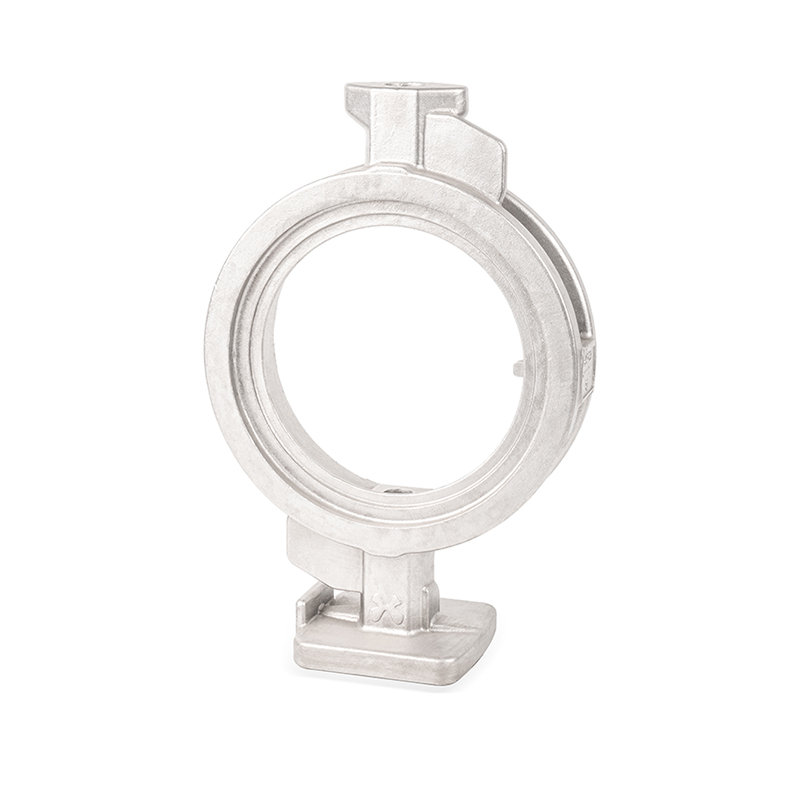 Precision Cast Stainless Steel Butterfly Valve BodiesProduced by the same foundry that makes pump castings, these butterfly valve bodies enable consolidated sourcing and a single quality system. They offer dimensional consistency and traceability for wetted parts in wastewater stations.View Product →
Because the same foundry can produce pump castings and the associated valve castings, a pump manufacturer can consolidate sourcing and keep a single quality system for the wetted parts of the station. This reduces administrative overhead and makes traceability easier when corrosion problems do appear after years of service.
The real risk in coastal wastewater applications is not the pump as a whole. It is the small casting defects and material decisions that become visible only after years of exposure. A corrosion-resistant wastewater pump for coastal service is the result of selecting a suitable duplex or 316L alloy, insisting on a clean precision casting, and confirming production quality with documented tests. For pump companies that manage this carefully, the payback is a longer service life, lower maintenance costs, and fewer emergency repairs in an environment that punishes shortcuts.
RELATED PRODUCTS

Do you have questions? Do not wait, Let's talk!
Contact Us
- Tel: +86-13967888380 / +86-13685858588
- +86-0574-86183698 / +86-0574-86183685
- Fax: +86-0574-86183696
- Email: [email protected]
[email protected] - Add: No. 68, Jiangbin Branch Road, Beilun Xiaogang Joint Development Zone, Ningbo, Zhejiang, China.
QR Code
Copyright © Ningbo Etdz Andrew Precision Cast Co., Ltd. All rights reserved
 Custom Metal Precision Casting Parts Manufacturers
