

 English
 Español
 русский
 中文简体
中文简体

Home / News / Industry News / Water Pump Castings Explained: Types, Materials, and Precision Manufacturing
Industry News
Water Pump Castings Explained: Types, Materials, and Precision Manufacturing
Water pump castings are the backbone of virtually every fluid handling system, from municipal water networks to chemical processing plants. The casing, impeller, and associated components determine how efficiently a pump moves water, how long it lasts, and how reliably it performs under pressure. For engineers and procurement teams, understanding what goes into a well-made pump casting is the difference between a solution that works and one that costs time, money, and reputation.
At Ningbo Etdz Andrew Precision Cast Co., Ltd., we have built our product line around precision castings for the fluid equipment industry, including a full range of water pump castings. In this guide, we share what we have learned about pump casting types, materials, processes, and quality considerations so that you can approach your next sourcing project with confidence.
Why Water Pump Castings Demand Precision
A pump casting is far more than a simple metal housing. Internal flow channels directly influence hydraulic efficiency, wall thickness defines the maximum working pressure, and sealing faces determine whether the pump leaks under load. Small variations in core position, wall thickness, or surface finish can shift a pump's performance curve, increase vibration, or shorten service life.
Water pump castings must handle constant fluid flow, pressure cycling, and often abrasive or corrosive media, so they need to be both dimensionally accurate and metallurgically sound. Casting allows designers to create the complex, curved internal passages that efficient pumps require, passages that cannot be machined economically from solid stock. The foundry's technical capability is therefore closely tied to the final performance of the pump itself. A supplier with hands-on experience in gating design, core placement, and solidification control will deliver castings that machine cleanly and perform reliably in service.
Main Types of Water Pump Castings
Water pumps come in a wide range of designs, and each type places different demands on its castings. Over the years, we have developed components for all of the major pump categories:
| Pump Type | Typical Casting Components | Key Casting Considerations |
|---|---|---|
| Centrifugal pump | Volute casing, impeller, bearing housing | Smooth internal surfaces, concentricity, pressure tightness |
| Axial flow pump | Bowl, impeller, discharge elbow | Large thin wall sections, accurate blade profiles |
| Mixed flow pump | Casing, impeller, diffuser | Complex three-dimensional flow passages |
| Vortex pump | Casing, impeller | Wide open channels, wear resistance for solids-laden fluids |
| Diaphragm pump | Pump body, valve chambers, manifold | Pressure integrity, corrosion resistance |
| Injection pump | Housing, valve components | Dimensional precision, sealing surfaces |
| Gear pump | Body, gear cavities, end covers | Tight clearances, wear resistance |
| Rotary pump | Casing, rotors, liners | Close tolerances, surface hardness |
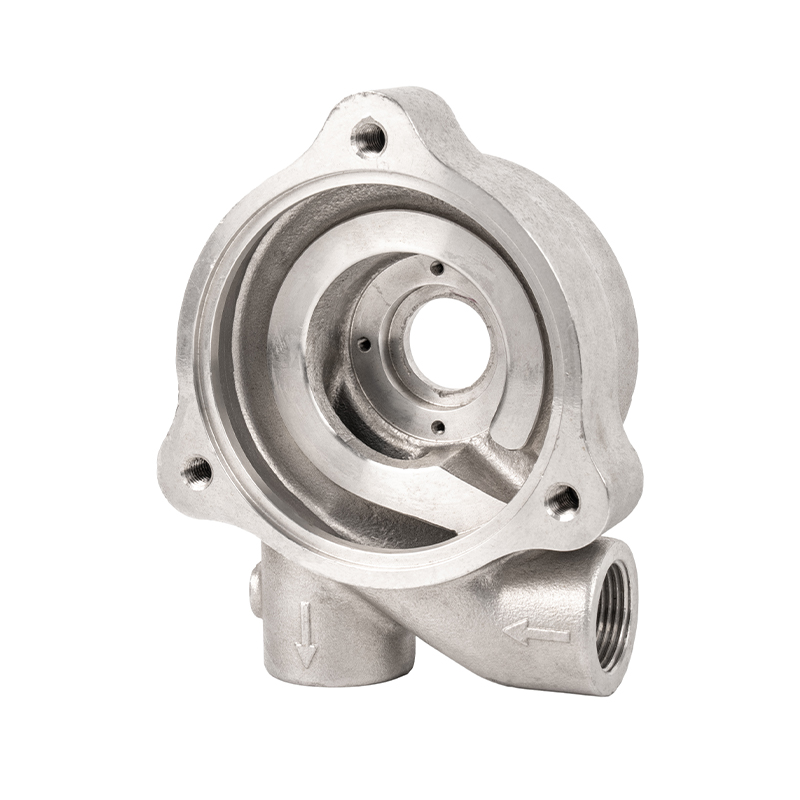
Among these, centrifugal pump castings are the most widely specified. The volute casing is a classic casting design: its spiral shape is formed with cores and is nearly impossible to produce efficiently by machining alone. The impeller, with its curved vanes, is another component that benefits enormously from precision casting.
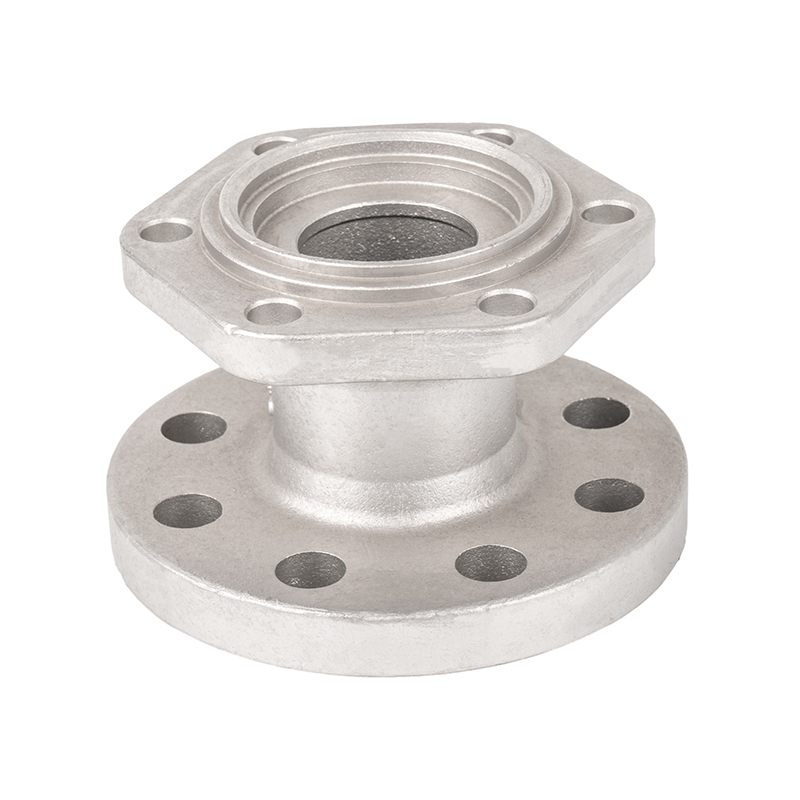
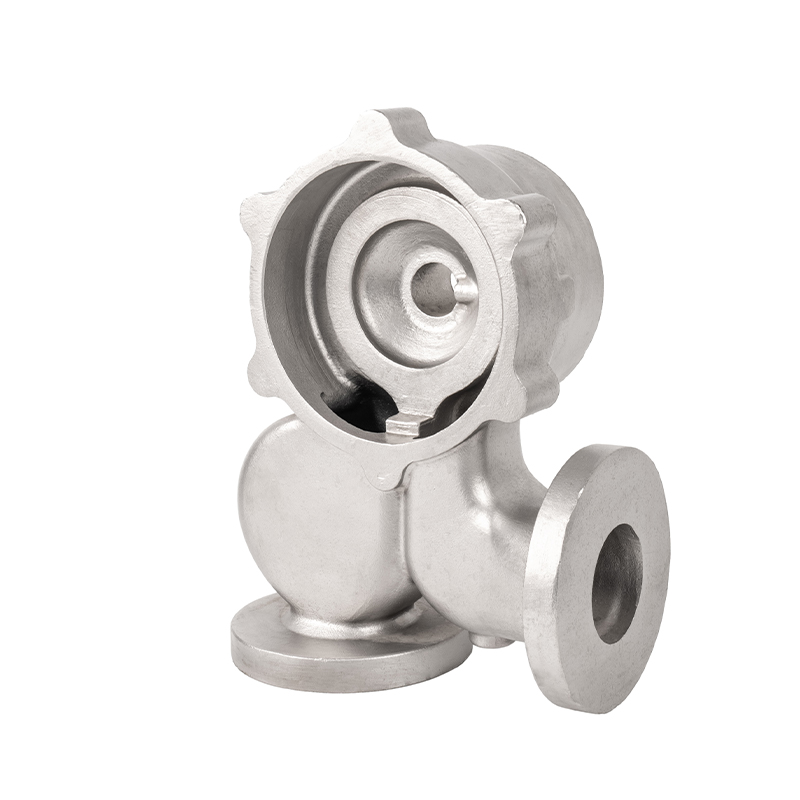 Custom Stainless Steel Precision Centrifugal Pump Castings for OEMsThis product line addresses the challenge of manufacturing volute casings and impellers, which demand precise spiral and curved geometries that machining alone cannot efficiently produce.View Product →
Our foundry also produces related impeller, valve, and pipe castings, supporting complete pump and fluid system assemblies.
Selecting the Right Material for Water Pump Castings
The choice of material for water pump castings depends on the fluid being pumped, the operating temperature, and the mechanical loads involved.
For clean water and HVAC applications, gray cast iron remains a classic choice. Grades such as HT200 offer good castability, natural vibration damping, and excellent cost-effectiveness. Ductile iron is often selected when higher strength and toughness are required, particularly for large pump bodies and high-pressure casings.
For corrosive media, seawater, or sanitary applications, stainless steel castings are the preferred solution. Grades such as CF8 and CF3M provide excellent corrosion resistance and can be precision cast to the tight tolerances that modern pump designs demand. The food and beverage industry, for example, needs stainless steel components that withstand frequent cleaning and chemical sanitizing.
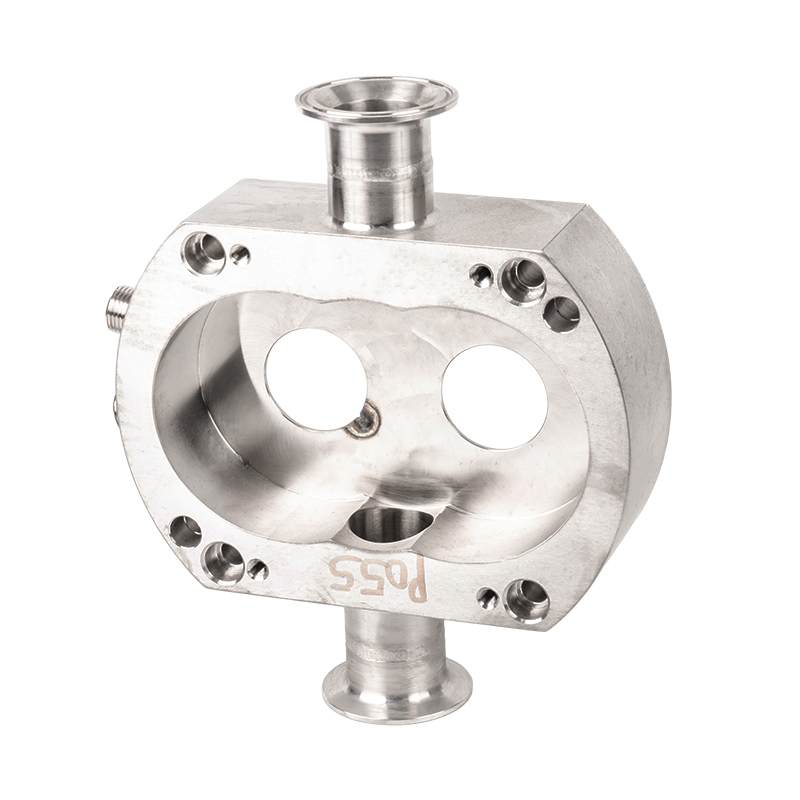
Diaphragm pump castings are a good example of how material selection affects long-term reliability. Diaphragm pumps are often used to handle aggressive chemicals, slurries, and viscous fluids, so every wetted component must match the chemical compatibility requirements of the application. Stainless steel pump bodies and valve chambers are standard for these demanding environments.
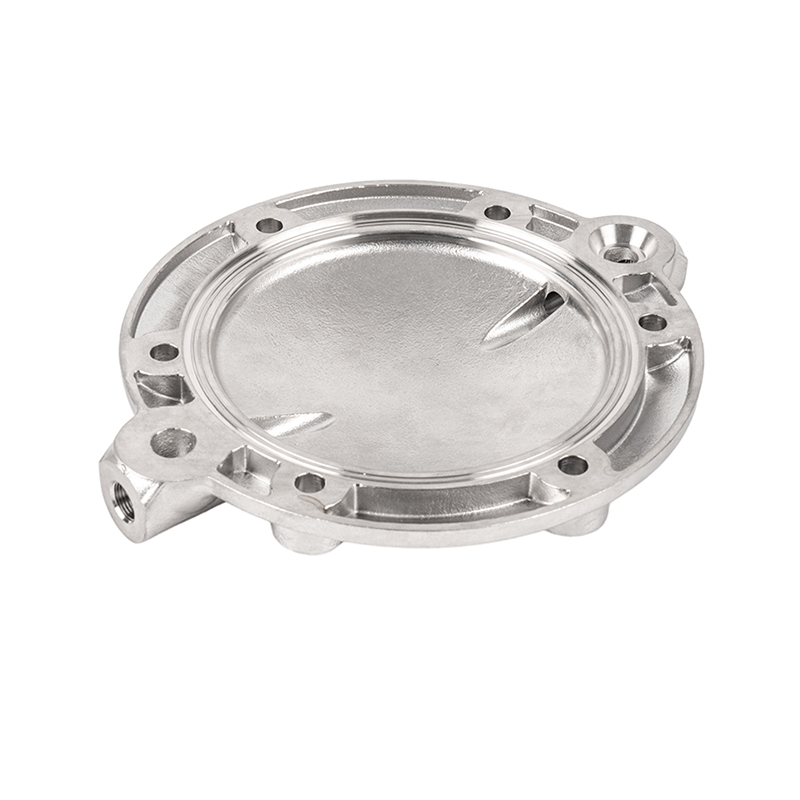
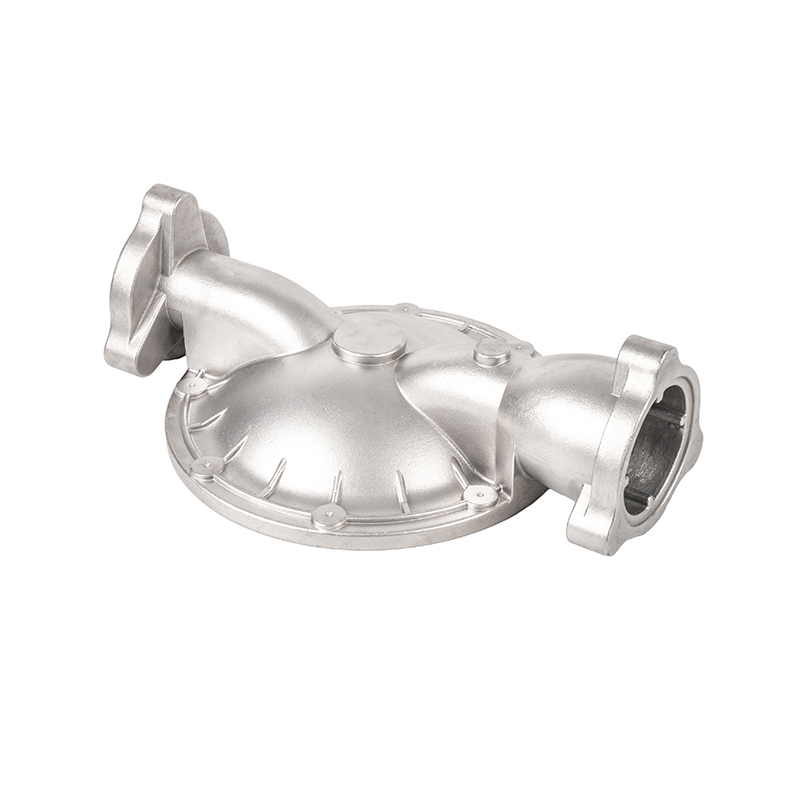 Precision Stainless Steel Diaphragm Pump Castings for Aggressive FluidsImportant for applications involving chemicals and slurries, these castings offer material-matched components that enhance long-term reliability and reduce maintenance risks.View Product →
When materials are selected correctly, the casting retains its dimensional integrity over time. Our experience across these material families, from cast iron to high-alloy stainless steel, helps customers avoid premature failures and unexpected maintenance costs.
Casting Processes for Water Pump Components
Two main casting routes cover most water pump production: investment casting, also known as precision casting, and sand casting.
Investment casting is the process of choice for impellers, small-to-medium pump bodies, and components with complex geometry and tight tolerances. A wax pattern is coated in ceramic slurry, the wax is melted out, and molten metal fills the resulting shell. The process reproduces fine details, delivers excellent surface finish, and minimizes machining allowances. It suits stainless steel pump components especially well. Read more about the precision casting process for water pump castings in our industry notes.
Sand casting, on the other hand, is often used for larger pump bodies and housings where component size makes investment casting impractical or where cost per piece is the priority. Modern sand casting with resin-bonded sand and precision cores can produce excellent internal passages even in large castings. Some foundries combine both approaches, using green sand outside and precoated resin sand cores inside to balance quality and cost.
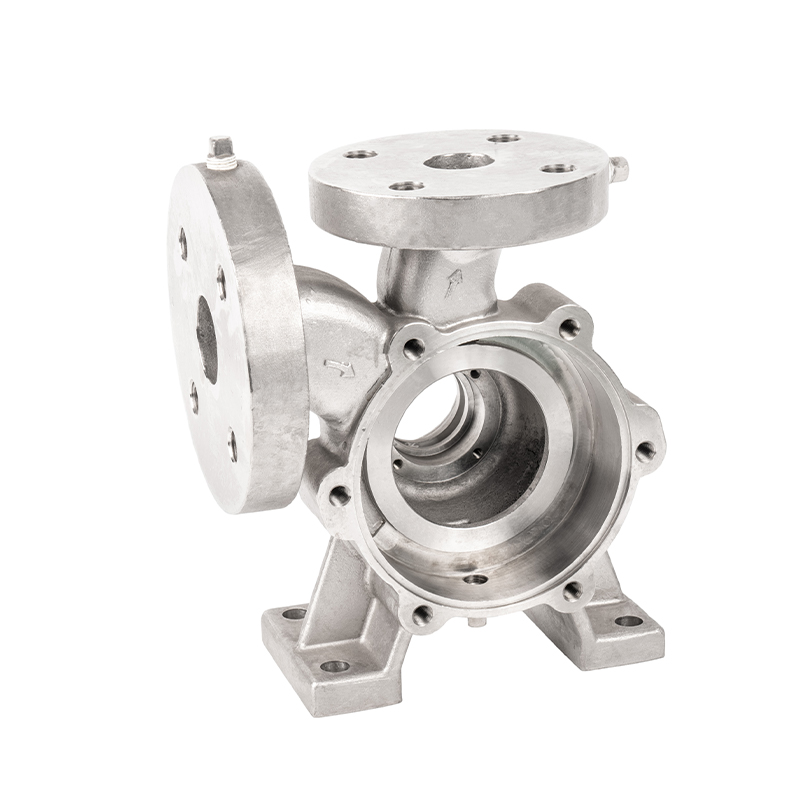
For large axial flow pump castings, where the bowl and impeller must manage high flow rates at low head, the casting process has to deliver smooth, accurate hydraulic profiles across substantial dimensions. This requires careful attention to core design, pouring temperature, and solidification control.
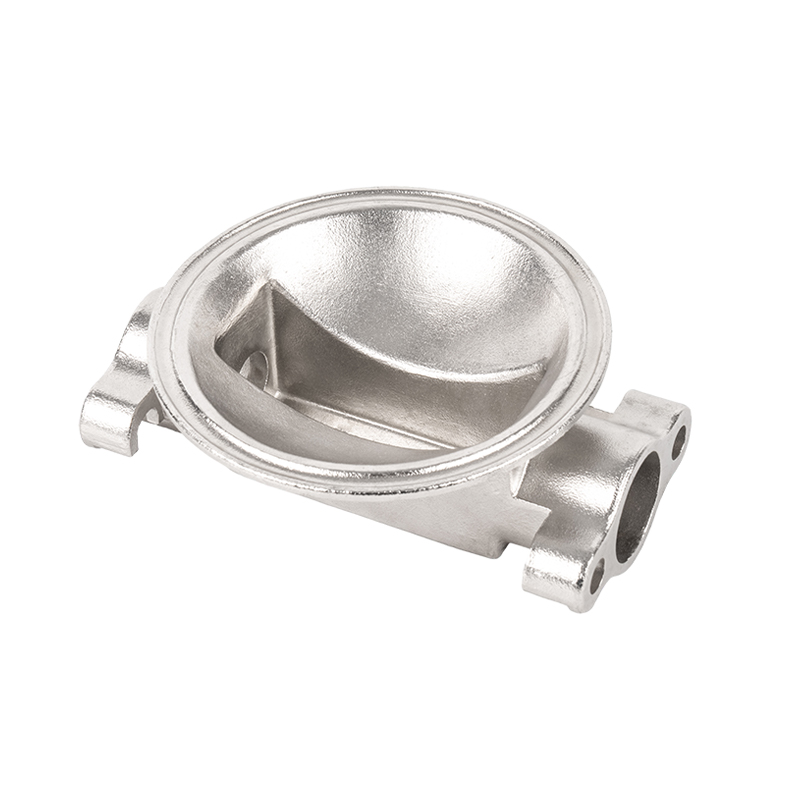
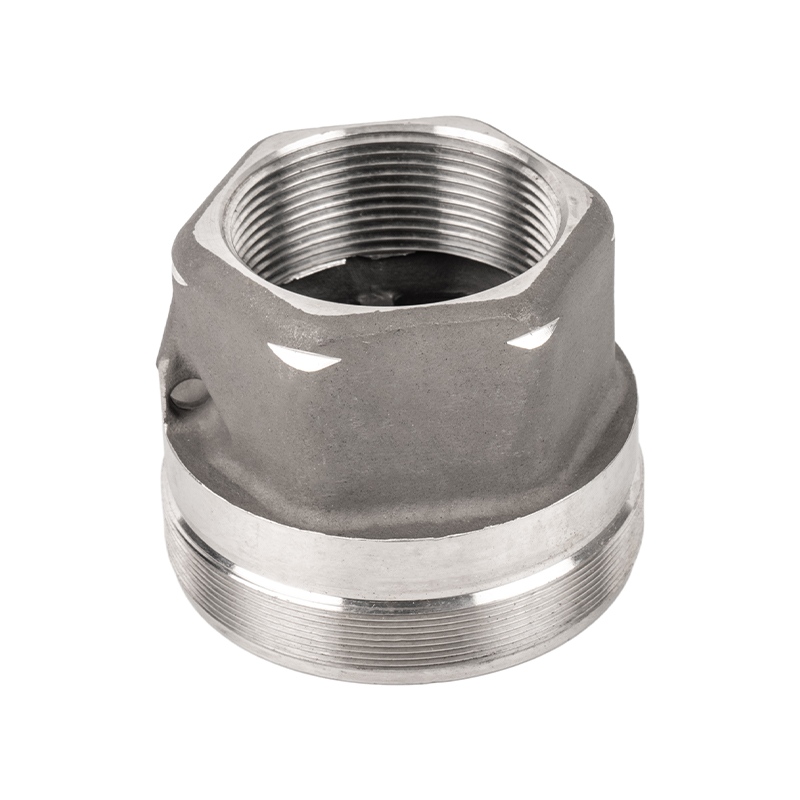 Precision Stainless Steel Axial Flow Pump Castings for Large OutputFor high-flow, low-head applications, these large castings require careful core design and solidification control to deliver accurate hydraulic profiles across substantial dimensions.View Product →
The right process choice depends on component size, annual volume, material, and performance requirements. A competent casting partner will help you evaluate these trade-offs rather than simply quoting the cheapest production method.
Quality and Testing Considerations
Whatever the process, the final quality of a water pump casting is judged by how well it performs under real operating conditions. That is why experienced foundries apply a range of inspection and testing methods before a casting leaves the factory.
Hydrostatic pressure testing is standard for pump casings and bodies. The casting is filled with water and pressurized to confirm that no leaks pass through the walls. Pressure testing, however, is only a final check; real pressure tightness comes from sound casting design, correct gating and risering, and strict process control.
Surface finish is another critical factor. Rough surfaces in the flow path increase friction and reduce pump efficiency, while poor finish on sealing faces can lead to leakage. Finishing treatments can also improve casting longevity and performance. Our article on surface finish requirements for stainless steel water pump castings explores the topic in more detail.
Dimensional inspection verifies that mounting features and machined surfaces align correctly, while nondestructive testing methods can detect internal shrinkage or inclusions before the casting is released for machining. Together, these checks give pump manufacturers the confidence to install castings without rework.
Building a Long-Term Water Pump Casting Partnership
When you choose a partner for water pump castings, look for more than a foundry that can pour metal. The right partner should understand pump hydraulics, recommend materials for your specific service conditions, and have a track record across multiple pump types.
At our foundry in Ningbo, precision casting is not just part of our name; it is how we approach every component we produce. With product categories covering pumps, valves, impellers, and pipe castings, we bring a broad view of fluid equipment manufacturing to every project. Whether you need a small batch of stainless steel impeller castings or a steady production run of large pump bodies, we work alongside your engineering team to refine the design for castability, reliability, and cost efficiency.
From centrifugal pump casings to high-efficiency axial flow impellers, water pump castings are the foundation of dependable fluid handling systems. The decisions made at the foundry level determine how a pump performs for years after it leaves the factory. We take that responsibility seriously and look forward to discussing your next water pump casting project.
RELATED PRODUCTS



Do you have questions? Do not wait, Let's talk!
Contact Us
- Tel: +86-13967888380 / +86-13685858588
- +86-0574-86183698 / +86-0574-86183685
- Fax: +86-0574-86183696
- Email: [email protected]
[email protected] - Add: No. 68, Jiangbin Branch Road, Beilun Xiaogang Joint Development Zone, Ningbo, Zhejiang, China.
QR Code
Copyright © Ningbo Etdz Andrew Precision Cast Co., Ltd. All rights reserved
 Custom Metal Precision Casting Parts Manufacturers
