

 English
 Español
 русский
 中文简体


Home / News / Industry News / How Does a Centrifugal Pump Work? Working Principle and Key Components
Industry News
How Does a Centrifugal Pump Work? Working Principle and Key Components
Walk into almost any water treatment plant, chemical facility, or HVAC room, and you will find a centrifugal pump quietly handling the heaviest lifting in the system. It is the workhorse of fluid handling, and the principle behind it is surprisingly simple. As a manufacturer of centrifugal pump castings, we produce the impellers, casings, and other components that make these pumps perform day after day. In this guide, we break down how a centrifugal pump works, what each part does, and why precision in the pump's cast components matters more than most people realize.
The Working Principle in Simple Terms
A centrifugal pump works by converting mechanical energy from a motor into kinetic energy in the liquid, and then into pressure energy. The process starts with the impeller, a disc fitted with curved vanes that spins inside the pump casing. Liquid enters through the suction pipe and reaches the center of the impeller, a zone called the eye.
As the impeller rotates, the vanes throw the liquid outward. Centrifugal force accelerates the liquid toward the outer edge of the impeller, where it leaves at high velocity and enters the volute, a spiral channel with a gradually increasing cross-section. This widening geometry slows the liquid down, and that loss of velocity is exactly what converts kinetic energy into pressure. The pressurized liquid then exits through the discharge nozzle.
Meanwhile, the liquid leaving the eye creates a low-pressure zone at the center of the impeller. Higher pressure on the surface of the supply reservoir pushes more liquid up the suction line, so the pump keeps drawing fresh liquid steadily. That is why a centrifugal pump produces smooth, continuous flow.
Key Components of a Centrifugal Pump
A centrifugal pump may look simple from the outside, but each internal component has a specific job.
| Component | Function | Why It Matters |
|---|---|---|
| Impeller | Rotating vanes that accelerate the liquid outward | The heart of the pump; impeller geometry determines flow rate and discharge head |
| Volute casing | Collects the liquid and converts velocity into pressure | A well-proportioned volute reduces turbulence and improves efficiency |
| Shaft | Transfers torque from the motor to the impeller | Must be rigid and well aligned; weak alignment causes vibration and wear |
| Mechanical seal | Prevents leakage where the shaft passes through the casing | One of the most common wear points; correct selection and installation are critical |
| Bearings | Support the shaft and hold the rotor in position | Worn bearings lead to misalignment, vibration, and eventual pump failure |
| Suction and discharge nozzles | Connect the pump to the piping system | Smooth flow into and out of the pump minimizes friction losses |
Of all these components, the impeller has the greatest influence on hydraulic performance. Its vane angles, width, and surface finish are designed around a specific duty point, and small casting deviations can shift the pump's performance curve noticeably.
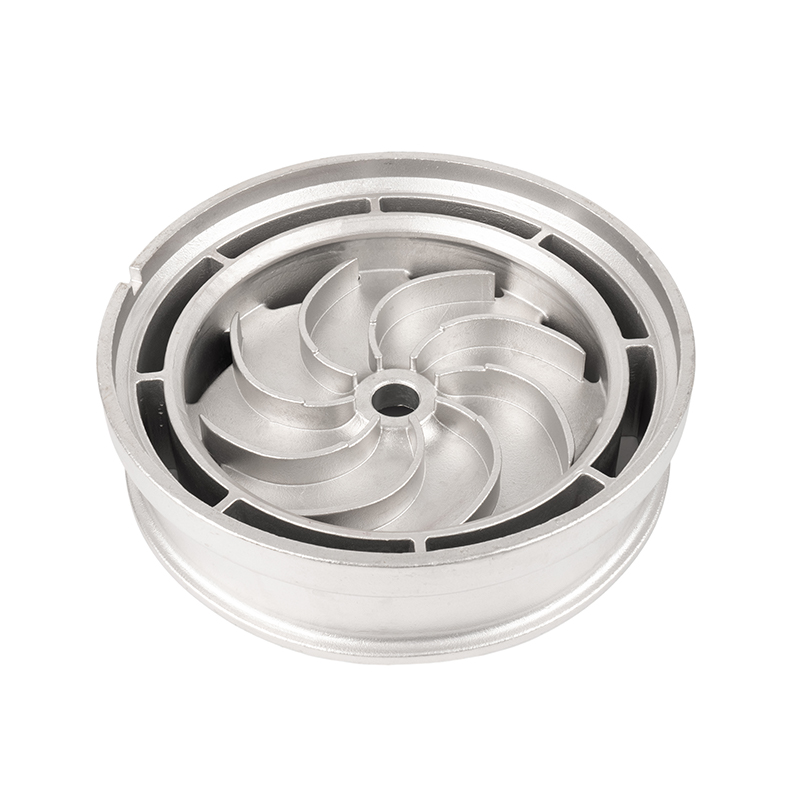 Precision Impeller Castings for Pumps and Rotating MachineryExplore a range of impeller castings, including runner, blade, spiral, and swirl types, designed for complex shapes and demanding industrial applications.View Product →
The mechanical seal deserves special attention because more centrifugal pump failures start at the seal than almost anywhere else. Selecting the right seal and installing it correctly makes the difference between years of trouble-free service and repeated downtime. Our guide to mechanical seal selection and installation covers this topic in more depth.
How a Centrifugal Pump Works, Step by Step
Putting the components together, the operating sequence of a centrifugal pump looks like this:
- Priming. The pump casing must be completely filled with liquid before start-up. A centrifugal pump cannot move air efficiently, so most installations include a foot valve or a priming system to keep the casing flooded.
- Suction. Once the impeller starts rotating, it creates a low-pressure zone at the eye. Atmospheric pressure pushes liquid up the suction pipe and into the pump.
- Acceleration. The impeller vanes catch the liquid and fling it outward, increasing its velocity significantly.
- Diffusion. In the volute, the expanding cross-section slows the liquid and converts its velocity into pressure.
- Discharge. The pressurized liquid exits through the discharge nozzle and continues into the system piping.
This cycle repeats continuously. The result is a steady, pulse-free flow that makes centrifugal pumps suitable for everything from domestic water supply to large-scale industrial processing.
The Main Types of Centrifugal Pumps
Centrifugal pumps are generally classified by the direction of flow through the impeller.
| Type | Flow Direction | Typical Application |
|---|---|---|
| Radial flow | Perpendicular to the shaft | High head, moderate flow; common in water supply and HVAC |
| Axial flow | Parallel to the shaft | Very high flow, low head; ideal for drainage and irrigation |
| Mixed flow | Diagonal, between radial and axial | Medium head and flow; widely used in large municipal pumping |
A single-stage pump has one impeller and suits moderate pressures, while a multi-stage pump stacks several impellers in series to reach much higher heads. Beyond these classic categories, special designs such as vortex and self-priming pumps use impeller geometries adapted to specific duties.
From a foundry point of view, these pump types translate into very different castings. An axial flow impeller is close to a propeller shape, a radial impeller has deep narrow channels, and a vortex impeller is recessed inside the casing. Getting the internal flow passages right in the casting is what allows each design to achieve its intended efficiency.
 Water Pump Castings for Diverse Pump DesignsFind castings for centrifugal, axial flow, mixed flow, vortex, and other pump types, supporting efficiency and durability across industrial and agricultural uses.View Product →
Why Precision Castings Matter for Pump Performance
Understanding how a centrifugal pump works naturally raises a question: why do some pumps deliver rated performance for decades while others lose efficiency and begin vibrating after a short time? Very often, the answer lies in the quality of the cast components.
The impeller vane profile, the volute cross-section, and the surface finish of internal flow passages all affect hydraulic efficiency. A small deviation in vane angle can shift the pump duty point and increase power consumption. Surface roughness adds friction and encourages cavitation. Internal defects such as porosity or slag inclusions can weaken the impeller and cause sudden failure in demanding conditions.
Precision investment casting addresses these issues. It reproduces complex impeller geometries with tight dimensional accuracy and a smooth surface finish, while keeping the metal's grain structure dense and uniform. This is why engineers specify high-quality stainless steel castings for impellers and casings exposed to corrosive or erosive fluids.
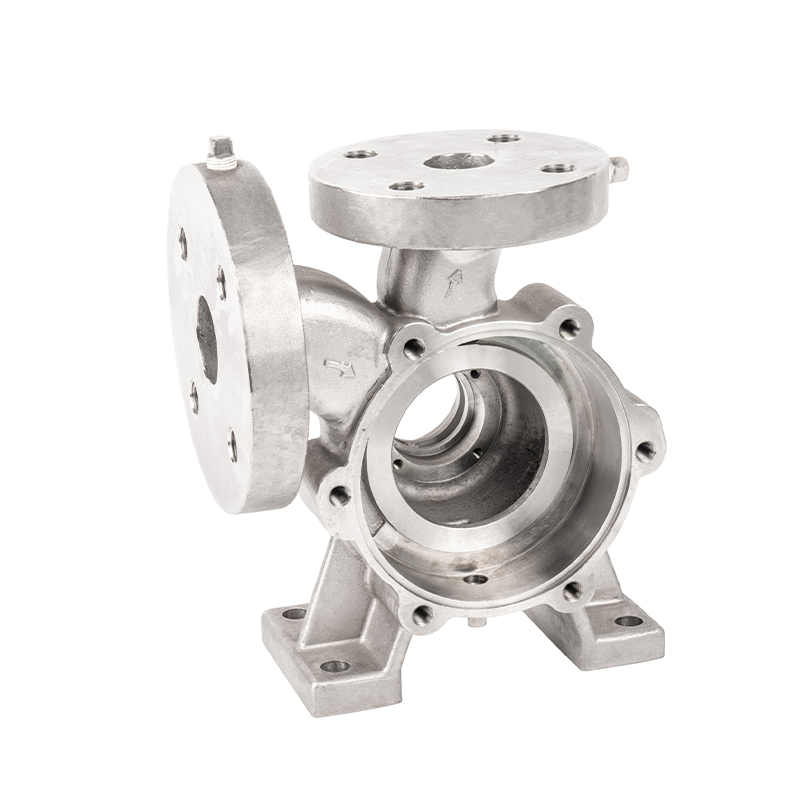
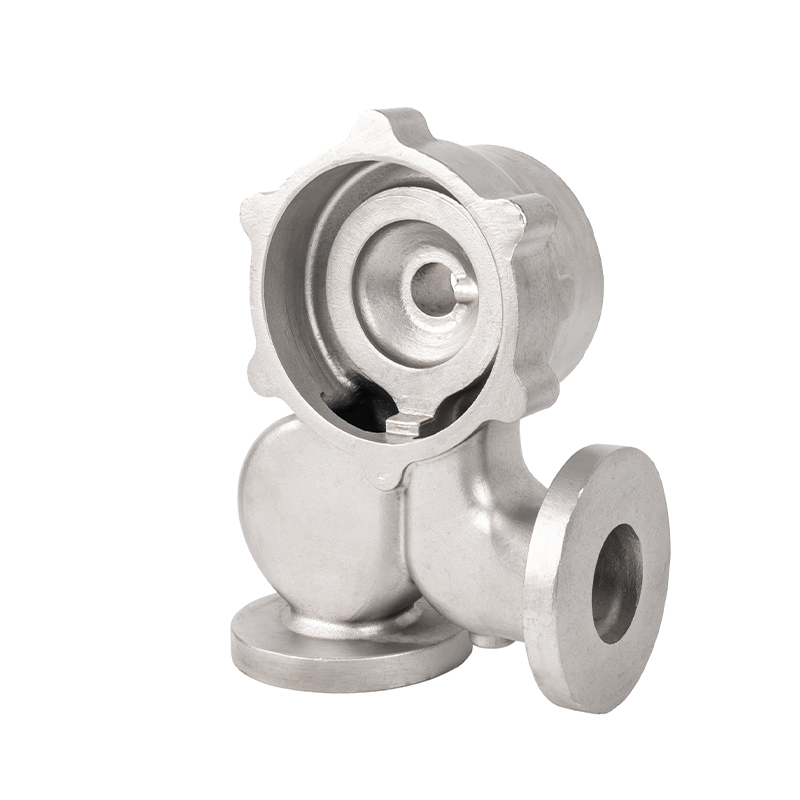
 Custom Stainless Steel Centrifugal Pump CastingsPrecision-cast OEM components such as casings and impellers, engineered for fluid dynamics, corrosion resistance, and reliable performance in harsh environments.View Product →
When a pump is assembled from well-cast components, the benefits add up:
- Higher efficiency and lower energy costs
- Quieter operation and less vibration
- Longer intervals between overhauls
- Consistent performance at the design duty point
Frequently Asked Questions About Centrifugal Pumps
Does a centrifugal pump need to be primed before starting?
Yes. Because a centrifugal pump cannot create a strong vacuum, the casing must be full of liquid before the impeller starts. Dry running can damage the mechanical seal and even the impeller itself.
What is NPSH and why does it matter?
Net Positive Suction Head is the margin between the pressure at the pump suction and the vapor pressure of the liquid. If the available NPSH falls below the required value, the liquid flashes into vapor and collapses inside the pump, a phenomenon called cavitation. Cavitation erodes the impeller and can become the dominant factor limiting pump life.
What happens if a centrifugal pump runs below its design flow?
Some pumps experience recirculation at low flow, causing vibration and localized heating. Operating too far from the best efficiency point also wastes energy, so many installations use variable speed drives and bypass lines to keep the pump near its intended duty.
Final Thoughts
A centrifugal pump may seem like a straightforward machine, but the interaction between the impeller, the casing, and the clearances is carefully engineered. When every component is cast with precision, the pump runs at its best efficiency point, consumes less energy, and continues serving the system reliably for years. That is where precision casting makes itself felt: in the quiet, dependable performance of a pump that simply does its job.
RELATED PRODUCTS
Do you have questions? Do not wait, Let's talk!
Contact Us
- Tel: +86-13967888380 / +86-13685858588
- +86-0574-86183698 / +86-0574-86183685
- Fax: +86-0574-86183696
- Email: [email protected]
[email protected] - Add: No. 68, Jiangbin Branch Road, Beilun Xiaogang Joint Development Zone, Ningbo, Zhejiang, China.
QR Code
Copyright © Ningbo Etdz Andrew Precision Cast Co., Ltd. All rights reserved
 Custom Metal Precision Casting Parts Manufacturers
